Singapore's Death Penalty Reroutes Cannabis Smuggling Routes
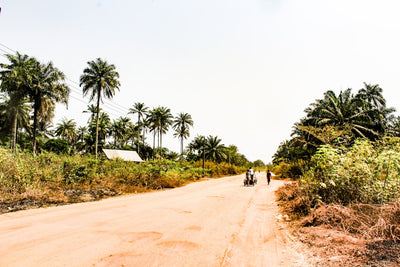
Photo by Sushanta Rokka via Unsplash.
Seven people. That's the number Singapore has hanged for drug offenses in the first months of 2026 alone, a pace that puts the city-state on track to blow past its own 2025 total of fifteen executions -- already the highest annual figure in years. The machinery of the Misuse of Drugs Act hasn't slowed down; it's accelerating.
Omar bin Yacob Bamadhaj was hanged on April 16, 2026, for importing just over 1,000 grams of cannabis through the Woodlands Checkpoint. He wasn't accused of running a network or profiting at scale -- courts found his role was that of a courier, someone moving product across a border for pay. That distinction didn't matter. Singapore's law doesn't really ask what you intended to do with the drugs once you crossed the line; it asks how much you were carrying, and 1,009 grams cleared the 500-gram threshold for cannabis by a wide margin. Absent a prosecutor's certification that he'd substantively helped dismantle a trafficking operation, the outcome was mandatory.
Set this next to what's happening everywhere else in the region and the contradiction gets hard to ignore. Thailand decriminalized cannabis in 2022 and now has a retail dispensary market operating in plain daylight. Much of the world, including places that once ran hardline drug regimes, has been loosening its cannabis laws for a decade. Singapore has gone the other way, doubling down on capital punishment as its answer. The real question isn't whether this is harsh -- it obviously is -- it's whether it's actually working the way it's supposed to, or whether it's just changing the shape of the trafficking it's meant to stop.
The Misuse of Drugs Act's bright line: 500 grams

Under Singapore's Misuse of Drugs Act, trafficking as little as 500 grams of cannabis or 250 grams of methamphetamine triggers a mandatory death penalty threshold, highlighting the law's severe stance on drug offenses.
Singapore's Misuse of Drugs Act draws its line at a specific number: 500 grams of cannabis, or 250 grams of methamphetamine, moved into or out of the country. Cross that threshold and the death penalty becomes mandatory, full stop. There's no requirement for prosecutors to show the person intended to distribute at industrial scale, no need to prove they were part of an organization, no sentencing tier based on culpability the way most jurisdictions handle drug weight. The law treats the number on the scale as the entire question.
That's a very different structure from what you see in most drug statutes globally, where intent, role, and quantity interact to produce a range of possible sentences. In Singapore, weight alone triggers the maximum penalty, and the only way a courier can avoid execution is through a narrow statutory exception: prosecutors must certify that the person gave substantive assistance in disrupting a trafficking network. That certification is entirely within the prosecution's discretion -- it's not something a defendant can win through cooperation alone if the state doesn't judge the information valuable enough.
Omar Bamadhaj's case shows exactly how unforgiving this bright line is in practice. He was stopped at Woodlands Checkpoint in July 2018 carrying 1,009 grams of cannabis, convicted in 2021, and the courts themselves acknowledged his role was limited to transporting the drugs rather than directing any operation. He wasn't a kingpin by any account in the record. Still, no certification was granted, and the mandatory sentence stood. For a courier caught over the line, remorse, limited role, or personal circumstance doesn't move the outcome -- only information the state finds useful does. It's a rigid, quantity-driven deterrent model, and it's part of why Singapore's drug law reads so differently from its neighbors', where thresholds tend to function as sentencing guidance rather than an on/off switch for capital punishment.
2026's execution surge

Photo by Larry Farr via Unsplash.
The numbers for 2025 alone should have been a signal: fifteen executions for drug offenses, seven more than the year before it. That kind of jump doesn't happen by accident -- it reflects either a surge in prosecutions clearing appeals simultaneously or a deliberate acceleration in how cases move through the system. Either way, 2026 didn't slow the pace down. It sped it up.
By the time Omar bin Yacob Bamadhaj was executed on April 16, 2026, his case had already drawn international attention -- his wife, who is German, had petitioned President Tharman Shanmugaratnam for clemency, and that petition failed. A month later, on May 21, a 32-year-old Singaporean was executed for possession-for-trafficking. Then, over the summer, the pattern continued: a 44-year-old Malaysian man executed on July 3, and a 35-year-old Singaporean executed on July 23, both convicted on possession-for-trafficking charges rather than importation specifically.
What's notable isn't just the raw count, it's the mix of nationalities and case types running through the system at the same time -- Malaysians, Singaporeans, importation cases, possession cases, all moving toward the same outcome within a single calendar year. That suggests the surge isn't concentrated in one type of case or one demographic; it's systemic, touching multiple points in the pipeline from checkpoint seizure to courtroom to execution chamber.
Set against what's happening in neighboring countries, the timing reads almost defiant. Thailand's dispensary market keeps expanding. Malaysia has been debating softer penalties for personal-use quantities. Singapore, meanwhile, is executing people at a rate that outpaces its own recent history, with no public indication from the government that this is a temporary spike rather than the new normal. If anything, officials have used the surge to reaffirm the deterrence rationale rather than reconsider it.
Woodlands Checkpoint: the land border doing the heavy lifting

Photo by Frames For Your Heart via Unsplash.
If you want to understand where the actual trafficking risk concentrates in this corridor, look at Woodlands Checkpoint, the land crossing connecting Johor Bahru in Malaysia to Singapore. It's not Changi Airport and it's not the ports -- it's the causeway, and it's almost always Malaysian nationals driving Malaysia-registered vehicles who get caught there. Air and sea routes carry their own risks, but the land border is where the bulk of the courier traffic actually happens, likely because it's cheaper, faster, and easier to attempt repeatedly than trying to clear customs at an airport.
The seizure record from 2026 gives a sense of scale. On April 14, a 23-year-old Malaysian was caught with roughly 5,127 grams of cannabis and 2,072 grams of Ice. On May 4, a pair of Malaysian nationals were stopped with about 261 grams of Ice and 2,261 grams of cannabis. Then on August 1, a 22-year-old Malaysian was caught carrying approximately 8,646 grams of cannabis alongside 1,569 grams of Ice -- a haul valued at more than $361,000. These aren't isolated mega-shipments; they're a steady drumbeat of individual couriers, each carrying a load big enough to trigger capital charges under the 500-gram cannabis threshold many times over.
The concealment methods keep evolving too. During the December 2025 festive period, authorities found drugs packed inside pet food bags, an attempt to exploit the higher volume of holiday travelers and gift parcels moving through the checkpoint to slip past inspection. It's a small, telling detail -- it shows traffickers adapting their packaging and timing rather than abandoning the route altogether.
Put together, the pattern at Woodlands looks less like large consolidated shipments run by a handful of well-resourced operations and more like frequent, smaller-scale loads carried by individuals who are easier to recruit, easier to replace, and -- crucially -- easier for Singaporean authorities to intercept one at a time.
Singapore versus its neighbors: an outlier in a loosening region

Photo by Nothing Ahead via Pexels.
Thailand's decriminalization in 2022 didn't just change its own domestic law, it repositioned the whole region's cannabis map. Dispensaries now operate openly in Bangkok and tourist centers, and cannabis tourism has become a real line item in Thailand's economy. Malaysia, for its part, has held public debate over softening penalties for personal-use quantities, even as it remains the country of origin for the overwhelming majority of couriers crossing into Singapore with cannabis and methamphetamine loads. The regional trend, broadly, is toward loosening.
Singapore is the exception, and it's not a quiet one. Its 2026 execution pace makes clear the government isn't hedging or waiting to see how its neighbors' experiments play out. But it's worth being precise about what this policy actually accomplishes on the ground. It doesn't function as a regional deterrent in the sense of stopping trafficking activity across Southeast Asia -- it functions as a chokepoint specific to Singapore's own borders. Bulk international shipments increasingly appear to route around the country entirely, while individual couriers, drawn by wages that are almost certainly a small fraction of the risk they're assuming, keep crossing at Woodlands anyway.
Singaporean officials have been consistent in their public rationale for decades: the mandatory death penalty is framed as essential to maintaining the country's comparatively low domestic drug-use rates, a position that traces back to the expanded 1970s framework of the Misuse of Drugs Act and hasn't meaningfully shifted since. Whatever one thinks of that argument, it's not new -- it's the same justification the government has offered since long before this current execution surge.
What has shifted is who bears the cost of that policy. Because Malaysian nationals make up the clear majority of Woodlands Checkpoint cases, the legal risk of Singapore's hardline stance falls disproportionately on people from a neighboring country that is, at the very same moment, publicly debating whether its own drug penalties are too severe.
What the enforcement data suggests about deterrence

Photo by Tiger Lily via Pexels.
Here's the part that should give policymakers pause: seizure volumes at Woodlands in 2026 look broadly similar to prior years, despite the mandatory death penalty being fully in force this entire time. If the law were functioning as a blanket deterrent, you'd expect the flow of cannabis and methamphetamine through the checkpoint to shrink over time. Instead, the volume has held roughly steady, which suggests the law is reshaping how trafficking happens rather than stopping it outright.
The concealment tactics tell part of that story. Packing drugs inside pet food containers during the December 2025 holiday rush wasn't a one-off gimmick -- it's a sign that traffickers are adapting their methods to slip under detection rather than avoiding the route because the risk got too high. Smaller parcel sizes, timed to high-traffic periods, seem to be the emerging playbook, rather than couriers deciding the corridor isn't worth using anymore.
The certification exception built into the law has also had a specific, arguably intended, effect: it gives couriers who get caught a single incentive to cooperate, and Singapore's Central Narcotics Bureau has reportedly used that leverage to build cases against the organizers running these networks. That's the theory behind the exception -- turn low-level couriers into informants against the people actually directing the trade. Whether it's producing convictions against organizers at a rate that justifies executing the couriers who don't qualify for certification is a separate, much harder question, and one the public record doesn't fully answer.
What the data does seem to show is a shift in the composition of what's crossing the border. Instead of large, consolidated international shipments moving in bulk, the checkpoint traffic looks increasingly dominated by mixed cannabis-and-Ice loads carried by individuals -- exactly the kind of small, frequent, easily replaced courier activity that a strict weight-based capital punishment law would be expected to produce if it's pushing bulk operators to find other routes while leaving the riskiest, lowest-paid work to people with the fewest alternatives.
Nothing in the 2026 data suggests Woodlands Checkpoint has gone quiet. The traffic is still there -- it's just smaller per load, more frequent, and increasingly carried by Malaysian nationals who are crossing for wages that don't come close to matching what's at stake if they're caught. That's the practical result of a law built around a 500-gram bright line: it hasn't shut down the corridor, it's changed who's willing to use it and how they're willing to move product through it.
There's no sign of Singapore reconsidering course. The execution pace through 2026 has, if anything, outstripped 2025's already-elevated total, even as Thailand's dispensary economy keeps growing and global cannabis norms keep shifting away from criminalization. That divergence isn't closing -- it's widening, and Singapore seems entirely comfortable being the outlier.
The harder question sits underneath all of this: does executing couriers actually reach the people organizing these routes, or does it mainly remove the most replaceable link in the chain while leaving the organizers -- who rarely touch the product themselves -- largely insulated? The certification exception suggests Singapore's own enforcement apparatus at least recognizes that couriers aren't the real target, since it's structured specifically to extract information about the people above them. Whether that mechanism is working as intended, or whether it's mostly producing executions of people who had little of value to trade, is the question this policy has yet to answer convincingly.
Sources
- Singapore Executes Man for Cannabis Importation Amid Rising Drug-Related Executions | Death Penalty Information Center
- Singapore: Halt Imminent Execution for Cannabis Trafficking | Human Rights Watch
- Singapore prepares to execute man for cannabis offense - JURIST - News
- Singapore's anti-drug laws on Cannabis | Central Narcotics Bureau (CNB)
- Execution of a convicted drug importer - 16 April 2026 | Central Narcotics Bureau (CNB)