Nigeria's Cannabis Paradox: Crackdowns Meet Export Talk
Photo by Nnaemeka Ugochukwu via Unsplash.
Walk into a courtroom in Lagos and a cannabis possession case will be prosecuted the same way it would have been in 1980: as a strict-liability crime with no distinction for quantity, intent, or plant chemotype. Nigeria's cannabis law does not bend. Cultivation, possession, sale, transport, import and export are all criminal acts under a legal framework that has barely moved in nearly six decades. And yet on October 8, 2025, the man in charge of enforcing that framework stood in front of an audience of scientists in Abuja and said his agency was not opposed to licensed, export-only cannabis oil leaving the country.
That's the contradiction sitting at the center of Nigeria's current cannabis conversation. Brig. Gen. Mohammed Buba Marwa, chairman of the National Drug Law Enforcement Agency, floated a controlled export model at the very moment his agency's raid teams were still working southern cultivation belts. The timing wasn't accidental -- it reflects a real institutional itch to capture a slice of a global cannabis oil market analysts project will reach nearly $40 billion within a decade. But rhetoric from a workshop podium and a signed law are two very different things, and Nigeria has a long history of the former without the latter. What follows is an attempt to separate what the statute actually says, what officials are now saying out loud, and what's actually happening in the fields -- because right now, those three things point in noticeably different directions.
The Law as It Stands: No Exceptions, No Distinctions

Photo by SHOX ART via Pexels.
Nigeria's cannabis prohibition rests on two overlapping statutes, and neither leaves room for interpretation. The Indian Hemp Act of 1966 was the original criminalizing instrument, passed in the waning colonial-adjacent years of the First Republic, and it has never been repealed or meaningfully amended to reflect the modern distinction between industrial hemp and drug-type cannabis. The National Drug Law Enforcement Agency Act, now codified as Cap N30 in the Laws of the Federation of Nigeria 2004, layered a modern enforcement apparatus on top of that older prohibition. Together they criminalize every link in the chain -- growing it, holding it, selling it, moving it across a border in either direction.
The penalties are not symbolic. Section 11 of the NDLEA Act sets life imprisonment as the punishment for trafficking. Section 19 covers cultivation and dealing specifically, carrying a sentencing range of 15 to 25 years. Section 10 goes further than most countries' drug statutes by making cultivation a standalone offense in its own right -- you don't need to prove intent to sell or traffic, simply growing the plant is enough to trigger prosecution.
What makes the 1966 Act unusual by international standards is what it doesn't say. Most jurisdictions that have wrestled with cannabis law over the past two decades, from the European Union to the United States, have drawn a statutory line between hemp -- typically defined as cannabis containing under 0.3% THC -- and drug-type Cannabis sativa. That distinction is what allows countries to run legal hemp fiber, seed, and CBD industries alongside continued restrictions on high-THC cannabis. Nigeria's law recognizes no such line. A hemp plant bred for fiber and a high-THC cultivar are, in the eyes of the statute, identical contraband. That legal rigidity is the fixed backdrop against which every recent statement about export reform has to be read -- nothing Marwa or anyone else in government has said carries force of law, because the law itself hasn't changed.
Marwa's October Statement: A Door Cracked Open

Photo by RDNE Stock project via Pexels.
The venue mattered as much as the words. The Nigerian Academy of Science convened a workshop titled Cannabis Oil Debate: The Path Forward for Nigeria in Abuja on October 8, 2025, gathering scientists, policy figures, and drug enforcement leadership in the same room to talk openly about an industry the country's own criminal code doesn't acknowledge as legitimate. It was Marwa's remarks that made headlines. He told the room the NDLEA was, in his words, not opposed to the idea of exporting the oil to those who desire it, but such must be strictly controlled, licensed and monitored by NDLEA, confined specifically to export free zones.
The distinction he drew was deliberate and, notably, restrictive rather than expansive. This wasn't a call to legalize cannabis oil for Nigerian consumers. Marwa was explicit that any such product would be produced for outside markets only, walled off from domestic sale or use through free-zone confinement -- a model closer to how some countries handle export-only pharmaceutical or agricultural production than anything resembling broad legalization. He grounded the caution in a specific figure: Nigeria's substance abuse prevalence rate, which he cited at 14.4%, as the reason domestic risks cannot be dismissed even while export potential gets explored.
Alongside the export comments, Marwa announced an Alternative Development Project aimed at illicit cultivation zones, a framework that borrows directly from the crop-substitution models the UN Office on Drugs and Crime has used for decades against coca cultivation in the Andes and opium poppy in Southeast Asia -- offering farmers alternative livelihoods rather than relying purely on eradication.
What makes this worth watching isn't that Marwa has legislative power -- he doesn't. It's that Nigeria's top anti-narcotics official, the person whose institutional interest would normally run toward maximal prohibition, is the one publicly entertaining a controlled export carve-out. That's a meaningful signal about where institutional thinking may be drifting, even in the total absence of any bill reaching the National Assembly floor.
The Market Numbers Driving the Conversation

The global cannabis oil market is projected to grow more than fivefold, from $7.2 billion in 2025 to $39.7 billion by 2034, reflecting rapid expansion in demand and legalization worldwide.
The economic case being made in Abuja rests on numbers that keep circulating through every version of this debate. Figures cited at the NAS workshop put the current global cannabis oil market at roughly $7.2 billion, with projections reaching $39.7 billion by 2034 -- better than a fivefold expansion within a single decade. That kind of growth curve is exactly the sort of statistic that gets quoted in policy rooms as justification for getting in early rather than watching competitors capture the category.
Former Senator Athan Nneji Achonu has pushed a related but broader figure, citing the entire global legal cannabis market -- not just oil -- as on track to exceed $100 billion by the end of the decade. Whether these two projections are drawn from consistent methodologies or simply different market research firms with different assumptions is worth some skepticism; market-size forecasts in emerging cannabis sectors have a track record of being revised substantially as regulatory timelines slip in the countries doing the projecting. Still, the direction of the argument is consistent: this is described as a growth market large enough that Nigeria's continued absence from it carries an opportunity cost.
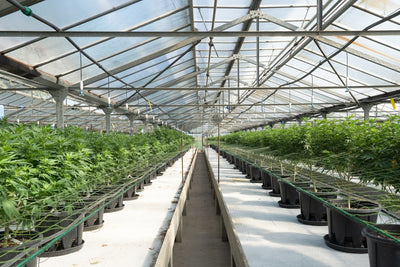
The domestic argument layered on top of the global numbers is about capacity rather than ambition. Nigeria isn't starting from zero agronomically. Southern states have long-standing informal cannabis cultivation -- exactly the activity the NDLEA's enforcement teams spend their time suppressing -- which means the raw growing knowledge, climate suitability, and labor already exist on the ground. Reformers frame this as latent capacity waiting to be formalized: farmers who already know how to grow the plant, land already suited to it, and a supply chain that currently operates entirely underground. Whether that informal capacity would actually convert into licensed, export-grade production -- with the quality control, testing infrastructure, and compliance systems international buyers expect -- is a separate and much harder question that the market projections don't answer.
The Bill Nobody's Seen Pass
Legislative momentum on this issue in Nigeria has a familiar rhythm: announcement, media coverage, and then quiet stalling before anything reaches a floor vote. Former Senator Athan Nneji Achonu, who has since become a Labour Party chieftain, said in September 2025 -- and repeated the claim again in May 2026 -- that the National Assembly was actively working on a bill to legalize cannabis for medicinal and economic purposes. It would not be his first attempt. Achonu previously sponsored a comparable bill while still a sitting senator, and it failed to advance. His own explanation for that failure was blunt: Nigerians chose to demonise its usage, he said, describing a public and legislative culture unwilling to separate cannabis from its association with addiction and criminality.
That earlier failure isn't an isolated data point. Separate reporting has referenced the House of Representatives stepping down a related bill concerning cannabis cultivation licensing -- pulling it from consideration rather than advancing it toward a vote. Stepping down a bill in Nigerian legislative practice typically means it loses its place in the immediate agenda without necessarily being killed outright, but in effect it functions as a stall, and there's no indication that particular bill has since resurfaced with force.
The important fact for anyone actually tracking this space is a simple one: as of publication, no cannabis reform bill has passed into law in Nigeria. Every part of the plant remains fully criminalized under the Indian Hemp Act and the NDLEA Act regardless of how many workshops get held or how many senators go on record supporting reform. The pattern is worth naming plainly because it's easy to miss if you only read headlines generated by individual statements: Nigerian cannabis reform proposals have surfaced periodically for years, generate a news cycle, and then stall before reaching passage. There is no reason yet to assume this round is different from the ones before it.
Enforcement on the Ground Hasn't Slowed Down
While the policy conversation plays out in Abuja conference rooms, NDLEA field operations haven't paused for it. The agency continues aggressive raid campaigns targeting cultivation identified in Lagos, Ogun, Edo, and Ondo States -- the same southern belt repeatedly named as Nigeria's major illicit cannabis production hubs. These raids are ongoing, not historical; they represent the agency's actual operational priority in the same period its chairman has been discussing export licensing frameworks.
The friction here is structural, not just optical. If Nigeria ever does move toward a licensed cultivation and export model, the land best suited for it -- by soil, climate, and existing grower expertise -- is largely the same land currently being raided. That creates an uncomfortable overlap: the geographic areas targeted for enforcement today are the presumptive sites of tomorrow's legal cultivation zones, assuming reform ever passes.
Academic research from Nelson and Klantschnig, published in 2025, gets at exactly this tension with more precision than the political rhetoric usually allows. Their work flags that Nigeria's existing illicit cannabis farmers and traders operate entirely outside any formal legal or regulatory structure -- there's no license they could apply for today, no pathway to compliance even if they wanted one. Formal legalization, when and if it arrives, doesn't automatically fold these existing operators into the new legal economy. More often it sidelines them, handing licenses instead to better-capitalized, better-connected corporate applicants who can meet compliance and export-quality standards that informal growers were never built to meet.
That's not a uniquely Nigerian problem -- it's a pattern that has repeated across legalizing jurisdictions elsewhere, where formal licensing regimes tend to produce new winners rather than simply legitimizing the people already doing the work informally. But it's a pattern worth naming specifically here, because it undercuts the simplest version of the reform argument -- that legalization would just formalize what's already happening in the south. The gap between reform rhetoric coming out of Abuja and raid operations continuing in Ogun and Edo is, at the moment, the clearest evidence that Nigeria's actual policy hasn't shifted at all.
Strip away the workshop panels and the senator quotes, and Nigeria's cannabis position right now is exactly what it was five years ago: rhetorical openness layered on top of completely unchanged law. Nothing about growing, holding, selling, or exporting cannabis is legal in Nigeria today, regardless of how many favorable headlines an NAS workshop generates or how reasonable a controlled export-zone model might sound in the abstract. The Indian Hemp Act and the NDLEA Act are still fully in force, still carrying life imprisonment and multi-decade sentences, still drawing no distinction between hemp and drug-type cannabis.
If reform does eventually clear the National Assembly, the detail that will matter most isn't the market-size projection or even the export-zone mechanism -- it's the question Nelson and Klantschnig's research puts directly on the table: who actually gets licensed. A reform that hands cultivation and export licenses to well-capitalized new entrants while leaving existing southern growers exposed to the same 15-to-25-year cultivation statute they've always faced isn't really legalization in any meaningful sense. It's a new export monopoly bolted onto an unchanged domestic prohibition, with the people who built Nigeria's actual cannabis-growing expertise left outside looking in, still prosecutable under the old law.
For anyone actually tracking this as a market or policy question rather than a news cycle, the advice is straightforward: watch the National Assembly's bill status directly, not the workshop circuit. Nigeria has produced sponsor statements, stepped-down bills, and chairman remarks before without producing a single signed reform. Until a bill actually clears both chambers and gets presidential assent, the only operative fact is the one written into Cap N30 -- and that hasn't moved.
Sources
- Contesting Cannabis Legalization in Nigeria: Hidden Narratives of Illicit Farmers and Traders - Nelson - 2025 - Sociological Inquiry - Wiley Online Library
- Nigeria eyes $40 billion global cannabis oil market, as NDLEA okays regulated exports - Businessday NG
- Nigeria's National Assembly Is Drafting A Cannabis Reform Bill
- Nigeria moves closer to legalizing medical cannabis - Newsweed
- National Assembly moves to legalise cannabis in Nigeria for medical and economic use | Pulse Nigeria