Thai University Cracks Rooftop Code for Cannabis Yields
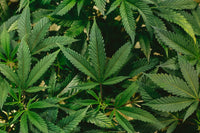
Photo by CRYSTALWEED cannabis via Unsplash.
On the roof of the Faculty of Science and Technology Building at Rajamangala University of Technology Thanyaburi, in Pathum Thani just north of Bangkok, researchers spent a growing season doing something that looks almost modest: raising rows of cannabis in open-air conditions, exposed to the same heat spikes and monsoon humidity that any small Thai farmer would have to contend with. No climate-controlled greenhouse, no indoor grow tent array with dialed-in HVAC -- just a rooftop, some soil trials, and a strain called Foi Thong Phu Pha Yon that the team wanted to understand at a level of detail Thai cannabis science hadn't previously nailed down.
The timing is worth sitting with. The study landed in a peer-reviewed MDPI journal in March 2025, right as Thailand's regulatory window on recreational cannabis access was audibly creaking shut. Bangkok has spent the past two years walking back the loose, headline-grabbing decriminalization of 2022, replacing it with a narrower medical framework. So here's a university publishing rigorous, replicable agronomic numbers -- exact temperatures, exact humidity percentages, exact CO2 concentrations by growth stage -- for an industry the government is simultaneously trying to shrink down to licensed medical channels. This isn't a paper full of hedged generalities about "favorable growing conditions." It's a working recipe, and that combination of precision and inconvenient timing is what makes it worth a closer look.
Inside the Rooftop Trial at Rajamangala's Faculty of Science and Technology
The trial itself was built around a straightforward but labor-intensive question: what combination of cultivation, harvesting, and extraction choices actually maximizes cannabinoid yield and purity when you're not working in a sterile indoor facility? The team germinated 170 seeds and got an 85% success rate -- a respectable number for anyone who's dealt with the germination headaches that come with landrace and hybrid genetics rather than stabilized commercial seed stock. Their focus stayed on Foi Thong Phu Pha Yon, a strain name that translates roughly to something like golden strands from the mountain forest, which gives some sense of its domestic, non-imported pedigree.
From there, the researchers ran parallel variations: different soil compositions, different nutrient regimens, different irrigation schedules, layered against the environmental controls they were simultaneously testing. That's a lot of moving parts to track at once, and it's part of why the rooftop setting matters as much as it does. A climate-controlled indoor operation can isolate one variable at a time under artificial stability. A rooftop in Pathum Thani cannot -- it bakes in the afternoon, cools at night, and swings in humidity in ways that mirror exactly what a smallholder grower in rural Thailand is going to experience with no budget for industrial dehumidifiers or precision HVAC.
That's the point. The study was explicitly framed as support for Thailand's medicinal cannabis industry and its standing in the global market, and a lab result that only works inside a sealed, air-conditioned facility isn't much use to the vast majority of Thai cultivators who don't have access to that kind of infrastructure. By testing under rooftop conditions -- imperfect, variable, tropical -- the Rajamangala team produced numbers that are far more transferable to real operating conditions than a sterile-lab result would have been, which is exactly why growers elsewhere in similar climates should be paying attention to what came out of it.
The Numbers: Temperature, Humidity and CO2 by Growth Stage

During the vegetative stage of hemp growth, optimal conditions identified in the Rajamangala study were around 27°C temperature, 70% humidity, and roughly 1,200 ppm CO2, highlighting warm, humid, CO2-enriched settings as ideal for growth in tropical climates.
The headline numbers from the study break cleanly into two growth stages, and the shift between them is the real finding. During vegetative growth, the optimal conditions the researchers identified were 27°C, 70% relative humidity, and 1200 ppm CO2 -- warm, humid, and carbon-rich, which tracks with what you'd expect for a plant building out leaf and stem mass. Nothing shocking there for anyone who's grown in the tropics before.
Flowering is where it gets more interesting. The optimal profile drops to 22°C, pulls humidity down hard to 50%, and pushes CO2 up to 1900 ppm. That's a five-degree temperature drop, a twenty-point humidity cut, and a substantial CO2 increase, all happening at the same transition point in the plant's life cycle. The researchers tied the cooler, drier flowering environment to two separate benefits: higher cannabinoid production and meaningfully better disease prevention, since Thailand's ambient humidity is exactly the kind of environment that lets bud rot and powdery mildew take hold once flowers start packing in density.
For growers working in genuinely tropical conditions, that's the practically useful part of this paper. Thailand's climate doesn't naturally hand you 50% humidity during flowering -- ambient humidity through much of the country sits well above that most of the year, so hitting that number requires active dehumidification, timed ventilation, or covered structures designed specifically to pull moisture out of the air during the back half of the grow. Vegetative-stage conditions are comparatively easy to achieve outdoors in Thailand; flowering-stage conditions are not, and that gap is precisely where the disease pressure and cannabinoid shortfalls tend to show up in uncontrolled grows.
Light exposure was tracked as a third variable alongside temperature and humidity, though the two-stage climate shift is the piece of this research most directly actionable for anyone trying to replicate strong yields without a fully sealed facility.
One University, Many Campuses: Thailand's Scattered Cannabis Science Push

Photo by Ludovic Delot via Pexels.
It's easy to read Rajamangala as a single institution, but it's actually a system of separate technical university campuses spread across different regions, and cannabis research is happening at more than one of them independently. RMUTT in Thanyaburi -- the campus behind the rooftop yield study -- is only one node in a broader, decentralized push.
Out in the northeast, RMUTI, the Isan campus cluster spanning Khon Kaen and Sakon Nakhon, has partnered with a private research firm called GreenWorks Asia on cannabis, hemp, and medicinal herb R&D aimed squarely at medical applications rather than recreational cultivation. That's a different institutional relationship than the Thanyaburi rooftop work -- private-sector partnership rather than a standalone university trial -- but it's aimed at the same broad goal of building out Thailand's medical cannabis science base.
Further north, RMUTL -- the Lanna campus in Nan province -- took a more regulatory-heavy path. In June 2021, it received Thai FDA approval to import 41 distinct cannabis seed strains specifically for cultivation research, giving that campus access to a genetic library well beyond what's available from domestic landrace strains alone. That kind of import approval is not trivial to secure in Thailand, and it signals a longer-term institutional bet on comparative strain research.
RMUTI's Isan campuses have also ventured into consumer-facing research, publishing a July 2026 study on cannabis-infused tea formulated at 3%, 5%, and 7% concentrations, tested on 30 volunteers to measure effects on sleep quality and self-reported happiness. It's a smaller, more consumer-oriented study than the agronomic work happening elsewhere in the system, but it rounds out the picture of a Rajamangala network working cannabis science from multiple angles at once -- cultivation, genetics, and applied product formulation -- rather than one coordinated national program. Taken together, these campuses form a research effort that's genuinely active and reasonably well-funded, but structurally scattered rather than centrally directed, which is worth understanding before assuming any single study speaks for a unified national strategy.
Research Against a Tightening Legal Backdrop

Photo by Maksim Romashkin via Pexels.
All of this research is happening against a legal backdrop that's tightened considerably and continues to move. Since June 25, 2025, cannabis flower in Thailand has been classified as a controlled herb under the Protection and Promotion of Thai Traditional Medicine Knowledge Act rather than treated as a narcotic. That reclassification carries a lighter penalty framework than a narcotics designation would, but it still functionally ends the casual, walk-in recreational access that defined the 2022-2024 period, when Thailand briefly became something of a regional novelty for loosely regulated cannabis retail.
The tightening kept going from there. A Ministerial Regulation published April 30, 2026 laid out operational requirements that go well beyond simple licensing: dispensaries now have to be formally linked to a licensed medical or healthcare business, maintain dedicated and secure storage for cannabis products, staff their operations with government-trained personnel, and install odor and smoke elimination systems on the premises. Those are meaningful capital and compliance costs for what had often been small, independently run shops.
The market impact has been direct and measurable. Of 18,433 cannabis shops registered nationwide, 7,297 had closed by February 2026 after failing to renew their licenses under the new requirements, leaving 11,136 still operating. That's roughly a 40% contraction in registered retail points in a fairly short window -- a clear signal of how much the compliance bar rose.
Meanwhile, the bigger regulatory question -- a comprehensive Cannabis and Hemp Act meant to replace the current patchwork of ministerial regulations and traditional medicine classifications with a single coherent law -- still hasn't passed. Public consultation on the draft closed May 21, 2026, but there's no confirmed timeline for when, or in what form, it might actually become law. That leaves university labs generating precise, publishable cultivation science for an industry whose long-term legal shape Bangkok itself hasn't finalized.
What Comes Next for the Science

Photo by Mikhail Nilov via Pexels.
The Rajamangala researchers were candid about where their own work leaves gaps, and their stated priorities for follow-up research map out a fairly clear roadmap. Genetic stability of Thai landrace and hybrid strains -- Foi Thong Phu Pha Yon chief among them -- was flagged as a priority, since consistent, predictable genetics are what separate a promising one-off harvest from a strain reliable enough to build a commercial or medical supply chain around.
Alternative extraction methods were named as a second area worth pursuing, aimed at squeezing further gains in both purity and yield beyond what current techniques deliver. Extraction is often where a lot of a harvest's theoretical cannabinoid value gets lost in practice, so improvements there can matter as much as anything happening in the field.
The team also called for deeper study of environmental influences on cannabinoid biosynthesis that go beyond the temperature-and-humidity variables this study already nailed down -- factors like light spectrum, soil microbiology, or stress-response triggers that could push cannabinoid production further without adding cultivation cost.
Underlying all of it is the same stated goal that framed the original study: strengthening Thailand's position in the global medicinal cannabis market, even as the domestic recreational side of that market keeps contracting under new regulation. That's the throughline connecting a rooftop trial in Pathum Thani, a seed-import program in Nan, and a private-partnership research cluster in Isan -- distinct efforts, same underlying bet on where the country's cannabis future actually lies.
What's emerging in Thailand right now is really two separate cannabis stories running on parallel tracks. One is scientific: rigorous, publishable, exportable agronomic work happening across a scattered network of university campuses, producing numbers precise enough that a grower in Vietnam, southern India, or the Philippines could plausibly apply them without modification. The other is regulatory: a domestic retail market that's contracted by roughly 40% in registered shops in under a year, with a comprehensive Cannabis and Hemp Act still stuck in consultation with no passage date in sight.
The rooftop data out of Rajamangala doesn't need Thailand's domestic policy to resolve in any particular direction to remain useful. A 22°C, 50% humidity, 1900 ppm CO2 flowering environment either produces better cannabinoid yields and fewer disease losses in a tropical climate, or it doesn't -- and this study says it does, with numbers a grower anywhere in a similar climate band can test for themselves. That's a genuine technical contribution regardless of what happens next in Bangkok.
What's still unsettled is which industry that science ends up serving. If the Cannabis and Hemp Act eventually passes in a form that supports licensed medical cultivation and export, this kind of agronomic groundwork becomes foundational infrastructure for a legitimate international supply chain. If the law stalls indefinitely or narrows further, this research risks becoming a well-documented but commercially orphaned body of knowledge -- excellent science with a shrinking domestic industry left to apply it. Either way, the Act's outcome, not the next planting season, is the thing actually worth watching.
Sources
- Datasets for the development of hemp (Cannabis sativa L.) as a crop for the future in tropical environments (Malaysia) - PubMed
- Cannabis – Rajamangala University of Technology Thanyaburi
- Integrating Sustainable Cultivation Practices and Advanced Extraction Methods for Improved Cannabis Yield and Cannabinoid Production
- A framework for the development of hemp (Cannabis sativa L.) as a crop for the future in tropical environments - ScienceDirect
- A framework for the development of hemp (Cannabis sativa L.) as a crop for the future in tropical environments | Request PDF