Is Cannabis Legal in Oregon? Sales, Decriminalization and Psilocybin in 2026
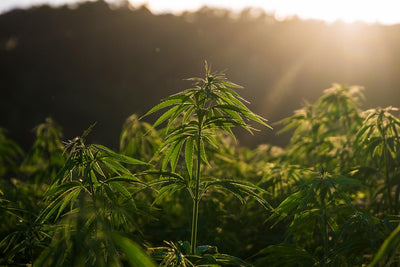
Photo by Janne Simoes via Unsplash.
Ask three different questions about Oregon and you'll get three different answers, and that's exactly where most confusion starts. Is weed legal there? Yes, and has been for over a decade. Is Oregon still the state that decriminalized hard drugs? No, not anymore, though the story is more layered than a simple repeal. And what's this psilocybin program people keep mentioning? That's a completely separate system with its own licensing, its own clinics, and nothing to do with a dispensary counter.
These three programs get flattened together in casual conversation, especially by people outside the state who lump "Oregon drug policy" into one loose category. They shouldn't be. Cannabis operates under one regulatory structure, the state's brief experiment with decriminalizing personal drug possession under Measure 110 has been rolled back, and psilocybin therapy runs through an entirely different licensing body with rules that look nothing like a cannabis retail shop. Untangling them matters if you're planning a trip, considering a move, or just trying to figure out what changed and what didn't heading into 2026.
Recreational and Medical Cannabis: Still Fully Legal

Photo by Elsa Olofsson via Unsplash.
The short answer is yes, and it has been since Oregon voters passed Measure 91 in November 2014. That initiative legalized possession and home cultivation of cannabis for adults 21 and older and put the Oregon Liquor and Cannabis Commission (OLCC) in charge of licensing the commercial side -- cultivation, processing, wholesale distribution, and retail. The rollout happened in stages: medical dispensaries began selling to recreational customers in a limited early-access window starting October 2015, and the full adult-use retail system OLCC now oversees came online in 2016. Over ten years later, that basic framework hasn't budged.
OLCC is still the agency you'd deal with if you wanted to open a grow operation or a retail storefront, and it still tracks every plant and product through the state's seed-to-sale system. Alongside the commercial market, Oregon also runs a separate medical program -- the Oregon Medical Marijuana Program (OMMP) -- administered by the Oregon Health Authority rather than OLCC. Registered patients under OMMP get benefits the recreational system doesn't offer, like higher possession limits and larger home grows, and the two programs run in parallel rather than one replacing the other.
For an adult visiting or living in Oregon, the practical reality is straightforward: you can walk into any OLCC-licensed retailer, show ID, and buy cannabis products just like you would at a liquor store, subject to per-transaction purchase limits. You can also grow at home, though household cultivation limits still apply and vary depending on whether you're growing under the recreational allowance or as a registered OMMP patient. What's notable isn't any recent change here -- it's the stability. While Oregon's drug policy landscape around cannabis has shifted substantially on decriminalization and psilocybin, the core legality of cannabis itself has been a fixed point since the mid-2010s.
What Legal Weed Actually Costs Right Now

Oregon's monthly legal cannabis sales have declined steadily, falling from $81 million in August 2025 to $77.6 million by August 2026, signaling a cooling market.
Legal doesn't mean lucrative, and Oregon's numbers from 2026 tell a story of a market that's leveled off rather than one that's collapsing or booming. August 2026 sales came in at $77.6 million statewide, which pushed the year-to-date total through the first eight months of the year to roughly $607.5 million. That's a meaningful pile of tax-generating commerce, but the trend lines are pointing gently downward rather than up.
Compare August to the months around it and the softness shows up clearly. Sales dropped 2.6% from July's approximately $79.7 million, and were down about 4.1% from the same month a year earlier, when August 2025 brought in roughly $81 million. Zoom out to the full January-through-August comparison and the pattern holds: 2026's $607.5 million trails the equivalent stretch of 2025, which totaled about $621.6 million, by roughly $14.1 million, or 2.3%. Nothing dramatic, but a consistent, low-single-digit contraction rather than growth.
Prices explain a lot of this. Usable marijuana flower averaged around $3.25 per gram in July 2026, and concentrates averaged about $14.81 per gram -- both numbers that would have seemed impossibly low to anyone shopping Oregon's dispensaries in 2016 or 2017. When you combine essentially flat unit demand with prices sitting near historic floors, the revenue math almost has to trend downward even if Oregonians are buying roughly the same amount of product they always have. This looks less like a market losing customers and more like a mature, oversupplied market where years of aggressive cultivation licensing outpaced demand, pushing wholesale and retail prices down to levels that squeeze margins for growers and processors even as consumers benefit.
New Rules in 2026: Hemp Registry and Trade Events

Photo by Nora Topicals via Pexels.
Two pieces of 2026 legislation reshape how cannabis and hemp businesses operate in Oregon, and they pull in opposite directions -- one tightens oversight, the other loosens it.
House Bill 4121, effective January 1, 2026, directs OLCC to build a registry for hemp products sold to Oregon consumers. This targets a category that's operated with far less scrutiny than licensed marijuana: hemp-derived intoxicating beverages, edibles, and similar products sold at gas stations, smoke shops, and grocery stores under the federal hemp definition rather than through OLCC's marijuana licensing track. For years, that gap let a parallel, lightly regulated intoxicating-hemp market grow alongside the tightly tracked cannabis system, and HB 4121 is Oregon's attempt to bring some of that under state visibility. Notably, OLCC generally isn't taking compliance enforcement actions tied to the registry until June 1, 2026, giving hemp businesses a five-month runway to get their products registered before the state starts treating non-compliance as a violation.
On the marijuana side, Senate Bill 558, signed into law May 29, 2025, loosens a longstanding restriction. Starting in January 2026, licensed marijuana businesses can distribute product samples and conduct wholesale deal-making at trade events that are themselves registered with OLCC. Previously, Oregon's rules around sampling and wholesale networking at industry events were tight enough to limit the kind of business-to-business relationship-building that's routine in other consumer goods industries -- think of a beverage distributor sampling a new product line to retail buyers. SB 558 brings cannabis a step closer to that norm, at least for licensed operators dealing with each other rather than consumers.
Read together, these two laws capture where Oregon's cannabis and hemp policy is heading: closing gaps in the loosely regulated hemp space that had been operating outside the marijuana system's controls, while giving the already-licensed marijuana industry a bit more room to conduct business the way other regulated industries do.
Measure 110 Is Dead, But Not All of It

Photo by DΛVΞ GΛRCIΛ via Pexels.
Oregon made national headlines in November 2020 when voters approved Measure 110, becoming the first state to decriminalize personal possession of small amounts of hard drugs -- including substances like heroin, methamphetamine, and cocaine -- reclassifying possession from a criminal charge to a civil violation more like a traffic ticket. The measure was funded in large part by cannabis tax revenue, an intentional design choice that tied the state's legal marijuana proceeds directly to drug treatment and harm reduction infrastructure.
That experiment didn't last four years. HB 4002 ended the decriminalization piece effective September 1, 2024, restoring small-amount drug possession to a misdemeanor after Oregon watched public frustration build over visible drug use and stalled treatment access during the pandemic-strained rollout years. It's worth being precise about what that bill did and didn't do, though, because the popular narrative -- Measure 110 got repealed -- isn't quite right. HB 4002 killed the decriminalization mechanism specifically. It did not tear out the funding structure that channels cannabis tax revenue into treatment and outreach services through the state's Behavioral Health Resource Network, or BHRN. That network of funded treatment and recovery programs is still operating today.
The governance of that funding pipeline did change, though, just recently. As of January 1, 2026, the Oversight and Accountability Council -- the body that had decision-making authority over how BHRN dollars got allocated -- shifted into a purely advisory role, with the Oregon Health Authority now holding direct administrative control. That's a meaningful shift in who calls the shots on treatment funding, even if the dollars themselves keep flowing.
The throughline worth remembering: Oregon's headline-grabbing decriminalization of personal drug possession is over, full stop. But the cannabis-tax-funded infrastructure for addiction treatment that Measure 110 built alongside it never went away -- it just changed hands.
Psilocybin Therapy: A Separate, Slower-Growing Program

Photo by Andre via Pexels.
If cannabis and the old Measure 110 program get confused with each other, psilocybin gets confused with both. It shouldn't be, because Oregon's psilocybin services program, created by voters through Measure 109 in 2020, is structurally nothing like a cannabis dispensary. There's no retail sale. There's no take-home product. Every dose of psilocybin consumed under this program happens during a supervised session at a licensed service center, with a licensed facilitator present the entire time. You can't buy mushrooms in Oregon and walk out the door with them the way you can with cannabis flower.
The industry built around that model is still finding its footing. As of early 2026, roughly 22 to 23 licensed service centers are actively operating out of 35 total approved licenses, meaning somewhere between 12 and 13 licensed centers have already closed. That's a real shakeout for a program only a few years into commercial operation, reflecting how expensive and operationally demanding it is to run a facility built around one-on-one or small-group supervised sessions rather than shelf inventory. Facilitator licensing has fared better -- almost 400 facilitators hold active licenses across the state, giving the program a deeper bench of trained providers than its center count might suggest.
Client demand has climbed steadily even as the business side consolidates. The program logged 1,509 clients in the first quarter of 2025 alone, and roughly 4,577 across the first three quarters of that year, with the cumulative total since the program's 2023 launch now estimated somewhere around 15,000 to 16,000 clients. That's meaningful adoption for a therapy model requiring hours-long supervised sessions rather than a quick purchase.
Two developments are worth watching heading further into 2026. HB 2387, effective January 1, 2026, lets licensed healthcare providers who also hold facilitator licenses offer psilocybin services without risking their medical licensure -- previously a genuine deterrent for clinicians considering dual roles. And the Oregon Health Authority has started collecting veteran status on client intake forms, a data point that hints at growing interest in psilocybin's potential for veterans dealing with PTSD. There's also ongoing industry talk of a possible merger between Oregon Psilocybin Services and the state's medical marijuana program infrastructure -- an idea that hasn't been finalized but signals where some in the industry think regulatory efficiency could come from.
Someone planning a visit to Portland or a move to Bend needs to hold three separate mental models, not one blended sense of Oregon's drug laws. Cannabis is a mature, fully commercial, decade-plus-old legal market regulated by OLCC, with medical patients still served through a distinct OHA program. Hard drug possession, decriminalized for not quite four years under Measure 110, is a misdemeanor again, even though the tax-funded treatment network that measure built keeps operating under new management. Psilocybin is neither of those things -- it's a clinical, supervised-session-only therapy program with no retail component whatsoever, still working through growing pains as centers open and close.
The mistake worth avoiding is treating any one of these as a proxy for the others. A tourist who assumes psilocybin works like a cannabis dispensary will be turned away at the door of a licensed service center. Someone who thinks Oregon still tickets people for hard drug possession instead of charging them is operating on outdated information by over a year. And anyone assuming the hemp product on a gas station shelf carries the same oversight as OLCC-tracked cannabis flower hasn't caught up with what HB 4121 is trying to fix. Oregon's reputation as a policy laboratory is earned, but laboratories run several experiments at once, and each one's results stand on their own.
Sources
- Oregon Cannabis 2026: Legislative Forecast and Report - Canna Law Blog™
- Oregon Liquor and Cannabis Commission
- Oregon Marijuana Sales Reach $77.6 Million in August, 2026 Total Tops $607 Million and $103 Million in Taxes
- Oregon Cannabis 2026: Legislative Forecast And Report - Marijuana Retail Report - News and Information for Cannabis Retailers
- Registration With OLLC Required January 1, 2026, to Sell Hemp Products to Consumers - Loney Law Group