Lebanon's Cannabis Law Turns Five, Still Waiting to Take Root
Photo by Fady via Pexels.
Six years ago, Lebanon did something no other Arab country had done: its parliament voted to legalize cannabis cultivation, on paper, for medical and industrial purposes. That was April 2020. Since then, the law has mostly sat on a shelf, a piece of legislation with no functioning agency behind it, while the fields it was supposed to regulate kept doing what they'd always done. In the Bekaa Valley, cannabis has been grown for hashish for generations, often in open defiance of whatever government happened to be nominally in charge, through civil war, occupation, and a decade of near-total state collapse. The farmers there didn't need a law to grow cannabis. They needed the state to stay out of their way, and mostly it did, except when it didn't.
Then in 2025, something shifted. Prime Minister Nawaf Salam's new government made cannabis regulation an early talking point, hosted a formal conference on it at the Grand Serail, and finally named people to the regulatory body the 2020 law had promised but never delivered. Officials started floating numbers that sound almost fantastical for a country still digging out of one of the worst currency collapses in modern history: $1 billion to $3 billion a year in potential state revenue. And yet here we are in 2026, and there is still no legal channel from a Bekaa field to a licensed sale. The gap between the law that exists and the institutions needed to run it is, in many ways, the whole story.
A Valley That Never Needed a Law to Grow Cannabis

Photo by Anna Danielyan via Unsplash.
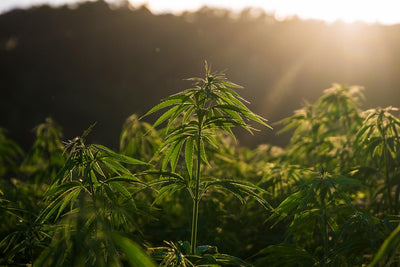
Drive through the Bekaa Valley around Yammoune or the outskirts of Baalbek and you're looking at terrain that has grown cannabis for hashish production for at least three decades, in many families' cases longer than that. This isn't a crop that arrived with any government blessing. It thrived precisely when the state was weakest -- during the civil war years, and again through long stretches when Beirut's writ barely extended past the coastal cities. Lebanese security forces have run periodic eradication campaigns against Bekaa plantations for decades, sending bulldozers and army units into fields ahead of harvest, and the crop has simply come back the following season, season after season.
That pattern may finally be breaking, at least in the short term. Ibrahim Tarshishi, who heads a Bekaa farmers association, told Alhurra in May 2026 that cultivation had virtually vanished from parts of the valley in recent years, a casualty of sustained state-led eradication and crackdowns rather than any voluntary shift toward legal alternatives. For families who depend on it, that's not a minor economic hit. Bekaa irrigation infrastructure is poor, formal agricultural markets are weak and unreliable, and cannabis has historically been one of the only crops that consistently pays. Wheat, potatoes, and other legal staples don't offer anything close to the same margin per hectare in a region where water access can make or break an entire season.
Overlaying all of this is a security dimension that no cannabis policy conversation in Lebanon can avoid. Hezbollah has long been accused by regional and international observers of ties to drug trafficking networks that originate in and around the Bekaa, whether through direct involvement or through tacit tolerance of trafficking figures operating in areas under its influence. That accusation, contested as it is, shapes how cautiously Beirut approaches any formal cannabis framework -- legalizing the crop means deciding who gets licensed, who gets left out, and who loses income streams that have operated in the shadows for a very long time.
Law No. 178: What Lebanon Actually Passed in 2020
Law No. 178 cleared Lebanon's parliament on April 21, 2020, and was published in the Official Gazette on June 4 that year, making Lebanon the first country in the Arab world to legalize cannabis cultivation, strictly for medical and industrial applications rather than recreational use. Recreational sale and consumption remained illegal; what the law authorized was licensed growing for pharmaceutical extracts, industrial hemp products, and export.
The push behind it didn't come from public health advocates or reform campaigners -- it came from a McKinsey & Company report on Lebanon's economic vision, which projected that regulated cannabis cultivation could generate up to $1 billion a year in government revenue. A separate McKinsey estimate from 2018 had gone further, projecting that legal cannabis could help push Lebanon's drug-related exports from roughly $828 million up to $1.79 billion by 2025. Those numbers, produced years before Lebanon's economy actually collapsed, gave lawmakers a rare bipartisan reason to act: a cash-strapped state looking at a legal cash crop it was already, unofficially, one of the world's larger producers of.
On paper, the law built out a governance structure to make this real. It created a seven-member regulatory authority combining representatives from the Ministries of Health, Agriculture, Justice, and Interior alongside two independent experts, tasked with licensing growers, setting standards, and overseeing the whole supply chain from seed to export. That structure looked reasonable on the page. The problem was that the cabinet never actually issued the implementing decrees required to bring that authority into existence -- meaning the law had a governance chart with no one sitting in the chairs, for years.
Five Years of Paperwork: Why Nothing Happened

Photo by Dom J via Pexels.
Between 2020 and early 2025, Law No. 178 existed mostly as a symbol -- something officials could point to and say the country had legalized medical cannabis, even though no regulatory authority had ever actually formed and not a single legal cultivation license had been issued. It's worth remembering what else was happening in Lebanon during that window: the currency lost a huge share of its value, the banking sector effectively froze depositors out of their own savings, the August 2020 Beirut port explosion killed over 200 people and devastated the capital, and a succession of caretaker and paralyzed cabinets struggled to agree on basic governance, let alone stand up a novel drug-licensing bureaucracy.
A CannaReporter report from January 2026 put it plainly: even years after the law technically took effect, Lebanon's main cannabis-producing communities remained in essentially the same legal limbo that had defined the previous three decades. Nothing about their day-to-day reality had changed. They were still growing outside any formal system, still selling into informal markets, still facing the same periodic eradication risk they always had.
That limbo created its own kind of inertia. Farmers had no real incentive to abandon networks and buyers they'd worked with for years in favor of a licensing system that existed only in statute, not in practice. Why apply for a permit that no office was issuing, from an authority that didn't exist, when the informal trade kept functioning exactly as it had before the law passed? The underground hashish economy in the Bekaa didn't shrink to make room for a legal one -- it simply kept running in parallel, waiting to see if the state would ever catch up to its own legislation. That gap, between a law passed in Beirut and a system never built to enforce or enable it, is really the defining feature of this entire episode.
The 2025 Restart Under PM Nawaf Salam
Momentum returned with Nawaf Salam's government, formed on February 8, 2025, which flagged cannabis regulation as an early priority rather than something to revisit once other crises settled. On August 17, 2025, Salam sponsored a conference at the Grand Serail dedicated specifically to legal cannabis cultivation -- a notable signal in itself, since it put the prime minister's office directly behind an issue that previous cabinets had let languish.
Agriculture Minister Nizar Hani used the occasion to call the moment a turning point for Lebanese agriculture and economic development, and repeated the eye-catching revenue projections: between $1 billion and $3 billion a year in potential state income, a figure officials noted could represent something like a quarter to half of Lebanon's entire projected 2024 state revenue. For a government trying to claw its way out of one of the deepest sovereign fiscal crises in the region, numbers like that are politically hard to ignore, even if they remain projections rather than guarantees.
By the time of the conference, two of the seven regulatory authority seats had been filled, with a third candidate expected imminently, and officials said the full slate of candidates had been finalized, with formation of the body expected by the end of July or early August 2025. The body eventually took shape as the Cannabis Regulatory Authority, with Dr. Dany Fadel named as its president following a September 2025 meeting at the agriculture ministry. In the interim, Cabinet Secretary-General Mahmoud Makieh was assigned to oversee the authority's setup, effectively acting as caretaker administrator while the new body organized itself, hired staff, and figured out what its actual mandate would look like in practice.
Where the Law Stands in 2026
The National Authority for the Regulation of Cannabis Cultivation wasn't formally stood up until summer 2025 -- a full five years after Law No. 178 passed. That delay alone tells you most of what you need to know about the distance between Lebanese legislation and Lebanese implementation. As of early 2026, there is still no legal consumer purchase channel operating anywhere in the country under this framework -- no licensed dispensary, no regulated pharmaceutical extract on shelves, nothing a patient or exporter could point to as proof the system works.
The authority itself has been candid about the timeline problem, acknowledging that the schedule is too tight to manage even a first legal harvest in 2026. Licensing procedures, quality and testing standards, export permitting arrangements with foreign buyers, and enforcement mechanisms to distinguish legal from illegal product all still need to be built essentially from scratch. None of that infrastructure existed before 2025, and none of it appears overnight just because a president and two other authority members have been named.
The security question hasn't gone away either. Legalization, to some observers, offers armed groups like Hezbollah a plausible route to convert illicit revenue streams tied to Bekaa trafficking into legitimate, taxable agricultural income -- a politically loaded possibility that makes regulators understandably cautious about how licenses get distributed and to whom. Meanwhile, conventional drug enforcement has continued on its own track, separate from the legalization push entirely. In 2025, Lebanese security forces killed a major Bekaa drug lord in an operation and arrested Nouh Zaiter, long described as the country's most-wanted trafficker. Legal reform and armed crackdown are running side by side, not in sequence, which underscores just how far Lebanon still is from having one coherent cannabis policy rather than two contradictory ones operating at once.
What Lebanon's experience with Law No. 178 really demonstrates is that passing a bill and building an institution are entirely different undertakings, and the gap between them widens fast in a state with as fragile a bureaucracy as Lebanon's. Six years passed between a parliamentary vote and the actual naming of a regulatory authority president. Even now, with that authority technically in place, licensing systems, testing standards, and export channels remain largely theoretical. A law can exist in the Official Gazette for half a decade and change almost nothing about how a crop actually moves from field to market.
The Bekaa Valley's growers didn't wait around for permission in the past, and there's no strong reason to think they'll wait now. Generations of cultivation survived civil war, army eradication campaigns, and total state absence -- a slow-moving regulatory authority in Beirut is unlikely to be the thing that finally reshapes how hashish moves through that region, at least not on its own. Whatever legal cultivation eventually looks like will have to compete with, rather than simply replace, networks that have been operating profitably for decades.
Whether those $1 billion to $3 billion annual revenue projections ever show up in a real budget line has less to do with the text of Law No. 178 than with something much harder to predict: whether Lebanon can build functioning licensing, enforcement, and export institutions faster than its ongoing economic crisis erodes the political will to keep trying. That's the actual race underway here, and as of 2026, it's not obvious which side is winning.
Sources
- Green Gold or Green Gamble? Lebanon’s High-Stakes Marijuana Debate
- Legalization of medicinal cannabis in Lebanon: between politics and reality – CannaReporter
- Lebanon's Cannabis Heartland, Bekaa, Hopes for Legalization — Naharnet
- Cannabis in Lebanon – Laws, Use, History and More Info - Sensi Seeds
- Cannabis in Lebanon