Lesotho's New Cannabis Rules Expose a GACP Compliance Gap
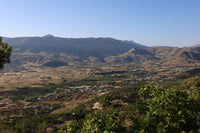
Photo by Tobias Doering via Unsplash.
Lesotho likes to remind people that it got there first. Back in a year often cited as its regulatory starting point, this small mountain kingdom landlocked inside South Africa became the first African nation to issue licenses for medical cannabis cultivation, years before Zimbabwe, Malawi, or South Africa itself got their own frameworks moving. The government has leaned into that origin story hard, branding Lesotho as the continent's cannabis leader and pointing to its roughly 140 issued licenses as proof of a thriving sector.
On 7 November 2025, Lesotho's government published Legal Notice No. 155, a sweeping amendment to its cannabis regulations that touches import-export permits, laboratory testing obligations, and license fee structures. It's the kind of regulatory housekeeping that signals a government trying to tighten up a program that's grown faster on paper than in practice.
And that's really the catch. Of those 140-odd licenses, only a small handful are doing anything at all, and as of the most recent peer-reviewed accounting, exactly one Lesotho company has actually cleared the technical bar required to export cannabis flower into the European Union as a pharmaceutical ingredient. Legal Notice No. 155 reforms permits and fees, but it doesn't touch the actual bottleneck: the gap between holding a license and meeting the EU's agricultural and collection practices standard that any exporter has to satisfy before a single gram leaves the country.
What Legal Notice No. 155 Actually Changes

Photo via Pexels.
The full name of the new rules is the Drugs of Abuse (Cannabis) (Amendment) Regulations, 2025, gazetted on 7 November 2025, and it's worth being precise about what it does and doesn't do. This is a licensing and administrative overhaul, not a reform that hands anyone new cultivation rights or export capacity they didn't already have. Regulation 25 is the centerpiece: it requires any operator conducting commercial import or export of cannabis to apply under sections 14 and 15 of the parent Act using a standardized Form B, closing off the informal workarounds that had crept into the system.
The fee schedule got a rewrite too. Under the updated Schedule II, an Annual Inspection now costs M25,000, a Change of Location runs M35,000, and Import/Export Permits are split by purpose -- M1,000 for commercial operators versus M5,000 for medical or scientific use. These aren't trivial sums for smaller growers, and they signal the government wants its licensing regime to actually fund enforcement rather than just exist as a formality.
A new Regulation 33 adds a compliance layer that didn't exist before: the Narcotics Bureau must now formally endorse destruction certificates and export permits as proof that an operator is meeting its statutory obligations. That endorsement requirement creates a paper trail that regulators can audit later, rather than relying on an operator's own say-so. Alongside the fee and permit changes, the amendment introduces stricter laboratory testing obligations, tightening what operators have to verify before product moves anywhere.
None of this, on its own, makes a Lesotho grower's flower exportable to Frankfurt or Munich. It makes the domestic paperwork trail tighter and the fee base more realistic. Whether operators can actually clear the much higher bar of European pharmaceutical import standards is an entirely separate question, and it's one Legal Notice No. 155 doesn't attempt to answer.
LeMeRA Takes Over Regulatory Oversight

Photo via Pexels.
The regulatory housekeeping didn't stop with the November notice. Lesotho's cannabis and pharmaceutical sector now answers to a new regulator called LeMeRA, modeled explicitly on South Africa's SAHPRA, the agency that oversees medicines and health products across the border. LeMeRA's new licensing regulations were gazetted in December 2025, with further operational rules -- the detailed procedures that actually tell applicants how to navigate the system -- expected by the second quarter of the 2026/7 fiscal year.
What changes in practice is the sequencing. Applications used to flow through a single agency. Now they go to LeMeRA first for technical and scientific review, then pass to the Lesotho Narcotics Bureau (LNB) for vetting on the narcotics-control side. It's a two-step system deliberately built to separate technical competence from law enforcement, the same division of labor that underpins more mature regulatory regimes elsewhere.
That split matters because the two functions require genuinely different expertise. LeMeRA is meant to judge whether a cultivation or processing operation actually meets pharmaceutical-grade standards -- water testing, batch records, staff training -- while the LNB handles the narcotics-control side: tracking product movement, verifying destruction of waste material, and making sure nothing diverts into illicit channels. Trying to run both functions out of one office had been part of the problem.
The gap in capacity became obvious at an INCB-organized conference held to train up LeMeRA officers on international standards. Officials at that session raised a pointed question: why does Africa's supposed cannabis leader still have no formal protocols governing how cannabis products are utilized and consumed domestically? It's a fair question for a country that's spent years marketing itself on a first-mover claim without finishing the basic regulatory architecture underneath it. LeMeRA now carries the job of closing that gap, and its December 2025 rules are only the opening move.
The Numbers Behind the Compliance Gap

Of the 140 cannabis licenses issued in Lesotho, only 17 are actually in use, highlighting a large gap between licensing and operational activity in the sector.
The numbers tell the story better than any press release. A 2023 licensing guide found that of roughly 140 cannabis licenses issued by Lesotho's government, only 17 were actually in active use -- an estimated 97% sitting dormant. The government itself, according to that same review, wasn't entirely sure of the precise total it had issued, which says something about how loosely the early licensing push was tracked.
A 2024 peer-reviewed study went further and looked specifically at who was actually getting product out the door to the EU. The answer: one company. MG Health was identified as the only Lesotho operator producing and exporting medicinal cannabis flower as an active pharmaceutical ingredient to the European market, having become the first Lesotho company approved to ship cannabis flower as a pharmaceutical starting material into the EU. Its buyer is Munich-based Drapalin Pharmaceuticals, a relationship that's effectively carried Lesotho's entire EU export story on its own for several years.
The same study flagged a separate risk that gets less attention than the export numbers: Ministry of Health non-compliance with its own reporting obligations, including failure to submit annual reports required under international drug control conventions. That's not a cosmetic paperwork lapse. The International Narcotics Control Board tracks exactly this kind of reporting failure, and sustained non-compliance is the sort of thing that can put a country at risk of INCB blacklisting -- a consequence that would ripple well beyond the cannabis sector.
Put the two findings together and you get the real picture of Lesotho's cannabis program: a licensing regime generous enough to have issued well over a hundred permits, and an operational sector narrow enough that a single company is doing essentially all of the EU-facing pharmaceutical export business. Abundant paper, scarce product.
Why GACP Is the Real Barrier to the EU Market
The reason so few licensees ever reach the EU market isn't mysterious -- it's GACP. Under EU GMP Annex 7, any cannabis material used as a starting ingredient in a pharmaceutical product has to originate from a cultivation operation compliant with recognized good agricultural and collection practices. This isn't a recommendation or a best-practice suggestion; it's a hard requirement enforced by the EU's pharmaceutical regulatory apparatus, and there's no path around it for any company that wants to sell flower or extract into that market as a pharma ingredient.
Getting certified is neither cheap nor fast. Industry estimates put GACP certification costs somewhere between $50,000 and $200,000, with the process typically taking three to nine months from initial audit to final sign-off. For a licensee in Lesotho running a modest operation on leased land, that range can represent more capital than the entire cultivation setup cost in the first place.
Bophelo Bioscience, operating under the Halo Collective umbrella, is one of the companies that made the investment work. It secured EU GACP certification through Pharmaconsulta, a Malta-based auditing firm, for its 14-hectare T'sakholo facility in Mafeteng district -- one of the larger cultivation footprints in the country. That certification puts Bophelo in rare company alongside MG Health as an operator with an actual documented pathway into EU pharmaceutical supply chains.
Most of Lesotho's roughly 140 licensees never attempt it. The cost alone rules out smaller growers, but GACP also demands a level of operational discipline that's hard to bolt onto an existing informal farm: verified seed sourcing, irrigation water testing on a regular schedule, documented staff hygiene training, and batch-by-batch recordkeeping that has to hold up to an external auditor's scrutiny. That's the actual filter separating license holders from exporters, and it has nothing to do with how many permits the government issues or how much it charges for them.
What's at Stake for Lesotho's Cannabis Ambitions
Lesotho's pitch to the world hasn't changed much over the years: first mover, most mature licensing regime on the continent, a government that understood cannabis's export potential before its neighbors did. Reporting from around May 2026 suggests the government's stated focus is now shifting toward producing high-quality medical cannabis specifically aimed at export markets rather than simply issuing more domestic licenses -- a tacit acknowledgment that the volume-of-licenses approach hasn't translated into volume of trade.
The cost of all those dormant licenses is concrete, not abstract. Unused permits mean unused land-lease arrangements that never generate revenue for the government or local landholders. They mean jobs that never materialize in a country where unemployment runs persistently high. They mean tax income the treasury had reason to expect when it issued 140 licenses and is still waiting on, since a license fee collected once doesn't substitute for ongoing economic activity.
The INCB blacklist risk raised in the 2024 study deserves to be taken seriously rather than filed away as a technicality. If Lesotho's Ministry of Health continues failing to meet its annual reporting obligations under international drug control treaties, the consequences wouldn't be confined to cannabis. Blacklisting affects a country's standing to participate in the legal international narcotics trade broadly -- including pharmaceutical precursors and controlled medicines that have nothing to do with cannabis at all. That's a much bigger stake than a few dormant cannabis farms.
Everything now rides on whether LeMeRA can actually do the job it was created for. Writing tougher fee schedules and permit rules, as Legal Notice No. 155 did, is the easy part. Building the technical capacity to vet GACP-track applicants, and ideally to help more of them get there, is the harder part that will determine whether Bophelo Bioscience and MG Health get company in the next few years or remain the exception that proves how narrow the path to EU export really is.
Lesotho has, on paper, built one of the more sophisticated cannabis regulatory frameworks anywhere on the continent -- a dedicated regulator in LeMeRA, a two-agency vetting structure, updated fee schedules, and now formal endorsement requirements for export documentation. None of that is nothing. But regulation alone doesn't manufacture export-ready product, and the last two years of data make that painfully clear: 140 licenses, 17 active, one company actually shipping pharmaceutical-grade flower to the EU.
The real bottleneck was never the permitting process -- it's GACP and GMP compliance, which demands capital and technical sophistication that most of Lesotho's licensees simply don't have and can't easily acquire. Expect that gap between licenses issued and exporters operating to persist until LeMeRA moves beyond collecting higher fees and vetting applications, and starts actively building the in-country capacity -- training, technical assistance, maybe subsidized audit pathways -- that gets more operators through GACP certification rather than just screening them out.
The number worth watching over the next year isn't how many licenses Lesotho issues or how high its inspection fees climb. It's whether a third, fourth, or fifth company follows MG Health and Bophelo Bioscience across that certification line into actual EU shipments. That's the only number that tells you whether Lesotho's cannabis sector is working, or whether it's still mostly a very well-organized filing cabinet.
Sources
- Bophelo secures EU GACP compliance for cannabis exports
- Envisaging challenges for the emerging medicinal Cannabis sector in Lesotho - PMC
- Lesotho Africa Cannabis Licences & Medicinal Cannabis News
- Lesotho Becomes the First African Country to Export Cannabis to the European Union
- Medicinal Cannabis - Lesotho National Development Corporation