Rongony and the Highland Taboo: Madagascar's Cannabis Divide
Photo by Tsiandy Ramanitriniony via Pexels.
Madagascar has had a military-led transitional government since October 2025, when Colonel Michael Randrianirina took the reins after former president Andry Rajoelina was forced from office. In the months since, the new administration has moved to consolidate control over the usual levers of state authority -- security forces, customs, provincial administration -- without touching the drug laws it inherited. That continuity matters for a plant that occupies a strange double life on the island. Rongony, as cannabis is known in Malagasy, is simultaneously a capital-grade taboo in the central highlands and a working cash crop in the country's northern mountains, and the gendarmerie's ongoing seizure campaigns show no sign that either status is about to change under a government with far bigger problems on its desk.
What makes Madagascar's cannabis story worth untangling isn't just the law itself -- it's how the law got there. The current prohibition didn't arrive as an import. It sits on top of a nearly two-century-old homegrown taboo, one that was later reinforced, not invented, by French colonial administrators. Understanding why rongony is fady in one part of the island and a livelihood in another means going back to a 19th-century royal court, long before any gendarme ever burned a sack of it in a field.
From Royal Court to Capital Crime: How Rongony Became Fady

Photo by Sandy Ravaloniaina via Unsplash.
Cannabis has a documented presence in Madagascar going back at least to 1661, referenced in some of the earliest written accounts of life on the island, well before European colonization took hold. Foreign visitors writing through the 1700s and into the 1800s described rongony -- also called zamal or rangani in different regions -- being smoked, brewed, and used socially across Malagasy communities, with observers noting both medicinal applications and a role in spiritual or ceremonial life. For a long stretch, there was nothing unusual about the plant's presence; it was simply part of the material culture of the island, much as it was across much of the African continent and the Indian Ocean trade routes that touched Madagascar's coasts.
The turn came from the top down, specifically from Andrianampoinimerina, the Merina king who unified the highland kingdom in the late 18th and early 19th centuries. Court accounts and oral tradition record him declaring that smoking the plant made people half-witted, unfit for the discipline and clear-headedness he expected of his subjects, and he made consumption a capital offense within his domain. This wasn't a vague cultural discouragement -- it was a formal royal edict carrying the harshest possible penalty, and it fell specifically on the Merina highland core, the political and symbolic heart of the island's most powerful pre-colonial kingdom.
That edict is why rongony became fady -- genuinely taboo, not merely illegal -- in a way that was geographically specific rather than island-wide. Coastal and peripheral communities outside Merina authority didn't carry the same prohibition, and the plant's status elsewhere remained comparatively unremarkable. When French colonial administrators arrived later in the 19th century and layered their own narcotics prohibition on top of existing law, they weren't introducing a foreign concept to the highlands so much as reinforcing a taboo that was already generations deep. The practical result of both bans stacked together wasn't eradication -- it was displacement, pushing cultivation away from the highland core and toward the margins of the island, where it persists today.
Where Rongony Grows Now: Antsahabe and the Analabe Highlands

Photo by Franck Andriantsalama via Pexels.
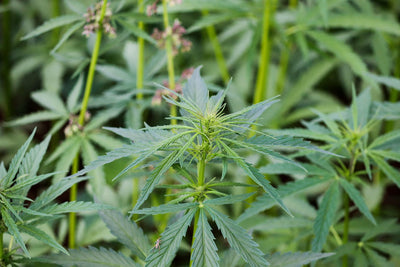
Drive away from Antananarivo and the old royal taboo loses its grip fast. The commune of Antsahabe, in Madagascar's rural north, has become one of the country's recognized production centers for rongony, far removed from the Merina highland heartland where the plant was once punishable by death. Further northwest, the mountainous Analabe area within the Ambanja district functions as another major growing zone, with output estimated in the tonnes annually -- a volume that reflects organized, sustained cultivation rather than scattered subsistence plots.
There's a geographic logic connecting these zones to the very highlands that rejected the plant centuries ago. Cannabis grown at altitude, in cooler, mist-fed mountain terrain, has long been prized across comparable growing regions worldwide -- Lesotho's highlands and parts of the Rif in Morocco follow the same pattern. Madagascar's own highland plateau would have offered exactly those conditions before Andrianampoinimerina's ban made cultivation there a legal and cultural impossibility. Growers didn't abandon the terrain that suits the plant; they just moved it to mountainous country that sat outside the reach of Merina royal authority, and later, outside the tightest reach of colonial and post-colonial state enforcement.
In places like Antsahabe and Analabe, rongony isn't a cultural relic -- it's income. For growers and the transporters who move the crop toward buyers, cultivation fills a gap left by thin formal economic infrastructure and limited state services in these remote northern districts. That economic reality sits uneasily alongside national law, which treats the same crop as contraband regardless of how central it has become to local livelihoods. The result is a kind of standing irony: the plant that was cast out of the symbolic center of Malagasy political power now thrives in physically similar terrain, just terrain that was never part of that center to begin with.
The Law on the Books: Possession, Trafficking, and OFNALAT

Photo by Brenton Pearce via Unsplash.
Madagascar's current legal framework for cannabis runs through Law No. 97-039 of 4 November 1997, which governs the control of narcotic drugs, psychotropic substances, and precursor chemicals nationwide. Under that statute, simple possession can draw a prison sentence of two to ten years, while trafficking convictions carry penalties of up to twenty years -- a sentencing range that puts Madagascar's cannabis law firmly in the punitive camp relative to many of its regional neighbors, with no distinction made for the kind of small-scale, subsistence-level cultivation common in places like Antsahabe.
Enforcement runs through a defined institutional chain. The Office National de Lutte Contre les Drogues, or OFNALAT, sits at the center of national drug strategy, coordinating policy and operational priorities. On the ground, that strategy gets executed by the Gendarmerie Nationale, which handles the bulk of rural seizures and arrests, working alongside the Direction des Douanes -- the customs directorate -- on interdiction at ports, border crossings, and transport routes where processed cannabis moves toward buyers. It's a structure built for suppression and seizure, not regulation or licensing.
That puts Madagascar on a notably different path than Lesotho, a country with a strikingly similar backstory: a highland growing tradition, a colonial-era criminalization layered onto existing cultivation, and communities economically dependent on the crop. Lesotho moved to legalize cannabis cultivation for medical and export markets years ago, building a licensing regime that's drawn international investment and positioned the country as a regional supplier to the medical cannabis trade. Madagascar has made no comparable move, and nothing in current policy discussion -- even amid a change of government -- suggests OFNALAT's enforcement-first approach is under review. The 1997 law remains the operative framework, unchanged and unchallenged.
Inside the 2025 Antsohihy Seizures
The scale of recent enforcement in northern Madagascar gives a concrete sense of how active this enforcement machinery actually is. Through the second half of 2025, the gendarmerie's Sofia group, covering the Antsohihy and Mahajanga region, seized more than one tonne of marijuana packed across 114 sacks -- a haul large enough to represent an organized supply chain rather than isolated small grows. Ten people were arrested in connection with trafficking and handling tied to those seizures, suggesting investigators were working up a distribution network rather than just intercepting isolated loads.
What happened to the seized cannabis was as deliberate as the seizure itself. Local authorities supervised a burn that ran roughly two hours, a public destruction method meant to leave no ambiguity about the product's fate and to signal the operation's conclusion to the surrounding community. Colonel Hajatiana Ralaikoto, who commands the gendarmerie group responsible for the operation, framed the broader campaign in blunt terms, describing the fight against the spread of drugs as a stated priority for his unit -- language consistent with how Malagasy security officials have long characterized cannabis enforcement, as a matter of public order rather than public health.
The more telling detail came just hours after that burn concluded. The same day, gendarmes seized another 18 sacks containing roughly 400 kilograms of marijuana at Ambavarano Befanihy, not far away. This second seizure wasn't the product of a planned operation -- it came out of a routine patrol, and the suspects involved fled on sight, abandoning their equipment rather than risk arrest. That reaction, and the speed with which a second major load turned up right after the first was destroyed, says something about volume: this stretch of northern Madagascar isn't dealing with occasional smuggling but with trafficking routes carrying serious, steady tonnage, enough that one major bust barely dents what's moving through the area.
Policing a Taboo Plant Under a Transitional Government

Photo by CDC via Pexels.
Madagascar's gendarmerie numbers around 10,000 personnel and operates under the Ministry of Defence, with a formal mandate covering rural security broadly -- meaning narcotics enforcement sits alongside, and sometimes behind, a wider portfolio of stability and order-keeping duties in a country where state presence outside major towns can be thin. That structural fact matters for how cannabis enforcement actually plays out: it's one priority among several for a force stretched across a large, difficult-to-access island, which helps explain why trafficking routes like the one running through Antsohihy and Ambavarano Befanihy can carry tonnage that only gets interrupted in bursts.
The political context around that enforcement has shifted, even if the enforcement itself hasn't. Madagascar has been under military-led transitional rule since the October 2025 coup that removed Andry Rajoelina from the presidency, with Colonel Michael Randrianirina now serving as interim head of state. Transitional governments installed by force tend to prioritize consolidating authority, securing institutional loyalty, and managing international legitimacy -- not revisiting decades-old narcotics statutes. Nothing in the public record since the transition suggests OFNALAT's mandate, the gendarmerie's enforcement posture, or the 1997 drug law itself are up for reconsideration.
Underneath that policy stasis sits the same cultural split that's defined rongony's status on the island for two centuries. In the Merina highland core, the plant remains fady, carrying the weight of a royal taboo that French colonial law later reinforced rather than invented. In Antsahabe and Analabe, hundreds of kilometers from that symbolic center, the same plant underwrites real household income for growers and transporters operating with little other formal economic opportunity. A country can't easily build a unified reform position -- something like Lesotho's licensed medical-export model -- out of a plant that carries opposite meanings in different corners of its own territory. That's not a new problem for whoever eventually governs Madagascar with a mandate to legislate rather than just hold power. It's simply not one that a transitional military government, focused on its own survival, has any incentive to touch.
None of this points toward a Lesotho-style pivot anytime soon. A government that took power through a coup and is still working to establish its legitimacy at home and abroad isn't going to spend political capital reopening a 1997 narcotics law, particularly one enforced by the same gendarmerie and defence ministry structure it depends on for its own stability. Drug policy reform requires a kind of settled governing confidence that a transitional administration, by definition, doesn't have yet.
That leaves Antsahabe and Analabe exactly where they've been for decades: growing economies built around a crop that's simultaneously fady in the country's historic political center and quietly indispensable in its northern mountains, operating in the same legal gray zone their growers' grandparents worked in. The gendarmerie will keep burning sacks in supervised two-hour fires, and more sacks will keep turning up the same day somewhere else down the road. Until Madagascar has a government stable enough to look past consolidation and toward legislation, that cycle is likely to be the closest thing to policy the country has.