San Knowledge, Colonial Law: Namibia's Cannabis Crossroads
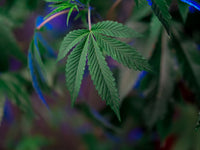
Photo via Pexels.
Walk into a Windhoek courtroom with a joint's worth of cannabis in your pocket and Namibian law treats you the same as someone caught with a kilo of heroin. Twenty to forty years in prison. A fine that can run to NAD 500,000. No carve-out for personal use, no sliding scale for quantity, no distinction between a first offense and a tenth. That is the plain text of the law still on the books, and it has been for decades, even as neighboring countries have moved toward decriminalization or outright legal cannabis markets.
That framework is now being tested in a Windhoek High Court case brought by the advocacy group Ganja Users of Namibia, with a hearing finally set for May 2026 after years of procedural delay. The case asks a blunt question: should unelected judges strike down a prohibition this severe, or is that parliament's job? While that fight plays out in the courts, a quieter and in some ways more revealing story has been unfolding in the Kalahari, where San communities hold some of the deepest botanical knowledge in southern Africa. Their experience commercializing plants like devil's claw and hoodia shows exactly how little of that knowledge's market value tends to make it back to the people who carried it for generations. Namibia is, in effect, running two unresolved experiments in parallel -- one about how harshly to punish a plant, the other about who profits when a plant becomes a product. They are not the same case, but they rhyme.
A 1971 Law Still Setting the Terms
Namibia's cannabis prohibition did not originate in Windhoek. It traces back to the Abuse of Dependence-Producing Substances and Rehabilitation Centres Act of 1971, legislation passed under the apartheid-era South African administration that governed what was then South West Africa. It was written for a different political order, in a different decade, with no input from the Namibian population it would eventually bind. Independence came later, but the law did not get a rewrite -- it got reinforced.
In 2006, Namibia passed the Combatting of the Abuse of Drugs Bill, which layered on sentencing ranges of 20 to 40 years imprisonment or fines between NAD 300,000 and 500,000. Critically, these penalties apply uniformly regardless of what drug is involved or how much of it was found. A small amount of cannabis for personal use triggers the same statutory exposure as trafficking in hard narcotics, because the law was never built with that distinction in mind.
There is no first-offense leniency written into the statute, and no threshold amount that separates a user from a dealer in the eyes of the court. Prosecutorial discretion and sentencing practice can soften outcomes in individual cases, but the underlying law gives judges enormous room to impose sentences that would look wildly disproportionate almost anywhere else in the region.
This has created an odd information gap. Some tourist-facing websites and travel blogs have floated claims that Namibia quietly decriminalized cannabis as of 2026, language that circulates informally among travelers hoping for a more relaxed legal climate. There is no government source behind these claims, and they directly contradict the active prosecution framework still in force. Namibian authorities continue to enforce the 1971-rooted law and its 2006 amendments as written, and anyone relying on secondhand travel-site assurances is taking a real legal risk.
Ganja Users of Namibia Take the State to Court

Photo by timokefoto via Pixabay.
The case that could finally force a reckoning with this law is Ganja Users of Namibia's constitutional challenge, filed by the organization's president, Brian Jaftha, and its secretary general, Borro Ndungula. They named five government defendants: the Prosecutor-General, the Inspector-General of the Namibian Police (Nampol), the Minister of Health and Social Services, the Minister of Justice, and the government of Namibia itself. The relief sought is not a narrow technical fix -- it is an attempt to have the cannabis prohibition declared unconstitutional outright, which would be the most significant judicial intervention in Namibian drug policy since independence.
The litigation has moved slowly, as constitutional cases against the state often do. A special plea filed by the defendants in July 2025 shifted the timeline, pushing the substantive hearing to a five-day window, 5-8 May 2026, at the Windhoek High Court. The state's lawyers have argued throughout that this is fundamentally a legislative question, not a judicial one -- that parliament, which is already reviewing the country's drug laws, is the proper body to weigh these tradeoffs, not a court asked to read new rights into the constitution.
Procedurally, the case has kept moving rather than stalling out entirely. A pre-trial report from the Government Attorney's office, released 23 January 2026 and heard before the court on 18 February 2026, was made an order of court, locking in the schedule toward the May trial date. That is a meaningful signal in Namibian civil procedure -- it means the parties and the court have agreed on the issues to be tried and the logistics of getting there, rather than the case drifting into further indefinite delay.
Whatever the court decides, it will be the first serious judicial test of Namibia's cannabis framework in over half a century. A ruling against the state would not just affect GUN's members -- it would force parliament's hand on a question it has so far preferred to review rather than resolve.
What the San Know About the Kalahari's Plants

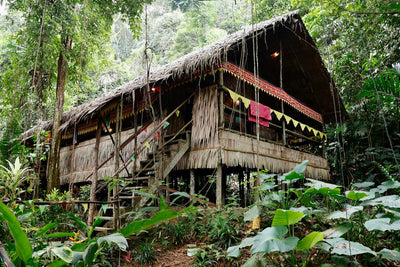
Photo by aurélie sgnl via Unsplash.
Namibia's San communities numbered 71,201 people in the 2023 Census, about 2.4% of the national population, and they carry a body of plant knowledge built over generations of life in and around the Kalahari. This is not folklore in the loose sense -- it is a working pharmacopeia, developed and refined through direct use, long before any international supplement company took interest in it.
Two plants show how that knowledge has moved from traditional use into global commerce. Devil's claw, the tuberous root of Harpagophytum species, was used traditionally to manage inflammation and pain. Today it is sold as extract in European pharmacies and health-food aisles, marketed for joint pain and arthritis. Hoodia, a succulent that grows across the same arid stretches, was traditionally chewed by hunters to suppress hunger and thirst on long treks through the bush. It later drew serious commercial interest from the diet-product industry, which licensed it for appetite-suppressant research.
Both cases sit within what researchers and policymakers call traditional ecological knowledge -- the accumulated, practical understanding a community develops of the plants in its environment, understanding that often predates and outperforms early-stage Western scientific interest in the same species. It's worth being precise here: no documented historical San cannabis practice has been established, so this is a different plant and a different knowledge tradition than what's sometimes discussed elsewhere in Africa regarding cannabis and indigenous use. The relevant parallel isn't botanical, it's structural -- the same pattern of unequal reward.
Oversight of San affairs and resource issues in Namibia falls formally to the Division of Marginalized Communities, a government body tasked with addressing exactly these kinds of resource and equity questions. Its track record on devil's claw gives a clear preview of what any future cannabis framework involving San knowledge or San land would be up against.
The Devil's Claw Problem: Who Actually Gets Paid

In the Devil's Claw value chain, European importers and retailers capture 79% of the total value, dwarfing the shares received by local exporters (17%) and the harvesters themselves (just 4%).
The devil's claw trade looks, from a distance, like a success story -- a traditional plant turned into a genuine European retail product. Research by University of Namibia researcher Ndapewa Nakanyete put hard numbers on who actually benefits from that trade, and the picture is lopsided. Harvesters, the people out in the field digging the tubers, capture roughly 4% of the total value chain. Local exporters in Namibia take about 17%. European importers and retailers -- the companies bottling and shelving the extract -- capture the remaining 79%.
Nakanyete's broader conclusion was blunt: despite roughly two decades of access and benefit-sharing (ABS) legislation on the books in Namibia, the impact on indigenous and local communities has been limited. The legal architecture for fair benefit-sharing exists. The outcomes it was designed to produce largely have not materialized.
The timeline on the ground reinforces the point. A devil's claw manufacturer began providing incentives to San communities back in 2021, but a formal, binding benefit-sharing agreement wasn't signed until March 2023 -- a two-year gap between money moving and any enforceable agreement governing how, and how much, it should move. That is not a technicality; it is two years in which a commercial relationship operated without the protections ABS law is supposed to guarantee upfront.
Compare that with South Africa's 2019 agreement with San communities over hoodia-derived compounds, which delivered roughly R12 million to the community by 2022 -- a binding deal that produced a measurable, timely payout. The contrast between the two countries' outcomes, using plants with a similar traditional-use-to-commodity arc, raises the exact question Namibia would face if cannabis were ever legalized and commercialized at scale: who controls cultivation rights, who holds export licenses, and who actually gets paid once a plant tied to indigenous knowledge becomes a legal cash crop.
Lessons for Any Future Cannabis Framework
If Namibia's cannabis law is ever loosened -- by the Windhoek High Court in May 2026, by parliament afterward, or both -- the devil's claw experience is the template policymakers should study, and not because it worked. It's instructive precisely because of where it fell short: a benefit-sharing law existed for twenty years, incentive payments flowed to San communities starting in 2021, and the binding agreement meant to govern that relationship didn't arrive until 2023. Any cannabis licensing regime that waits until after cultivation and export are underway to sort out who gets paid will likely repeat that same sequence.
The fix is not complicated in concept, even if it's politically hard in practice: enforceable benefit-sharing terms need to be negotiated and written into licensing frameworks before commercial activity begins, not bolted on once money is already changing hands. South Africa's 2019 hoodia agreement shows this is achievable within the region -- a binding deal, backed by real negotiating leverage, that produced roughly R12 million in community payout within about three years. That is the regional benchmark Namibia has yet to match with devil's claw, despite having comparable legislation in place for far longer.
That gap points to a broader lesson: the existence of ABS law on paper has not been the limiting factor in Namibia. Two decades of legislation produced a value chain where harvesters still capture only 4% of returns. What seems to matter more is enforcement capacity and the negotiating position of the communities involved at the moment a deal gets struck, not merely whether a statute exists.
Right now, Namibia is running two separate policy tracks that don't officially talk to each other -- Ganja Users of Namibia's constitutional fight over drug law, and the Division of Marginalized Communities' ongoing work on resource equity for San communities. They have different defendants, different courts, and different timelines. But both are, at bottom, about how Namibia assigns value and control over plants with deep roots in the country's land and its people, and the second track has a lot to teach the first.
Namibia's cannabis case and its devil's claw history are not the same fight. One is a constitutional challenge over criminal sentencing, playing out in a courtroom under a law written before independence. The other is a two-decade story about an export commodity and an access and benefit-sharing framework that hasn't closed the gap it was built to close. But set side by side, they expose the same unresolved question underneath Namibian plant policy: who gets to decide what a plant is worth, and who gets paid once that value goes global.
The May 2026 hearing at the Windhoek High Court will answer a legal question -- whether Namibia's prohibition-era sentencing regime survives constitutional scrutiny. It will not answer the economic question San communities have already lived through twice, with devil's claw and with hoodia: that having traditional knowledge of a plant and holding formal rights to its commercial value are two very different things, and Namibian law has so far been much better at the first than the second.
If cannabis ever does move from the criminal code into a licensed, taxed, exportable product in Namibia, the harvesters-to-retailers math shouldn't take twenty years to notice and two more to fix with a signature. It needs to be built into the licensing framework from the first permit issued -- not negotiated after the incentives are already flowing and the leverage has already shifted to whoever got there first.