Sri Lanka's Ayurvedic Ganja Loophole, Explained
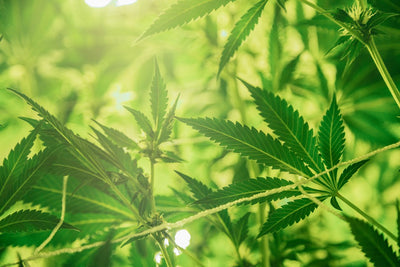
Photo by Edyttka1388 via Pixabay.
A bus driver in Jaffna was arrested on suspicion of driving under the influence of cannabis. A court later granted him bail. His lawyer told it that the drug in his system came from Ayurvedic medicine he had been taking.
That is the defence's claim, not a finding, and the details around it are thin. Still, the case lands on one of the odder features of South Asian drug law. Sri Lanka prohibits ganja outright, yet the plant never left the formal pharmacy of Ayurveda, the island's long-established system of traditional medicine.
This piece sets out the legal framework as far as secondary sources allow, looks at the best-known preparation, traces the policy history, and says plainly what could not be confirmed. Laws change, so treat everything here as a starting point for checking, not as legal advice.
Key takeaways
- Sri Lanka bans recreational ganja but the Ayurveda Act, No. 31 of 1961, lets registered physicians obtain cannabis for medicines.
- Madana Modaka, made from cannabis leaves and seeds fried in herbs and ghee, is the best-known registered preparation.
- A reported Jaffna drink-drive-style case shows the gap: a lawyer claimed Ayurvedic medicine explained a drug test, but that is unproven.
A Bail Hearing in Jaffna Puts the Loophole in Focus
Jaffna Monitor, in a report with a Kayts dateline and a November 2026 date, described a bus driver arrested on suspicion of driving under the influence of cannabis. A court released him on bail on a Tuesday, probably 3 November, though the exact date is not confirmed. His lawyer told the court the drug detected came from Ayurvedic medicine he was taking.
That statement is an assertion by the defence. Nothing in the available reporting says a court tested it, accepted it or rejected it.
The wider context is a crackdown on drug-impaired driving. Officials said 480 drivers were arrested for drug use in the first 22 days of 2026. The source does not say whether all of those were cannabis cases, so the figure shows enforcement activity, not a cannabis count.
Several basics are missing. The driver's name, the specific court, the testing method and whether prosecutors took the Ayurvedic explanation seriously are all unconfirmed. This is local reporting, and it should be checked against court records or a second outlet before anyone treats it as settled.
So the case works best as a doorway. It does not show how Sri Lankan courts treat this defence. It does raise a sharper question: how can a plant be criminal in one setting and a lawful medicinal ingredient in another?
Prohibition on Paper: The Ordinance Behind the Ban
The core of the ban is the Poisons, Opium and Dangerous Drugs Ordinance No. 17 of 1935. Under it, possession, sale and distribution of ganja are criminal offences. Recreational use is prohibited.
The state's interest in the plant is older still. Wikipedia notes that the import of bhang or ganja was banned in 1897, which points to well over a century of formal regulation.
A commercial summary from Trapothecary, current as of May 2026, adds detail on how strict the line is in practice. It says Sri Lanka has no THC threshold like the 0.3% limit used in the United States. Any detectable THC, it says, is generally treated as illegal outside state Ayurvedic channels.
The same site says commercial CBD oil is hard to import without medical or research licences. That follows from the absence of a hemp-style threshold: without one, there is no obvious category for low-THC products to sit in.
Two cautions apply. Trapothecary is a commercial site, and its account is a general summary, not an official statement. I also could not confirm the current text of the Ordinance itself. The framework above is the consistent picture across secondary sources, not a reading of the statute.
What the Ayurveda Act Actually Allows

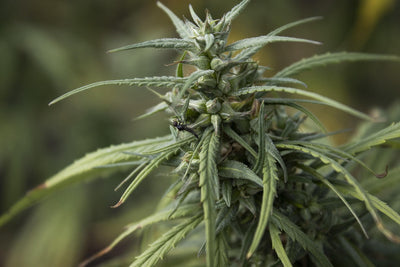
Photo by Zakhar Vozhdaienko via Pexels.
The exception sits in a different law. The Ayurveda Act, No. 31 of 1961, as amended in 1962, lets Ayurvedic physicians obtain opium and cannabis to manufacture their medicinal preparations. That is the legal hook for the arrangement the article is about.
According to the Trapothecary summary, practitioners can import cannabis products only through the Department of Ayurveda, with specific government authorisation. Wikipedia says cannabis is legally sold through Ayurveda herbal shops and may be used for medical and scientific purposes with a licence from the Ministry of Health.
Much of the machinery is unknown to me. I did not confirm the exact wording of the Act, the licensing procedure, any quotas, or how many registered physicians or licensed producers exist. I also could not establish where the Ministry of Health or the Department of Ayurveda stand on cannabis today.
What the sources do support is the shape of the arrangement. It is a carve-out inside a prohibition, not a parallel legal market. A registered practitioner acts within a state-controlled channel; an ordinary person outside it does not get the same protection.
That distinction matters for anyone reading the Jaffna case. The law, as summarised, does not exempt a plant. It exempts a route: registered physician, authorised supply, medicinal preparation. Anyone relying on the exemption would need to show they were inside that route. Readers should verify current specifics before relying on any of this.
Madana Modaka: The Best-Known Preparation

Photo by Khwanchai Phanthong via Pexels.
The preparation most often named is Madana Modaka. Registered practitioners may make and sell it. It is a traditional Ayurvedic formulation, and the brief gives a concrete picture of how it is made.
The pills are made from cannabis leaves and seeds fried in local herbs and ghee. That is the extent of the preparation detail I could verify. It is a cooked, compounded product, not a smoked or raw plant material.
What is not established matters just as much. I found nothing on dosing, on the THC content of the finished pills, or on how consistently different practitioners make them. Without those, no one can say how much active compound a patient actually takes in.
That gap sits right under the Jaffna claim. The defence said the drug in the driver's system came from Ayurvedic medicine. Whether a patient taking a preparation like this could register on a roadside drug test depends on content, dose, timing and the test used.
I am not claiming the answer either way. The sources do not provide it, and an honest account has to leave the question open. What can be said is that the claim is at least coherent: a lawful product containing cannabis exists, so a lawful source of a positive result is not absurd on its face.
A Policy History of Half-Steps

Photo by TeeFarm via Pixabay.
The available history reads as a series of proposals. Wikipedia says that in 2013 a new officeholder proposed amending the Ayurveda Act to recognise the value of cannabis. I could not confirm who held the post or whether any amendment followed.
In 2017, Wikipedia says, Sri Lanka announced a plan for a 400-hectare cannabis plantation. Its footnotes point to a Standard (UK) article headlined about launching the first cannabis plantation to export to the US.
I did not verify that article, and the status of the plan is unknown. These are older reports and may be outdated. Nothing I found shows an amendment, cultivation scheme or export programme is active today, and I will not suggest one is.
Still, a view is possible from the pattern. The exemption has persisted, anchored in a 1961 law, while broader reform appears to have stayed at the proposal stage. Headlines about plantations and exports are easy to generate; changes to the legal text are harder to find.
That leaves Sri Lanka with a narrow medical channel, a general ban, and little evidence of a bridge between them. For a driver who takes a traditional preparation, that absence is not academic.
Where the Loophole Meets the Roadside
Set the two legal statuses side by side. A registered preparation made by a practitioner under the Ayurveda Act is lawful. A drug-driving arrest follows a framework in which, per the commercial summary, any detectable THC is generally treated as illegal outside Ayurvedic channels.
The defence raised in Jaffna is plausible as an argument but unproven. To succeed, a court would likely need testing evidence showing what was detected, and proof that the patient obtained the preparation from a registered source. A bottle with no provenance would not carry much weight.
Readers who want to follow this up should check three things:
- The current text of the Ayurveda Act and the Poisons, Opium and Dangerous Drugs Ordinance.
- Guidance from the Department of Ayurveda on registered preparations and patients.
- Court records for the Jaffna case, including the testing method and any ruling on the defence.
None of this is legal advice. Laws change, and the specifics I could not confirm may matter a great deal. Anyone taking Ayurvedic preparations and driving should seek qualified advice first, because a lawful medicine does not guarantee a clean roadside result.
The real story is the gap between a national prohibition and a medical tradition the law deliberately preserved. Sri Lanka did not forget about the plant in Ayurvedic practice; it wrote a route for it into statute while banning it everywhere else. The Jaffna case shows how that gap can land on one driver, standing in a courtroom with a claim nobody has yet tested in public.
Until Sri Lankan authorities publish clearer guidance on registered preparations and drug testing, how the exemption interacts with enforcement stays open. Practitioners, patients and police are all working in that space, and the missing documents are the ones that would close it.