Taiwan Cannabis Law for Visitors: Law vs. Proposal
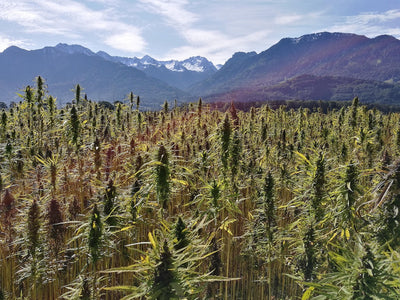
Photo by Dimitri Karastelev via Unsplash.
Picture a traveler who spends two weeks in a country where cannabis is sold over the counter, uses it legally, and flies home to Taipei. A few days later, behind the wheel, something goes wrong, or a test is ordered, and the question is no longer about where the substance was bought. It is about what is still in the body.
That scenario is no longer hypothetical in Taiwan's policy debate. On June 3, 2026, CNA and Focus Taiwan reported that transportation officials in Taipei were proposing to revoke the driver's licenses of people found to have used marijuana overseas, even where that use was legal.
A caution before going further. The framing behind this article, an amended Narcotics Hazard Prevention Act and zero tolerance aimed at foreigners, could not be confirmed. What follows separates what is settled, what is only proposed, and what remains unknown.
Key takeaways
- Taiwan classes marijuana as a Category 2 narcotic and bans possession, use, cultivation and transportation.
- In June 2026 officials proposed revoking driver's licenses over marijuana use abroad, if traces are detected after return; it was a proposal, not confirmed law.
- Claims about a zero-tolerance policy aimed at foreigners, or deportation rules, could not be verified and should be checked with official sources.
What Taiwan's Law Says About Marijuana
Under Taiwan's Narcotics Hazard Prevention Act, marijuana is a Category 2 narcotic. Focus Taiwan reporting describes a ban covering possession, use, cultivation and transportation of marijuana products. That is a broad net, and it does not narrow at the airport.
The key point for visitors is that Taiwan applies this ban even though some countries permit recreational or medicinal use. Legality elsewhere does not travel with you. A dispensary receipt from Canada or a prescription from another country does not change how Taiwanese law classifies the substance.
Two things need flagging. First, I could not confirm whether any amendment to the Act has passed the Legislative Yuan, nor its promulgation date or article numbers. If you see a headline announcing a new amended Act, treat it as unverified until you find the text.
Second, I did not verify penalty ranges for Category 2 offenses, so I will not quote any. Penalties differ by the type of conduct, and they are the kind of detail that gets garbled in secondhand coverage. The Ministry of Justice maintains the current statute text in its national law database at law.moj.gov.tw. Read the Act there, in the version currently in force, rather than relying on summaries, including this one.
The June 2026 Driver's License Proposal
The one concrete news item is dated June 3, 2026. Transportation officials in Taipei said Taiwan was proposing to revoke the driver's licenses of people found to have used marijuana overseas. The trigger would be evidence of use detected after the person returns.
The notable part is what the proposal does not require: the drug being consumed illegally. Officials said it could apply even if use was legal abroad. They were answering questions about travelers who consume legally overseas and come back with traces still detectable in their bodies.
This is a proposal, not confirmed law. The reporting I could check is from June, and by November 2026 it may be outdated. It could have been adopted, revised or shelved. The Ministry of Transportation and Communications is the body to ask.
The reporting also leaves a gap. It does not say how detection would be triggered: whether through a traffic stop, a crash investigation, a workplace test or something else. I will not guess at procedure. Anyone describing the mechanics in detail right now is filling in blanks the sources did not provide.
Why This Is Really a Drug-Driving Story
Read closely, this is less a story about tourists than about drug-impaired driving. The proposal is part of a wider crackdown that followed a series of drug-related traffic incidents. Licenses are the lever transportation officials control, so licenses are where they reached.
A related Focus Taiwan headline says harsher drug-driving penalties could take effect by the end of 2026, according to the minister. I did not read that article, so treat the timing as unconfirmed.
The science explains why legal use abroad creates a gray zone. In general terms, THC metabolites can remain detectable in the body after the effects of use have faded. A test can show past exposure without showing present impairment. A traveler who is sober can still test positive.
Based on how officials framed it, regulators appear to be treating detectable presence as the trigger, not proof of impairment while driving. That is a meaningful policy choice. It simplifies enforcement, since presence is easier to establish than impairment, but it also reaches people who did nothing unlawful where they used.
None of this predicts how courts or agencies will apply any final rule. It is context for the proposal's intent. Final text, and the way it is interpreted, could look different from what a June news summary suggests.
What Is Not Established About Foreign Nationals
Here the headline framing runs out of support. The research found no provision, policy or statistics specific to foreign nationals. The idea of zero-tolerance enforcement aimed at foreigners is unsupported by anything retrieved for this piece.
The same goes for immigration consequences. Deportation, entry bans and visa effects after a drug offense were not verified. The National Immigration Agency, at immigration.gov.tw, is the place to check how its rules treat drug-related cases.
No figures on foreign arrests or deportations were available, and none should be implied. Claims about how many visitors Taiwan has detained or removed need a published source behind them.
The safe baseline is a general principle: a country's criminal law applies to people on its territory, whatever their nationality. That is not a special rule for outsiders. It is simply how territorial jurisdiction works, and it is why a foreign passport offers no shield on a Taiwanese street.
Laws change, and so do proposals. Anyone facing a specific situation should verify current rules with official sources or consult a licensed Taiwanese attorney.
Practical Steps for Travelers and Returning Residents
Given how much is unsettled, the practical advice is short. Treat it as a checklist:
- Verify. Before travel, check the current text of the Act at law.moj.gov.tw, the status of the license proposal with the Ministry of Transportation and Communications, and any amendment progress at the Legislative Yuan (ly.gov.tw).
- Don't pack. Possession and transportation of marijuana products are banned. That includes leftovers from a legal purchase abroad.
- Don't drive after use. If you consumed overseas, assume there may be risk on return, particularly if you plan to drive soon after landing. Detection, not just conduct in Taiwan, is what the proposal targets.
- Check CBD and hemp products. The research did not cover their status, so confirm with Taiwan's Food and Drug Administration before packing anything hemp-derived.
- Get advice if unsure. A licensed Taiwanese attorney can speak to your circumstances in a way no news article can.
Returning residents have a bit more to think about than visitors, since they are the ones likely to hold a Taiwanese license. For them the license proposal is the most direct exposure, and worth watching.
The most useful takeaway is the gap between legal where you consumed and legal where you land. Taiwan's proposal targets exactly that gap, and detection rather than behavior inside Taiwan may become the trigger. That is a different logic from the one most travelers assume.
Until the Legislative Yuan and the relevant ministries publish final text, treat headlines about amendments and foreigner-specific crackdowns with caution. Go to the primary sources, read the current version, and check the date on whatever you are reading, this article included.
Sources
- Taiwan proposes driver's license revocation for marijuana use abroad - Focus Taiwan
- Narcotics Hazard Prevention Act-Relevant laws of deferred prosecution drug addiction treatment-Taiwan Yunlin District Prosecutors Office
- Drivers who use drugs abroad could have licenses revoked: MOTC - Taipei Times
- Cannabis in Taiwan
- Marijuana driving rule change planned - Taipei Times
- Cannabis in Taiwan in 2026: Strict Prohibition, Harsh Penalties, and the Reality Behind the Law - Respect My Region