Rastafari Ganja Rights and Jamaica's Narrow Exemption
Troy Harrison, a Westmoreland resident, was charged with possession of ganja and dealing in ganja. In Westmoreland Parish Court the Crown offered no evidence, and the charges were dropped, because Harrison is a Rastafari entitled to possess ganja for sacramental use. By then, according to his attorney, police had held his ganja for more than six weeks.
That sequence captures the tension at the center of Jamaican ganja law. Since 2015 the Dangerous Drugs Act has recognised Rastafari sacramental use. Now the Jamaica Constabulary Force says it cannot tell how officers are supposed to apply that recognition on the ground.
A note on sourcing before going further. This piece rests on news reporting, mainly the Jamaica Observer, and on an older government information service explainer from 2015. It does not draw on the statute's text or an official register, so check the current Act and the current permit process before relying on any detail here.
Key takeaways
- Section 7C(2)(a) of the Dangerous Drugs Act lets Rastafari possess ganja and smoke it for sacramental purposes at registered places of worship.
- Jamaica's police force called in late 2026 for a full review, saying officers cannot easily verify authorisation, sites or places of worship.
- Cases like Troy Harrison's, dropped in Westmoreland Parish Court, show the exemption can fail at the roadside before it works in court.
Ganja as sacrament, not pastime

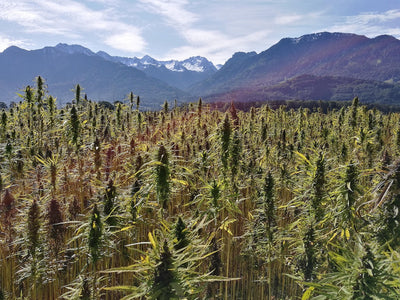
Photo by Kristen Sturdivant via Unsplash.
For Rastafari, ganja is used in worship and meditation. That is the premise on which the sacramental exemption stands: the plant is part of religious practice, not recreation dressed up in spiritual language.
The movement took shape in Jamaica, and it is not one uniform practice. Rastafari communities and organisations differ in how they organise, gather and worship, so any single description of how ganja is used will flatten real variety. The law, however, has to work for all of them.
The personal stakes surfaced in an April 2026 exchange in Parliament-adjacent debate. Dr Horace Chang, MP for St James North Western, said Lewis Brown, known as Ras Brown, of the Rastafari Coral Gardens Benevolent Society, declined appointment as a justice of the peace. Brown feared breaching the law because ganja is part of his sacrament. A community figure turned down a public office out of worry that his religion could put him on the wrong side of the statute.
That worry has a history behind it. For most of the movement's existence, ganja was prohibited in Jamaica, and Rastafari practice went on regardless. A religious carve-out became necessary precisely because the general rule treated sacramental use like any other offence. The exemption is a correction to that long-standing mismatch, and it is only as good as its application.
What the 2015 amendment actually allows
The Dangerous Drugs (Amendment) Act, 2015 took effect on April 15, 2015. Section 7C(2)(a) of the Act makes provision for members of the Rastafarian community to possess ganja. That is the legal hook for the religious exemption.
The government's explainer from the time lays out the working parts:
- Rastafari adherents may smoke ganja for sacramental purposes in locations registered as places of Rastafarian worship.
- Adherents aged 18 or older, or Rastafarian organisations, may apply for authorisation to cultivate ganja as a sacrament.
- Smoking ganja in a public place, or within five metres of one, is prohibited, in a manner similar to cigarettes.
- Each household may grow up to five plants.
Note the structure. The exemption is not a blanket right to carry and smoke anywhere. It ties smoking to registered places of worship and ties cultivation to an application and authorisation. Those are the points where an officer, or a court, will look for proof.
The same 2015 Act also created the Cannabis Licensing Authority, for a regulated medical, therapeutic, scientific and hemp industry. That commercial track is separate from the sacramental provisions.
One caution. The explainer dates from 2015, so details such as the permit process may have changed in the years since. Anyone planning to cultivate, transport or gather should confirm the current requirements with the relevant authorities or a lawyer, since laws change.
Where the exemption meets the roadside
The Harrison case shows how this plays out when a stop goes wrong. His attorney, Goffe (the excerpts reviewed give no first name), said a clerk of court wrote that the charges were dismissed on the basis that Harrison is a Rastafari entitled to possess ganja for sacramental use. Goffe said police held Harrison's ganja for more than six weeks and threatened legal action against the JCF, according to a December 27, 2025 Observer story.
Goffe also described another case. A Rastafarian man's pound of ganja was confiscated, and the man allegedly handed it over after being told to give it up or be arrested. That is an allegation, and the sources do not report any finding on it.
The volume of work is telling. In an April 6, 2026 Observer report, Goffe said he had been in court about seven times in 2025 and three times so far in 2026 on Rastafari ganja rights. He claims narcotics police are not fully aware of the extent of those rights.
Treat all of this as one lawyer's account, not an established pattern proven by data. The police have not been quoted here rebutting it, and the sources include no count of how many Rastafari have been stopped or charged. Still, the Harrison outcome on the court record, charges dropped when no evidence was offered, is consistent with the problem the police themselves later described.
The police ask for a rulebook

Photo by angie3888 via Pixabay.
On October 29, 2026, the JCF called for a comprehensive review of the Dangerous Drugs Act. It cited gaps and ambiguities in the law on sacramental ganja use by Rastafarians.
The force's specific complaint is practical. It says it is unclear how officers should verify religious authorisation, identify approved cultivation sites and recognise places of worship. It asked for clear guidance on possession, cultivation, storage, transportation, smoking, and events where ganja is used as a sacrament. And it says the uncertainty has contributed to tensions with Rastafari adherents.
Those are fair questions for any exemption that depends on documents and designated locations. A constable at a roadblock cannot read a registration from a plant or a congregation from a gathering. If no workable method of checking exists, the exemption gets decided after arrest, in court, which is where Harrison's case ended up.
A technical development complicates the picture. The April 6, 2026 report said the forensics lab can now test THC percentage to separate ganja from hemp. One speaker argued that convictions in the roughly nine-year gap between the amendment and the lab's testing ability would be open to question. That is an opinion, not a legal finding, and no court ruling on it appears in the sources.
Reform pressure from several directions
Pressure to change the framework comes from more than one side. On April 6, 2026, Dr Horace Chang said decriminalisation should go a step further. He asked Culture Minister Olivia Grange to work toward allowing Rastafari JPs to serve, the issue raised by Ras Brown's refusal of appointment.
Opposition Senator Allan Bernard went broader. He asked whether Jamaica should replace its prohibition-based approach with modern legislation that would distinguish ganja from more harmful controlled substances. He raised that as a question, not a proposal, and no bill is described in the sources.
Government has also moved. A July 20, 2026 Observer report said ministers had begun consultations on Jamaica's sacramental cannabis regime. The stated aim is greater clarity, consistency and certainty while safeguarding religious freedoms under Section 7C(2)(a).
One structural point matters here. The Cannabis Licensing Authority is the only body with legal authority to license and regulate commercial cannabis. The sacramental regime therefore sits outside its commercial remit, which helps explain why verification has no obvious institutional owner.
Several things are not public in the sources reviewed:
- The number of sacramental cultivation authorisations issued.
- The number of registered places of worship.
- The text of Section 7C itself, which was not checked.
- Any official ministry statement on the July consultations.
Without those figures, nobody outside government can say how often the system works as designed.
The exemption exists on paper. But a right that officers cannot verify at a roadside stop depends on paperwork and goodwill rather than on the law itself, and Harrison's six weeks without his ganja show what that costs when goodwill runs short.
Whatever the consultations produce, the practical test is simple to state and hard to meet: can a Rastafari adherent and a constable reach the same answer on the spot, without a lawyer? Until then, courts will keep doing the work that guidance should do. Laws and permit procedures change, so verify current specifics with the authorities or a qualified attorney before acting.