Terkos Hemp Seed Halva: Turkey's Ramadan Sweet and the Law
Photo by VD Photography via Unsplash.
Hemp seed halva from Terkos is a sweet that sounds impossible in a country with one of the region's strictest narcotics regimes, yet the law has a place for it.
The claim comes from Terkos, also called Durusu, on Istanbul's coast. It rests on local tradition rather than documentation, and this piece treats it that way while laying out the legal framework that would make such a sweet possible.
The real question is legal: how does a sweet made from a cannabis-family seed fit inside a strictly enforced narcotics system?
Since a 2016 regulation, Turkey has licensed controlled hemp cultivation while cannabis stays prohibited as a drug. The legal test turns on THC content and a licensed source, which is what leaves room for a seed-based food.
What Terkos Hemp Seed Halva Actually Is

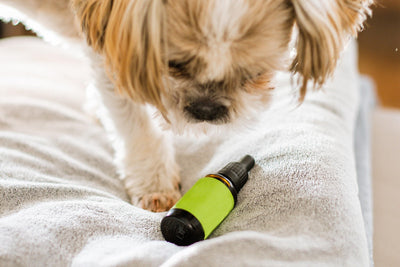
Photo by ezimuse via Pixabay.
In Turkish usage, halva (helva) covers a wide family of dense sweets. The best known is tahini halva, made from sesame paste and sugar syrup, often sold in blocks and sliced. Flour halva, semolina halva and versions built on other seeds and nuts exist as regional and household variants.
Terkos, or Durusu, sits in Arnavutköy district on Istanbul's northern coast, around a large lake of the same name. No documentation of hemp cultivation or hemp halva production there has surfaced.
Such a halva would differ from the sesame kind in predictable ways. Hulled hemp seed is soft and pale green-cream, with a nutty, slightly earthy flavor. Its oil profile also differs from sesame's, so texture and aroma would not be identical. A maker would likely adjust the sugar, the paste and the roasting.
Producer names and recipes would have to come from local reporting, and Turkish-language searches will go furthest. Until then, the Ramadan link is a community's own account, not a national practice.
Halva on the Ramadan Table

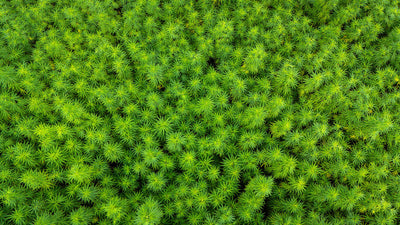
Photo by Nurul Sakinah Ridwan via Pexels.
At iftar the sweet course has its own repertoire, from güllaç to baklava, and halva sits among them. After a long fast, a dense, energy-rich sweet delivers calories in a small portion, and halva suits sahur for the same reason: it is compact and keeps well.
Halva also carries social weight beyond Ramadan. In Turkey it is made for gatherings and for remembrance, including the custom of preparing halva after a death, as well as for festive meals. A dish with that kind of presence tends to attract local variations.
Hemp seed halva is not a nationwide staple. Its place at Ramadan tables, if any, is local to a few neighborhoods.
Turkey's Hemp Law: From 1933 to Licensed Farming
The foundation is Law No. 2313 of 1933 on narcotics, which historically restricted cannabis cultivation and use. For decades that framework treated the plant as a controlled substance with little room for agricultural exceptions.
The loosening began in 2016. From that year, a regulation allowed licensed hemp cultivation in designated provinces, under the Ministry of Agriculture and Forestry. This is the basis of Turkey's controlled hemp program, and the covered provinces are set by the ministry.
Several agencies are involved: the Ministry of Agriculture and Forestry, the Ministry of Interior and the Turkish Grain Board (TMO). Licensing, inspection and purchase or storage are divided among them.
The licensing logic follows a pattern common in regulated hemp systems:
- Farmers apply for permission to grow.
- Only approved varieties may be planted.
- The crop is tested for THC.
- Fields and harvests are tracked.
This is a general outline; current provinces, licensing terms and the THC cap are published at tarimorman.gov.tr and in the Resmî Gazete.
Why Low-THC Seed Products Still Pass

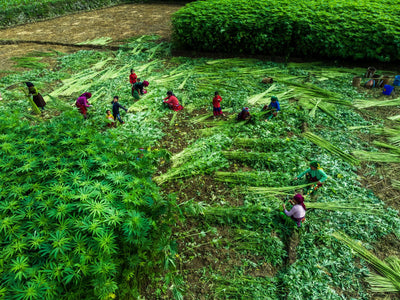
Photo by Dan Burton via Unsplash.
The central distinction is between seed and the rest of the plant. Hulled hemp seed carries negligible THC. The cannabinoid-rich parts are the flowers and leaves, and those are what narcotics law is built around. Trace amounts can reach seed through contact with resin during harvest, which is why sourcing matters.
The European Union offers a benchmark. Its usual hemp limit is 0.2% THC, with a later move to 0.3%. Turkey sets its own cap in its regulation, which may differ.
Regulating by THC content and licensed source is more coherent than banning a seed with a long food history. A ban would sweep in a harmless ingredient while doing little to address the intoxicating parts of the plant. A licensing system targets the actual risk.
There is a compliance catch. Seed lots must come from licensed, tested crops. Imported seed raises a separate customs question, and a seller cannot assume that what is legal to grow is automatically legal to bring in.
None of this softens enforcement. Turkish narcotics law remains strictly enforced, and permitted hemp products do not change the status of cannabis as a drug. Possession of flower or resin is treated under the narcotics framework, not the agricultural one.
What to Verify Before You Buy, Sell or Travel
If you are buying or selling a hemp seed product in Turkey, a short checklist helps:
- Confirm the producer is licensed.
- Look for ingredient and origin labeling on the pack.
- Ask whether the seed supplier can document THC testing.
- Keep receipts and batch information.
For primary sources, use the Resmî Gazete for regulation text, tarimorman.gov.tr for licensing, and the Turkish Medicines and Medical Devices Agency (TİTCK) for health-product questions. Those three will answer more than any trade summary.
Travel adds another layer. Carrying hemp products across a border depends on the destination's rules, and an EU or UK customs officer may treat seed products differently from how Turkey does. Check the destination country's customs guidance before packing a box of halva.
To find local reporting on Terkos producers, search in Turkish. Useful terms include kenevir tohumu helvası and kenevir ekim yönetmeliği. Turkish-language news and provincial agriculture pages are likelier to name makers and dates than English sources.
This is general information, not legal advice. Rules shift, so verify current specifics for your own situation.
The Terkos halva story is useful because it shows how a strict-law country can protect a traditional food. The tool is regulation of THC content and licensing, not an outright ban on the plant family. Seed, flower and licensed field are treated differently, and that is what lets a sweet exist alongside a hard narcotics law.
What remains open is how much of the hemp-halva tradition is documented history and how much is local lore. A name on a market stall or a grandmother's recipe is not a record, and Turkish primary sources and the producers themselves are where the next round of reporting should start.