Thailand's Cannabis Notice and Your Dispensary Licence
Photo by Pavel Danilyuk via Pexels.
A shop owner in Bangkok's Sukhumvit area or on a Phuket side street sees a headline about a new Public Health Ministry notice. Within days, sometimes hours, she has to work out whether the licence framed behind the counter still covers what the shelves hold.
That scramble comes from how Thailand built its cannabis model. The plant was taken off the narcotics list in June 2022 by ministerial notice, and most of the rules since have shifted the same way, by notice rather than by an act of parliament. A notice can change the picture quickly.
One caution before going further. I could not verify the text or effective dates of the latest reclassification notice, so this piece does not state them. It lays out the framework and the questions that matter. Confirm the actual wording in the Royal Gazette and with the Thai FDA before you act on anything here.
Key takeaways
- Thailand removed cannabis from its Category 5 narcotics list on June 9, 2022, but no full cannabis statute followed.
- Ministry notices, not a single law, set most of Thailand's cannabis rules, so the exact wording of each notice decides licence consequences.
- Operators should read the Royal Gazette and Thai FDA texts directly, since laws change and secondhand summaries go stale quickly.
How Thailand Regulates Cannabis by Notice
The Narcotics Act B.E. 2522 (1979) is the statute that matters. Under it, the Ministry of Public Health issues notices that decide which substances sit on the narcotics lists and in which category. Change the notice and you change the legal status, without touching the Act itself.
That is what happened on June 9, 2022. Cannabis was removed from Category 5 by notice. The Narcotics Act was not repealed, and the ministry kept the power to list substances again.
The delisting was also partial in practice. Extracts containing more than 0.2 percent THC stayed controlled. So Thailand ended up with a split: plant material treated one way, and regulated extracts treated another. Anyone selling oils, tinctures or concentrates faced a different compliance picture from someone selling dried flower.
A comprehensive cannabis bill was debated for years. To the best of my background knowledge, it never became a standing statute, but verify that against current parliamentary records, because I can't confirm the latest position.
Why does this matter to a licence holder? Legislation moves slowly, with readings, committees and votes. A ministerial notice can be amended or replaced far faster. If your business depends on a notice, you are working against a moving target, and the date of the next amendment is not yours to set.
What the Latest Notice Says, and Where to Read It
I can't give you the effective date, clause numbers or penalties of the newest reclassification notice. The research for this piece could not confirm them, and guessing at legal specifics is how operators get burned. What follows is how to find and read the real text.
Start with primary sources:
- The Royal Gazette at ratchakitcha.soc.go.th, where notices are formally published
- The Thai FDA at fda.moph.go.th
- The Ministry of Public Health at moph.go.th
- The Department of Thai Traditional and Alternative Medicine at dtam.moph.go.th
For context and a sanity check, cross-read Bangkok Post, The Nation, Thai PBS World and Khaosod English. News reports are useful for spotting that something changed. They are not the legal text.
When you have the notice, check three things first. What is the date of publication, and what is the date it takes effect? Those are often different, and the gap is your working window. Does it name a transition period? And does it amend earlier notices, or replace them outright? An amendment leaves surrounding rules in place. A replacement can reset them.
Be wary of translations passed around on social media and in trade chat groups. They are frequently partial, skip the annexes, or flatten qualifications such as who is exempt and under what conditions. If a decision rests on one clause, read the Thai original or pay someone qualified to do so.
The Prescription Rule and the 2025 Shift

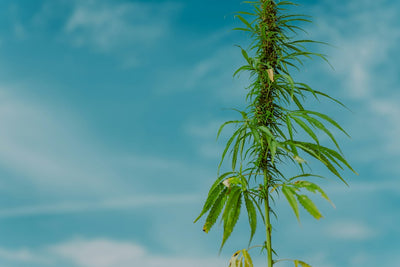
Photo by CRYSTALWEED cannabis via Unsplash.
The background here carries a verify-it flag. As I understand it, a Public Health Ministry notice requiring a prescription for cannabis flower sold for medical use took effect around June 2025. Check the exact date and wording in the Gazette.
In general terms, the effect was to push dispensaries from open retail toward a medical-dispensing model, with licensed practitioners involved. A shop that had sold flower over the counter to anyone walking in faced a different set of expectations.
Three questions are easy to blur together, and they should be kept apart:
- What is legal to sell?
- Who may issue the prescription?
- Who may dispense against it?
A product can be lawful to sell while the shop is not a lawful dispenser. A prescriber can be qualified while the premises are not. Each answer comes from a different provision, and a licence may satisfy one while failing another.
Recreational-style retail was never given an explicit statutory basis in Thailand. Delisting removed a prohibition; it did not create a retail right. That is why enforcement posture shifted when the notices changed, even though the Narcotics Act itself had not been rewritten.
If you see figures for the number of dispensaries in the country, treat them carefully. Only rely on counts that trace back to Thai FDA or DTAM data, and note the date they refer to, because the market has moved fast.
What Reclassification Could Mean for Existing Licences
Treat everything here as questions the notice text must answer, not as claims about what it says.
The first is the blunt one. Does the notice revoke licences, suspend them, or leave them valid for a narrower set of activities? Those are three very different outcomes for an owner, and the wording will say which.
Licence types matter too. Cultivation registration, extraction, sale or dispensing, and import or export each sit under different authorities and may be affected differently. A grower could be untouched while a retailer is not. Read the notice against each licence you hold, one by one.
Then look for transition terms. Is there a grace period? What happens to stock on hand at the effective date: can it be sold, returned to a supplier, or must it be destroyed? Records of that stock may matter if an inspector arrives.
If any part of cannabis returns to a narcotic category, activities involving it would generally need permission under narcotics law rather than a health-product or herbal licence. The exact route, and which office handles it, should be confirmed with the regulator rather than assumed.
Finally, a licence can survive and still change in practice. Conditions on premises, staffing and labelling can be revised while the paper on the wall stays valid. Check the conditions, not just the licence's existence.
A Practical Checklist for Operators and Visitors
Here is a sequence operators can follow when a notice drops:
- Obtain the Gazette text itself, not a summary.
- Have a Thai-qualified lawyer or regulatory consultant read it.
- Compare it against every licence you hold, clause by clause.
- Check stock and records against the effective date and any transition terms.
- Update signage, labelling and staff procedures, and log the date you did so.
Where something is genuinely unclear, ask the Thai FDA or DTAM in writing and keep the reply on file. A written answer is far better evidence of good faith than a phone call remembered months later.
Visitors face a lighter version of the same problem. The general framework points toward buying from a licensed outlet, carrying documentation where it is required, and avoiding public consumption. Those are broad patterns, not guarantees, and the specifics may have changed since this was written. Verify current rules before you travel.
Cross-border movement is a separate matter. Import and export of cannabis products carries its own rules at borders, and the laws of your home country still apply when you return. A purchase that was lawful in Thailand can be a serious offence at an airport elsewhere.
Thailand shows what happens when a country delists a plant without building a full statute around it. The opening was fast and the market grew quickly, but licence security rests on the next notice, not on a settled law.
For operators, the sound habit is plain. Treat the Royal Gazette text as the only authoritative answer, schedule a compliance review each time a notice appears, and verify current specifics before acting. In a system run by notice, the people who read the primary text first are the ones who keep trading.
Sources
- Thailand Tightens Cannabis Licensing Rules Through Two New Ministerial Regulations - Lexology
- What to Know About Thailand’s Cannabis Laws
- Thailand Cannabis Laws 2026: Every Rule Change Explained
- Cannabis Laws in Thailand 2026: The Complete Legal Guide
- Is cannabis legal in Thailand in 2026?
- Thailand Cannabis and Hemp Act 2026 - Solar Farm Thailand