The Herero, Cannabis, and the Colonial Record in Namibia
Photo via Unsplash.
Search around for the story of German colonial administrators cataloging Herero cannabis rituals and you'll find the claim repeated with a confidence the sources don't actually support. The popular version goes something like this: German ethnographers in South West Africa, methodical as ever, wrote down detailed accounts of Herero men gathering to smoke dagga from stone pipes in some kind of formalized ceremony. It's a tidy image. It's also mostly not there when you go looking for the actual paper trail.
What exists instead is messier and, honestly, more interesting: a diffusion story that runs through Nama trade networks and Bantu bartering routes, a Khoekhoe word that predates German contact by a considerable stretch, and a set of stone pipes whose makers still can't be confidently identified. This is one of those cases where the record is thinner than the narrative built on top of it, and picking apart that gap tells you something real about how colonial-era knowledge got produced and how easily a plausible-sounding claim can outrun its evidence.
There's also a timing detail that rarely makes it into the popular telling. Cannabis appears to have reached the Herero only shortly before Germany formally colonized the territory in 1884. The plant and the colonizer arrived on almost the same schedule, which means any German record of Herero cannabis use -- if one exists in the form people claim -- would be documenting a brand-new practice, not an ancient one.
Tracing Dagga's Path to the Herero

Photo via Pexels.
The foundational source for almost everything we know about how cannabis moved through southern Africa is Margaret Shaw's 1938 study, Native Pipes and Smoking in South Africa. Shaw traced dagga's spread outward from Bantu-speaking groups to the Khoekhoe (historically called Hottentot in colonial-era literature) and San (Bushmen) peoples through what she described as a major annual bartering trade -- seasonal gatherings where goods, livestock, and cultural practices moved alongside each other across considerable distances. Cannabis wasn't a fixed feature of any one group's culture from time immemorial; it was a commodity that traveled.
From the Cape region, the plant pushed westward and northward through Nama territory before it ever reached Herero communities further north and east. The Nama, as pastoralists with extensive trade contacts, functioned as a kind of relay point -- absorbing the practice from southern trade partners and passing it along their own networks. This matters because it locates the Herero relationship to cannabis not as something self-generated but as the endpoint of a long chain of contact.
The linguistic evidence backs this up cleanly. The word dagga itself comes from the Khoekhoe term daxa, first recorded by European observers in the 1660s -- well before the first German administrators set foot in what would become South West Africa. That gap is worth sitting with. It means the vocabulary, and likely the practice it described, was already well established among Khoekhoe speakers long before any German ever had reason to write a word about it.
Put together, the trade routes and the etymology point to the same conclusion: cannabis use among the Herero was adopted, not indigenous to the group and not ancient in the way a pre-colonial pipe ritual claim implies. It was a relatively recent cultural import, arriving via Nama intermediaries as part of a broader regional exchange system that had nothing to do with German colonization and everything to do with older African trade geography.
A Surprisingly Late Arrival
Shaw's research contains a detail that quietly undercuts a lot of the assumptions people bring to this topic. She found that dagga was still unknown among the Ovambo, in what's now northern Namibia, as late as 1887. If cannabis hadn't yet reached the Ovambo by that date, it means the plant's spread through the region was still actively in progress during the very years Germany was establishing its colonial administration -- not a settled, generations-old practice sitting quietly in place waiting to be documented.
That single data point reframes the whole question. If dagga was still working its way into some parts of the territory in the late 1880s, then its arrival among the Herero -- who lived in central Namibia, geographically between the Nama routes to the south and the Ovambo areas further north -- most plausibly happened only shortly before, or during, the earliest years of German colonial presence, which began formally in 1884. There isn't room in that timeline for a cannabis tradition stretching back multiple generations among the Herero.
This is worth stating plainly because it changes what any hypothetical German record would actually represent. A colonial administrator writing down observations of Herero cannabis use in the years that followed wouldn't have been capturing an ancient or deeply rooted custom. He'd have been describing something closer to a recent adoption, still spreading and probably still being integrated unevenly across different Herero communities and generations.
None of this makes the topic less worth studying. It just means the premise needs adjusting. The interesting question isn't how Germans recorded an old Herero ritual -- it's how a very new practice, arriving almost in step with colonization itself, got absorbed into daily life at the exact moment that life was being violently reorganized by an occupying power. Those two timelines running side by side is the actual story, and it's a stranger one than the tidy ritual narrative usually told.
The Stone Pipes: Whose Technology?
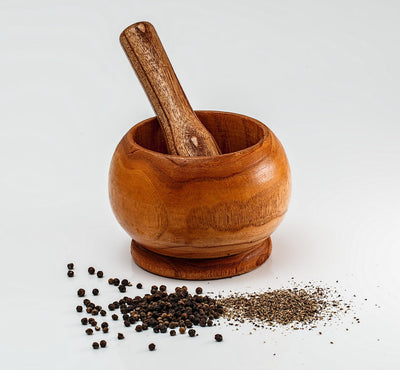
Archaeological work in Namaqualand and parts of Namibia has turned up stone pipes associated with dagga smoking among several groups, including the Herero and the Tswana. These pipes are real, physical objects -- carved stone bowls designed for smoking, sometimes found in burial contexts or old habitation sites -- and their existence is genuinely documented in the archaeological literature, unlike the specific ritual claim attached to them.
What isn't settled is who actually made them. Researchers examining these finds have been careful to note the uncertainty: it's not clear whether Herero communities manufactured stone pipes themselves or acquired finished pipes through trade with the Nama, who had a longer and more established relationship with both the plant and the smoking technology that came with it. Given how directly Nama trade networks are tied to cannabis's spread into the interior in the first place, it would make sense for the pipes to have moved along the same routes as the plant itself.
That's the more likely reading of the evidence: pipe-smoking technology diffusing to the Herero as part of the same package as the dagga trade, rather than being independently invented. A people adopting a new plant from trading partners would plausibly also adopt, or at least borrow and adapt, the equipment those partners used to smoke it. Technology and substance moving together is a common pattern in trade diffusion generally, and there's no strong reason to think Herero pipe use broke from that pattern.
Here's the part that matters most for evaluating the popular claim: no German colonial administrative document has been reliably identified that describes a specific Herero pipe ritual by name, with dates, an author, or an archive reference. The claim as it circulates today rests on inference -- stitching together Shaw's diffusion research, archaeological pipe finds, and general colonial-era ethnographic writing about the region -- rather than pointing to one named report that actually says what people claim it says. That's an important distinction between a documented historical record and a plausible-sounding story built from adjacent facts.
Recording a People Being Destroyed

Photo by Jörg Hamel via Pexels.
Whatever ethnographic notes German administrators did produce about Herero customs during this period have to be read against an unavoidable fact: they were written during or immediately after one of the darkest episodes of German colonial rule, the 1904-1908 war against the Herero and Nama. Under General Lothar von Trotha, German forces pursued a campaign of extermination that reduced the Herero population from an estimated 80,000 people to roughly 16,000 by the end of 1905 -- a campaign now recognized by Germany itself, after decades of pressure, as genocide.
This context isn't a footnote to the cannabis question; it's central to it. Any colonial administrator writing about Herero cultural practices in this window was doing so either during active military destruction of the group or in the immediate aftermath, when survivors had been driven into concentration camps, forced labor, and scattered exile. That is not a neutral observational environment. It's hard to imagine ethnographic notes from that period being produced with anything resembling detached scholarly curiosity.
German colonial ethnography of this era, broadly speaking, tended to serve administrative and racial-classification purposes rather than cultural documentation for its own sake. Observations about indigenous customs were often gathered to support arguments about the supposed character, capacity, or governability of a subject population -- material that fed directly into colonial policy and racial ideology, not into a disinterested cultural record. Herero cannabis use, if it was noted at all, would have been filtered through that lens.
This matters directly for evaluating any claimed source on Herero pipe rituals. Even setting aside whether a specific document exists, the political circumstances of whoever might have observed and written about it shaped what got recorded, what got left out, and how it was framed. A practice observed through the eyes of an administrator embedded in a genocidal campaign is not going to produce a clean, trustworthy ethnographic account -- and that's before even getting to the question of whether the source was ever written down in the first place.
From Colonial Statute to Modern Courtroom

Photo via Unsplash.
The legal framework governing cannabis in Namibia today didn't emerge from independent Namibian policymaking -- it's a direct holdover from the colonial and apartheid-era legal system. The country's current prohibition traces back to the 1971 Abuse of Dependence-Producing Substances and Rehabilitation Centres Act, a statute imposed under South African administration before Namibia's independence. More than half a century later, it's still the backbone of cannabis law in the country.
That law faced a direct legal challenge in July 2026, when the Windhoek High Court dismissed a case brought by the advocacy group Ganja Users of Namibia seeking cannabis legalization. The court's reasoning wasn't that legalization lacked merit on the facts, but that reform was premature while the government continues reviewing its broader drug legislation -- a procedural ruling rather than a substantive rejection of the underlying argument.
Borro Ndungula, secretary-general of Ganja Users of Namibia, responded by signaling a shift in strategy. Rather than pursuing further litigation, the group said it would focus on lobbying Parliament directly, pressing lawmakers to take up reform rather than waiting on the courts to force the issue. It's a pragmatic pivot, recognizing that a decades-old statute embedded in the legal system isn't likely to be dislodged by a single court case.
Trace the line all the way back and the throughline is striking: a plant moving through 19th-century Nama and Bantu trade networks, absorbed by the Herero right around the time German colonization began, later criminalized under a law imported wholesale from apartheid-era South Africa, and still being litigated in a Namibian courtroom in 2026. Colonial-era legal frameworks don't just fade out after independence -- in cannabis policy across much of southern Africa, they're still the operative law, and reformers are still working within the boundaries those frameworks set decades before anyone alive today was born.
Strip away the popular version of this story and what's left isn't nothing -- it's just not a pipe ritual anyone can point to in a named colonial document. What actually holds up under scrutiny is a trade route, a borrowed Khoekhoe word that predates German contact, and a handful of stone pipes whose makers remain uncertain. That's a real history. It's just a quieter and more ambiguous one than the version that gets repeated online.
This kind of gap between a tidy popular claim and a messier documented record shows up constantly in colonial-era ethnography, and it's worth naming why. Records from this period were frequently incomplete, gathered under political motives that had nothing to do with cultural preservation, or simply never produced at all for groups colonial administrators didn't consider worth the effort of studying carefully. The Herero, in the specific years this claim supposedly dates from, were being subjected to a campaign of extermination -- not exactly the conditions under which careful, disinterested ethnography tends to get written.
The more durable legacy of this whole tangle isn't a ritual described in some German administrator's notebook. It's a 1971 law still sitting on Namibia's books, still being litigated in Windhoek courtrooms in 2026, still shaping what ordinary Namibians can and can't do with a plant that arrived in their region only a few years before the colonizers who'd eventually criminalize it did. That statute matters far more to people living under it today than any uncertain 19th-century pipe ever could.
Sources
- Black History Heroes: Herero Men of Namibia: Revisiting Germany's Genocide Period in Africa
- THE HERERO - A Namibian culture seeped in tradition - Travel Namibia
- (PDF) Cannabis and Tobacco in Precolonial and Colonial Africa
- Herero uprising
- Massacre of the Herero and Nama: A colonial laboratory for genocide? (The) | EHNE