Autoflower Feeding Schedules: What the Data Actually Shows
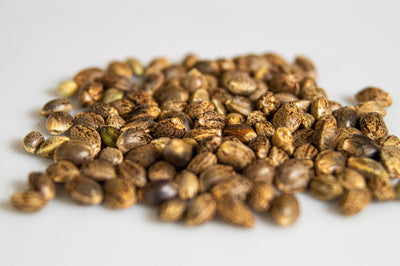
Photo by Jamie Edwards via Unsplash.
Search "autoflower feeding schedule" and you'll get the same chart copy-pasted across forty grower blogs: feed 25 to 50 percent less than you would a photoperiod plant, start light, don't get greedy. It's not wrong, exactly, but it's also not measured -- it's heuristic, passed down grower to grower like a family recipe, rarely tied to an actual nutrient uptake number pulled from a real plant under real conditions.
That changed somewhat in January 2026, when Powell and Bauerle out of Colorado State's Department of Horticulture and Landscape Architecture published a paper in Frontiers in Plant Science that did something nobody had done in a controlled, published way before: they modeled cultivar-specific nutrient uptake directly, rather than assuming one number fits every strain. The results don't hand growers a clean plug-and-play chart. If anything, they complicate the simple feed-less narrative, because the two cultivars they tracked side by side pulled in meaningfully different amounts of nitrogen, phosphorus, and potassium under identical conditions.
The deeper issue with autoflower feeding was never really about the dosage number on the bottle. It's about time. An autoflower runs its entire life -- seed to harvest -- in 60 to 90 days on an internal clock that doesn't care what happened to the plant last week. A photoperiod plant you overfeed in veg can sulk for ten days and still recover before you flip the lights. An autoflower doesn't get that grace period. This piece is an attempt to keep those two things separate: what's actually been measured in a controlled trial, and what's grower consensus dressed up as if it were science.
What the CSU Study Actually Measured
The CSU paper is narrower and more technical than the headlines suggest, and that's worth understanding before you try to apply it. Powell and Bauerle used transpiration-driven mass-balance modeling -- essentially tracking how much water a plant moves and back-calculating the nutrient concentration required to account for what showed up in tissue -- to predict vegetative nutrient uptake in Cannabis sativa. They ran this across two cultivars, First Light and CJ2, grown under the same conditions so the only real variable was genetics.
The numbers themselves are the interesting part. Nitrogen uptake for First Light ranged from 97 to 155 mg/L, while CJ2 came in at 78 to 145 mg/L over the same growth window. Phosphorus tracked closer between the two -- 14 to 48 mg/L for First Light versus 13 to 49 mg/L for CJ2 -- but potassium again showed a real gap, 112 to 216 mg/L for First Light against 111 to 205 mg/L for CJ2. These aren't rounding differences. A grower feeding both cultivars from the same reservoir at the same EC is, by definition, overshooting one and undershooting the other.
That's the core takeaway, and it's a more useful finding than any single feeding number: nutrient uptake is cultivar-specific. A universal feeding chart -- the kind printed on the back of a bottle, or the kind that gets shared as a spreadsheet in a grow forum -- cannot be precisely correct for every strain, whether it's an autoflower or a photoperiod plant. Genetics set the demand curve, and the fertilizer industry's one-size-fits-all schedules are, at best, a reasonable average.
It's also important not to overreach with what this study actually shows. This is mass-balance modeling of vegetative-stage uptake -- it tells you what the plant was pulling in during growth, not how that translated into final flowering yield or potency. Treat it as a data point about demand, not a yield trial. The temptation is to read cultivar-specific numbers as a new gospel schedule; the more honest read is that it's evidence a universal schedule was always an approximation, and now we have some real numbers showing how far off that approximation can drift.
Luxury Consumption: Why Heavier Feeding Doesn't Mean Bigger Yields

Photo by CRYSTALWEED cannabis via Unsplash.
One of the more practically important findings buried in the CSU data is easy to miss if you're just skimming for target numbers: observed nutrient uptake generally exceeded published sufficiency ranges. In plain terms, the plants were pulling in more nitrogen, phosphorus, and potassium than they actually needed to grow normally, simply because it was available in solution.
This isn't a new phenomenon -- horticulturists have a name for it, luxury consumption, and it shows up across nearly every crop that's ever been grown in a controlled system. Plants don't have a shutoff valve that stops uptake once biological need is met. If the root zone is loaded, the plant keeps absorbing, and that surplus mostly gets stored or cycled through tissue without doing anything to increase yield or potency. It's the plant equivalent of eating past full because the food's still on the table.
This finding is a direct problem for nutrient brands that market aggressive feed-heavy schedules as the path to bigger harvests. If uptake exceeds need by default, then pushing EC higher isn't feeding the plant's growth -- it's just handing it more surplus to store, with no corresponding payoff in bud weight. It lines up cleanly with a 2021 Frontiers in Plant Science study by Bevan, Jones, and Zheng, which used response-surface analysis in deep-water culture to map how flowering yield actually responded to nitrogen and phosphorus concentration. Yield responded quadratically -- meaning there's a real optimum, not a straight line where more is always better -- with predicted peak yield near 194 mg/L nitrogen and 59 mg/L phosphorus. Past that point, yield flattened or declined.
The same study found something that should unsettle anyone who's ever bought a dedicated PK booster: potassium showed no measurable effect on yield across a concentration range from 60 to 340 mg/L. That's an enormous range showing essentially zero response. Combined with the CSU luxury-consumption data, the practical implication is blunt: pushing EC past what the plant actually needs mostly wastes nutrient salts, raises the risk of salt lockout in the root zone, and doesn't buy you bigger colas.
Why Autoflowers Can't Absorb Mistakes Like Photoperiods Can

Photo by Pablo Federico Quiñonez via Unsplash.
The mechanical reason autoflower feeding has to be handled differently isn't just that the plants stay smaller -- it's that they operate on a fixed internal clock with no ability to pause or extend it. A full autoflower lifecycle, seed to harvest, runs somewhere between 60 and 90 days depending on the strain. A photoperiod plant, by contrast, vegs for as long as the grower chooses to leave the lights on an 18/6 or similar schedule. That single structural difference changes almost everything about how forgiving a feeding mistake is.
Say you overfeed a photoperiod plant in week two of veg and it shows tip burn, some leaf curl, a slowdown in growth. You back off the feed, flush lightly, and the plant has weeks -- sometimes months, if you're vegging for size -- to recover full vigor before you ever flip it to 12/12. The mistake gets absorbed into a much longer runway. An autoflower doesn't have that runway. It transitions into flowering on its own schedule regardless of how stressed or set back it is, so a feeding mistake in week two doesn't get a do-over. It just eats directly into whatever vegetative growth window the strain's genetics already allotted it, which was short to begin with.
There's a second, sharper risk specific to the early weeks: overfeeding during weeks one through three of an autoflower's life can actually trigger stress-induced early flowering. Cannabis has evolved to respond to stress by reproducing sooner rather than later -- it's a survival strategy -- and nutrient burn is exactly the kind of stress that can nudge that internal clock forward. So the mistake doesn't just fail to get corrected; it can actively compress the vegetative window even further than the strain's genetics already dictate, leaving you with a smaller plant that starts flowering before it's built the structure to support a decent harvest.
This is the real argument for treating autoflower feeding as its own discipline rather than a scaled-down photoperiod schedule. It's not simply that the numbers on the bottle should be smaller. It's that the cost of getting those numbers wrong is structurally higher, because there's no extended veg phase sitting there to absorb the damage.
EC and PPM Targets: Autoflower vs Photoperiod Side by Side

Recommended nutrient strength steadily increases across an autoflower's lifecycle, rising from a mild 0.6 mS/cm EC at the seedling stage to a peak of 1.9 mS/cm during bloom. This gradual ramp-up reflects the plant's growing nutrient demands as it matures from vegetative growth to flowering.
Commercial nutrient lines have started catching up to this reality. The 2026-updated Bonnie & Clyde system from Cronk Nutrients is a useful example because it was built from scratch specifically for autoflowers rather than adapted down from an existing photoperiod formula -- and the numbers reflect a genuinely conservative starting point. Seedling-stage EC sits at just 0.2 to 0.6 (roughly 100 to 300 PPM), which is low enough that a lot of growers coming from photoperiod habits will feel like they're barely feeding at all.
From there the ramp is gradual: 0.6 to 1.0 EC through early veg, 1.0 to 1.4 in late veg, and a peak of 1.5 to 1.9 EC at full bloom. Compare that to a typical photoperiod bloom schedule, which commonly runs 1.8 to 2.2 EC or higher at peak, and you can see the gap. The general industry rule of thumb -- autoflowers need roughly 20 to 30 percent lower EC than an equivalent photoperiod schedule -- holds up reasonably well against these numbers, and the gap matters most in weeks one through three, exactly the window where stress-induced early flowering is the biggest risk.
Timing the switch from vegetative to bloom nutrients is where a lot of growers overthink things by defaulting to a calendar. The better trigger is a plant signal: white pistils emerging at the nodes. That typically shows up around weeks three to four from sprout, but it shifts meaningfully by strain and by environment -- light intensity, temperature, and genetics all nudge that timing earlier or later. Watch the node sites, not the countdown on your grow journal.
Worth being direct about the source here: this EC ramp is industry and grower consensus built from commercial formulation and years of shared field experience, not the controlled peer-reviewed uptake numbers out of the CSU study. Both are genuinely useful, but they answer different questions -- one tells you what's been measured under lab conditions in two specific cultivars, the other tells you what's worked across thousands of home grows -- and conflating them gives you false confidence in either direction.
Genetics matter more here than most feeding guides admit. Well-bred autoflower seeds with stable, predictable flowering triggers make these plant signals far easier to read accurately -- inconsistent or poorly stabilized genetics can throw pistil timing around enough that you're second-guessing every node instead of feeding with confidence.
The Late-Flower Phosphorus Trap

Photo by Thiago Patriota via Unsplash.
Standard photoperiod late-flower practice leans hard on PK bloom boosters in the final weeks, usually justified as a way to push final bud swell and density. It's baked into how most bloom nutrient lines are marketed -- the bottle with the biggest numbers on the label gets positioned as the secret to bigger yields right before chop.
Autoflower-specific guidance has increasingly pushed back against copying that approach directly, and for good reason. Pushing phosphorus above roughly 6 percent in late-stage autoflower formulas can actually induce deficiencies rather than prevent them. That sounds counterintuitive until you think about what excess phosphorus does in the root zone -- it can bind up and block uptake of other elements like zinc, iron, and calcium, creating a functional deficiency even while the phosphorus number on your feed chart looks generous. In a photoperiod plant with weeks of flower left to run, there's time to notice the lockout symptoms and correct course. An autoflower in its last two to three weeks doesn't have that time. The cycle doesn't allow for the same buffering or correction.
This lines up directly with the 2021 Frontiers finding discussed earlier -- potassium showed no measurable yield benefit across an enormous 60 to 340 mg/L range. If potassium isn't doing meaningful work across that entire span, the whole premise of the aggressive PK-hammer approach starts looking shaky even for photoperiod plants, let alone for autoflowers running on a much tighter margin for error.
The practical guidance is straightforward: keep bloom-phase phosphorus moderate, and stop chasing the more-is-better marketing on bloom booster bottles, especially inside the final two to three weeks before harvest. A flush or reduced-strength feed in the last 7 to 10 days still applies to autoflowers the same way it does to photoperiod plants -- that part of the consensus holds up fine. What's different is the margin for error while you're doing it. A photoperiod plant given an extra week or two of flower stretch can absorb a slightly mistimed flush. An autoflower's runway to correct an overfeed mistake at this stage is measured in days, not weeks.
None of this hands you a plug-and-play chart, and that's really the point. The CSU data confirms that nutrient uptake is cultivar-specific -- two strains grown side by side pulled meaningfully different amounts of nitrogen and potassium from the same solution. That's precisely why a rigid universal feeding schedule printed on a bottle, autoflower-branded or not, is always going to be an approximation rather than a precise fit for the plant in front of you.
The most defensible practical approach blends the two kinds of evidence rather than picking one. Start low, in the 0.2 to 0.6 EC range that the industry consensus and commercial autoflower lines both point to, then let the plant's own signals -- pistil emergence at the nodes, leaf color, growth rate -- guide your ramp rather than a fixed day count on a calendar. And resist the pull to push EC or phosphorus higher just because you know a photoperiod plant down the hall could tolerate it. It could, because it has weeks of extra veg or flower time to absorb that mistake. Your autoflower doesn't.
That asymmetry is really the whole argument. Underfeeding an autoflower costs you some size and maybe a bit of final yield -- a disappointing outcome, but a recoverable one within that grow. Overfeeding, especially early or in the last stretch before harvest, can cost you the entire cycle, because there's no extended runway left to fix it. Dialing feed in slightly under the plant's ceiling rather than over it is the safer bet every time, and it's worth remembering that even with feed dialed in perfectly, results still hinge on your genetics, your environment, and your setup -- which is exactly why starting with stable, well-bred seed genetics matters as much as anything on the nutrient label.
Sources
- Autoflower feeding schedule. grow question by Cannabeans ...
- Autoflower Nutrient Schedule Week by Week (2026 Guide) | Veridian Grow Hub
- Best Autoflower Nutrients 2026: A Grower's Comparison
- What is the best autoflower nutrient feeding schedule? | MSNL Seeds.com Blog
- The Best Nutrients for Growing Autoflowers | Autoseeds