Cold Reservoir Water in Unheated DWC Tents: The Overlooked Winter Killer
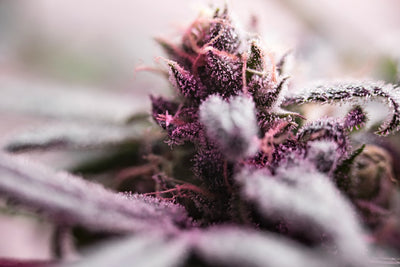
Photo by DominikFuchs via Pixabay.
It's late January, the garage tent is dialed in exactly the way the forums told you to dial it in. EC sits at 900 ppm, pH is locked at 5.8, the air stone is roaring, and the reservoir looks clean and healthy. And yet the plants have basically stopped moving. Leaves that should be stretching toward the light are sitting there, a little dark, a little tight in the node spacing, like someone hit pause three weeks ago. You check the runoff, you check the pH again, you maybe even flush and redose because that's what you're trained to do when growth stalls. Nothing changes.
Most DWC troubleshooting guides spend all their energy warning you about the opposite problem: warm reservoir water, root rot, that 75-80°F danger zone where pythium loves to move in. So it doesn't occur to a lot of growers that an unheated tent in a cold garage or basement can fail in the exact opposite direction. Cold water below 60°F isn't a milder version of the same problem -- it's a completely separate failure mode, with its own mechanism and its own fix.
A quick caveat before we get into it: there's no large body of peer-reviewed cannabis-specific research on root zone cold thresholds. Most of what's below traces back to hydroponics retailers, long-running grower forums, and practical horticultural science from other crops. The underlying mechanism, though -- enzyme-driven nutrient uptake slowing down in cold roots -- is well established plant physiology, not speculation. The number to remember: 59-60°F is where trouble starts, and 65-72°F is where you want to live.
What Actually Happens to Roots Below 60°F
Nutrient uptake in roots isn't a passive process, and it's worth being precise about that because it explains everything that follows. Water molecules can move into root cells fairly freely by osmosis, but the mineral ions dissolved in your reservoir -- nitrate, potassium, calcium, magnesium, phosphate -- have to be actively pumped across the root cell membrane. That job falls mostly to ATPase proton pumps embedded in the membrane, enzymes that use metabolic energy to build an electrochemical gradient and drag those ions in against their concentration. It's an energy-intensive, temperature-sensitive biochemical process, not a sponge soaking up whatever's around it.
Enzymes have an optimal temperature range, and like most plant enzymes, ATPase activity in root membranes drops off sharply as the solution gets cold. Below about 59°F (15°C), that enzymatic machinery slows enough that nutrient uptake falls noticeably even when your reservoir chemistry is textbook-perfect. Your EC meter and pH pen can read exactly right and it won't matter, because the bottleneck isn't in the water -- it's in the root's ability to move what's in the water across its own cell walls.
Push the temperature down further and things get worse fast. A commonly cited harder floor sits around 55°F, below which root development essentially stalls out and nutrient uptake grinds close to a stop. Roots aren't dying at that point, necessarily, but they've functionally gone dormant while the rest of the plant is still trying to run on lights and CO2 like nothing's wrong.
The most vulnerable stage of all is germination and early root development -- seedlings and fresh clones. A mature plant with an established root mass has some buffer; a taproot or a rooting clone in cold water has almost none, and cold shock at that stage can set a plant back for its entire life cycle or kill it outright. The end result across all these scenarios looks identical from the outside: slow, stunted, sulky growth that reads exactly like a nutrient problem, dragging on for weeks, even though nothing is actually wrong with your feed.
Why This Gets Misdiagnosed as a Deficiency
This is where cold water problems turn into wasted bottles of nutrients. Phosphorus, potassium, calcium, and magnesium uptake are all disproportionately sensitive to cold root zones, and those are exactly the elements whose deficiency symptoms are the most visually dramatic and the most familiar to growers -- interveinal yellowing, purpling stems, weak stretch, tight internodes. So the pattern plays out the same way in tent after tent: grower sees slow growth or some purplish tint creeping into the leaves, assumes it's a Cal-Mag or PK shortage, and reaches for the bottle.
The problem is that the nutrients were never missing. They're sitting in solution at perfectly adequate concentrations; the plant just can't pull them across the root membrane fast enough in cold water to keep up with what the enzymes need. Dosing more nutrient into a reservoir that's already saturated doesn't fix an uptake bottleneck -- it just spikes your EC, adds osmotic stress on top of cold stress, and can push the plant further into trouble. You end up compounding one invisible problem with a very visible one.
The fix for misdiagnosis is almost embarrassingly simple, which is exactly why it gets skipped: check reservoir temperature with a cheap thermometer before you touch your dosing at all. It costs about ten dollars and takes five seconds, and it should honestly be step one in any DWC troubleshooting checklist, ahead of pH, ahead of EC, ahead of reaching for the Cal-Mag bottle. A lot of growers check everything except the one variable that's actually off.
There's a tell that separates this from a genuine nutrient deficiency, too. A true PK or Cal-Mag deficiency tends to show up unevenly -- worse in one or two plants, or concentrated on older growth first as the plant reallocates mobile nutrients. Cold-water uptake stress tends to hit the whole tent at once: dark, slightly purplish-tinged leaves and slowed node spacing across every plant sharing that reservoir, because they're all fighting the same cold water rather than each fighting its own internal shortage.
The Oxygen Paradox: Why Cold Isn't All Bad

Dissolved oxygen saturation declines as water temperature rises, dropping from 11.3 mg/L at 50°F (10°C) to 7.6 mg/L at 86°F (30°C), highlighting the risk of oxygen deprivation in warmer growing solutions.
Here's the part that trips people up: cold water isn't uniformly bad for a hydroponic root zone. In fact it's better at one very specific thing that most DWC advice obsesses over -- holding dissolved oxygen. Colder water simply carries more oxygen than warm water. At 50°F, water can hold roughly 11.3 mg/L of dissolved oxygen; at 68°F that drops to around 9.1 mg/L, and by 86°F it's down near 7.6 mg/L. That relationship is exactly why most DWC guides tell you to keep your reservoir cool -- warm water in the mid-70s to 80°F range holds less oxygen, and that same warmth happens to be the sweet spot for pythium and other root pathogens, which is how you end up with the classic slimy brown root rot that terrifies every DWC grower at some point.
An unheated winter tent flips that entire risk profile on its head. Oxygen is abundant -- your air stone is barely needed to hit saturation in 55°F water. But the roots are now too cold to actually use the nutrients that oxygen-rich, well-fed water is delivering. You've solved the rot problem and walked straight into the uptake problem instead, without doing anything wrong on the oxygenation side.
This is the real lesson buried in the oxygen numbers: cooler is not automatically safer just because warm water carries the more famous risk. Reservoir temperature is a two-sided variable, and managing it means actively steering toward a target window, not just defaulting to as cold as possible because that's the side of the spectrum the internet warns about most loudly.
None of this means air stones and circulation stop mattering in cold water -- they still matter, because stagnant zones and biofilm can build up regardless of temperature, and you still want even mixing so temperature and nutrient distribution stay uniform. It's just that oxygen availability stops being your limiting factor in a cold tent. The limiting factor becomes metabolic rate -- how fast the roots' own enzymatic machinery can actually put that oxygen and those nutrients to use.
Fixing It: Heaters, Placement, and Avoiding Thermal Shock

Photo by Austin via Unsplash.
Once your reservoir is reading below 60°F with any regularity, the standard fix is a submersible aquatic heater, sized in watts to your reservoir volume rather than eyeballed. A 50-100 gallon tote in a cold garage in January is a very different heating load than a 5-gallon bucket system in a basement that hovers at 62°F, so check the heater manufacturer's wattage-to-gallon guidance rather than grabbing whatever's cheapest at the pet store.
Spend the extra money on a titanium-element heater rather than a standard glass aquarium heater. Nutrient solution is more corrosive and more electrically active than plain aquarium water, and glass heater elements degrade and occasionally crack in that environment over a season of continuous use. Titanium elements hold up far better long-term, and given that a heater is running essentially nonstop through an entire winter grow cycle, the reliability difference is worth the premium.
Placement matters more than people expect. Drop the heater into a dead corner of the reservoir and you'll create a warm pocket right around the heater while the bulk of the water -- and the roots actually sitting in the net pots -- stays cold. Position it in the path of active circulation, ideally near the pump return, so the heat gets distributed through the whole volume rather than pooling in one spot.
Aim for 65-72°F as your working target, and if your setup and ambient climate cooperate, plenty of experienced growers run the higher end of that, 68-72°F, without any oxygenation issues as long as circulation and air stones are doing their job. Just don't chase the number too aggressively or too fast. Ramping a cold reservoir up quickly, or topping off a warm reservoir with cold tap water straight from the line, can thermal-shock the root zone -- a sudden temperature swing stresses roots even when the eventual destination temperature is fine. Top off gradually, and use room-temperature or pre-warmed water rather than water straight from a cold pipe.
Finally, insulate the reservoir itself -- reflective bubble wrap, foam board panels, or simply running the system inside a covered tote -- so the heater isn't fighting a cold garage floor and drafty walls all night. A well-insulated reservoir holds its temperature far more evenly and cuts your heater's duty cycle substantially, which also extends its working life.
What the Numbers Actually Show
It's worth being honest about where this information actually comes from, because a lot of hydroponics advice gets repeated so often it starts sounding like settled science when it isn't. There is no cannabis-specific, peer-reviewed study establishing exact cold thresholds for root uptake in this crop. Most of what circulates -- including the 59-60°F and 55°F numbers referenced earlier -- traces back to grower forums and hydroponics retailer explainers built on collective field experience. That's genuinely useful practitioner knowledge, but it's not the same thing as a controlled trial, and it's worth treating it that way.
The closest thing to controlled evidence comes from outside cannabis entirely: a Purdue University hydroponic lettuce trial, run under horticultural research conditions with air temperatures held at 60°F during the day and 55°F at night. Researchers varied the nutrient solution temperature and tracked plant response, and found maximum crop growth occurred at a solution temperature of 71.5°F -- landing right in the range grower forums independently converged on for cannabis.
The more interesting finding wasn't just the optimal number, though -- it was the mechanism. Root growth increased as solution temperature rose, and that increase in root mass directly drove increased shoot fresh weight. In other words, this wasn't a correlation floating in the background; it was a measurable, dose-response chain running from warmer roots, to more root growth, to more top growth, tracked under controlled conditions in a real hydroponic system.
That matters for cannabis growers because it's controlled evidence for the exact mechanism the forums describe anecdotally. It doesn't prove cannabis behaves identically to lettuce down to the degree, but it validates the underlying physiology -- root zone temperature drives root growth, which drives yield -- with actual data instead of just repeated claims. The practical takeaway is to treat 65-72°F as your working target range, watch how your own strain and setup respond, and hold that forum-derived number as a strong starting point rather than an exact law of physics.
The frustrating part of cold-water stress is how disproportionate the fix is to the problem. A titanium reservoir heater runs somewhere around $15-30, a decent thermometer is another $10, and together they solve an issue that otherwise gets misread as a nutrient or pH problem for weeks -- weeks of flushing, redosing, second-guessing your feed schedule, and watching a plant sit there doing nothing while the actual cause sits unmeasured in the reservoir the whole time.
Genetics play a role here too, though not the starring one. Vigor and cold tolerance vary meaningfully strain to strain, and starting with well-bred seeds gives a root system a better baseline to work from when conditions aren't perfect -- which is part of what we focus on with the genetics we offer at Seedtiva. But even the most vigorous seedline still runs on the same root enzymes, and no amount of genetic quality substitutes for actually managing reservoir temperature in a cold garage. Genetics set the ceiling; temperature management determines whether you get anywhere near it.
The bigger habit to walk away with isn't really about DWC heaters specifically. It's about treating reservoir temperature as something you actively steer toward a target, in both directions, rather than defaulting to cooler-is-safer because that's the failure mode the internet talks about most. Warm water rot and cold water stunting are two ends of the same variable. Managing only one end of it is how a perfectly clean, perfectly dosed reservoir still leaves you with a tent full of plants that just won't grow.
Sources
- DWC water temperature - GrowWeedEasy.com
- How to lower water temperature in DWC without reservoir grow question by Hoodoo - GrowDiaries
- Ideal Water Temperature for Hydroponics: 65-80°F | Growee
- DWC Water Temperature: The Key to Hydroponic Growing
- Water Temperature in DWC: The Danger Zone and the Fix - Smart Floor Clean