Diagnosing Cannabis Nutrient Deficiencies by Leaf Color
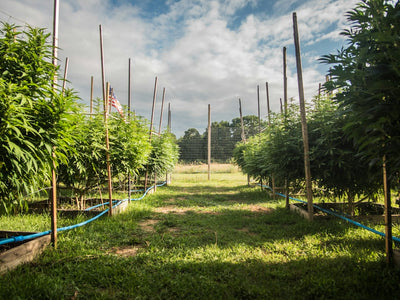
Photo by CRYSTALWEED cannabis via Unsplash.
A fan leaf goes pale, or the edges start browning, or the new growth looks twisted and small — and the first instinct is to reach for a bottle. That instinct is usually wrong, or at least premature. A discolored leaf is a symptom, not a diagnosis, and treating the wrong problem doesn't just fail to fix anything — it burns time you don't get back. Dump extra cal-mag into a plant that's actually locked out from a pH swing and you've just made the lockout worse while the real cause sits untouched for another week. In flower, a week is not a small thing.
The color itself is the least useful piece of information you have. Pale yellow can mean nitrogen deficiency, magnesium deficiency, or a pH problem that has nothing to do with either. What actually narrows it down is location — whether the symptom is showing up on the oldest fan leaves near the bottom of the canopy or on the fresh growth at the top. That single detail tells you whether you're dealing with a mobile nutrient the plant can reallocate on its own, or an immobile one it can't move once it's been used. Everything else follows from that.
This piece walks through the actual framework growers use to work through that question — not a generic chart where you match a leaf photo to a picture and guess. We'll also cover the handful of look-alikes that get misdiagnosed as deficiencies constantly (nutrient burn, light bleaching, cold-induced purpling), and close with a quick, honest look at the new AI leaf-scanning apps that have started showing up in grow rooms. They're a decent shortcut. They are not a substitute for understanding why the symptom is where it is.
Why Location on the Plant Matters More Than Color Alone

Photo by Esteban López via Unsplash.
Plants aren't passive about nutrients. When something is running short, mobile nutrients — nitrogen, phosphorus, potassium, and magnesium — get physically pulled out of older tissue and shuttled to new growth, because new growth is where the plant is placing its bets for the future. That's why a deficiency in any of these four almost always shows up first on the lower, older fan leaves. The plant is cannibalizing them to keep the top of the canopy fed.
Immobile nutrients don't work that way. Calcium, iron, and manganese get deposited into plant tissue and stay there — once they're built into a leaf's structure, the plant can't strip them back out and ship them somewhere else. So when one of these runs short, the deficiency shows up in the new growth at the top, because that's the tissue currently being built without enough of the nutrient to build it correctly. Older leaves that were formed while supply was adequate stay fine.
This is the whole trick: mobility plus location. Before you treat anything, pull a recently matured leaf — not the oldest, wilted one, and not the newest tip — and check your runoff pH and EC. Visual symptoms are a starting point, not a confirmed diagnosis. A leaf can look exactly like a magnesium deficiency and turn out to be a pH lockout that's blocking magnesium uptake despite plenty of it sitting in the reservoir or soil. Runoff numbers tell you whether the problem is supply or availability, and that distinction changes what you actually do next.
Experienced growers use this two-factor system — mobile-versus-immobile, top-versus-bottom — instead of scrolling through a color chart hoping a photo matches theirs closely enough. Charts are a fine memory aid once you already understand why the pattern exists. Used cold, without the location logic behind them, they lead to a lot of wrong guesses and a lot of wasted feed.
Lower Leaf Symptoms: Nitrogen, Phosphorus, Potassium, Magnesium
Nitrogen deficiency is the most common one growers run into, and it's often self-inflicted in the best way: it happens because the plant's demand for nitrogen is dropping in flower while feeding may not be adjusted to match. It shows up as an overall pale, washed-out green starting on the oldest fan leaves at the bottom of the plant. The yellowing is uniform across the whole leaf, not patchy, and affected leaves eventually go fully yellow and drop. Mid-to-late flower is when this shows up most, when N demand outpaces whatever bloom-phase feed is being run.
Phosphorus deficiency is less common and easy to overcall. Real P deficiency produces dark, dull-looking leaves, purpling in the stems and petioles, and visibly slowed growth — not just discoloration. The catch is that purple stems alone don't mean phosphorus deficiency. Cold night temperatures and certain purple-leaning genetics produce the exact same stem coloration with zero nutrient problem behind it. Don't treat purple stems in isolation; look for the dullness and stunted growth alongside it.
Potassium deficiency shows up as brown, burnt-looking edges and tips on the lower leaves, usually starting right at the margins and creeping inward toward the midrib over time. It reads almost like the leaf got scorched from the outside in.
Magnesium deficiency is the one most often confused with nitrogen, and the tell is the vein pattern. Mag deficiency causes yellowing specifically between the veins — interveinal chlorosis — on older leaves, while the veins themselves stay noticeably greener for longer. Nitrogen deficiency, by contrast, yellows the whole leaf including the veins fairly evenly.
Before treating any of these four, cross-check pH. Cannabis in soil wants roughly 6.0-7.0; in hydro or coco, 5.5-6.5. Outside those windows, nutrients that are physically present in the mix become chemically unavailable to the roots, and you'll see these exact same symptoms even with a perfectly adequate feeding program. Fixing the feed when the real problem is pH just adds salts on top of a lockout.
New Growth Symptoms: Calcium, Iron, and Manganese
Calcium deficiency is one of the more frustrating ones because it hits the plant's newest, most vulnerable tissue. It shows up as distorted, curled, or spotted new growth, along with weak, sometimes hollow-feeling stems. Because calcium is immobile, the plant can't pull it from older leaves to bail out the new growth — whatever calcium made it into that new tissue during formation is all it's going to get. That's why Ca deficiency tends to look structural rather than just cosmetic: twisted leaflets, brittle new shoots, sometimes tip burn on the newest leaves specifically.
Iron deficiency causes yellowing of the young leaves while the veins stay sharply, almost strikingly green — a much crisper contrast than the softer interveinal pattern you get with magnesium. It typically starts near the base of the leaf and works outward. Because iron uptake is heavily pH-dependent, this is one of the deficiencies most likely to actually be a pH problem in disguise.
Manganese deficiency produces a mottled, blotchy interveinal chlorosis on new growth that gets confused with nitrogen deficiency constantly — understandable, since both involve yellowing. The tell is the pattern: manganese keeps the veins green in a speckled, mottled way, while nitrogen deficiency produces a uniform pale yellow across the whole leaf, veins included, and shows up on old growth instead of new.
Cal-mag issues deserve a special mention because they're largely preventable rather than something to diagnose after the fact. Coco coir and reverse-osmosis water setups strip out or simply never contain the calcium and magnesium that tap water or living soil would naturally supply. Growers running coco or RO should be supplementing cal-mag proactively as a standard part of the feed schedule, not waiting for curled new growth to show up before reacting.
The general point with all three of these immobile nutrients: catch it early, because there's no fixing what's already built. New growth affected now stays affected — the distorted leaf doesn't uncurl once you correct the feed. You're not repairing existing tissue, you're just making sure the next round of growth comes in clean. That's a strong argument for regular runoff checks rather than waiting for a visual cue to prompt action.
Don't Mistake These for a Deficiency
Plenty of things that aren't deficiencies produce deficiency-like symptoms, and mixing them up leads to overcorrecting a problem that was never nutritional in the first place.
Nutrient burn from overfeeding browns leaf tips, but it does so evenly across many leaves throughout the canopy at once — top, middle, and bottom all showing crispy tips roughly simultaneously. That's the giveaway that separates it from potassium deficiency, which follows a specific bottom-up pattern rather than hitting the whole plant uniformly. If tip burn is everywhere at once, back off your EC before you consider it a K deficiency.
Nutrient lockout is the sneakiest one, because it can mimic almost any deficiency on this list. It happens when pH drifts outside the plant's usable range and roots simply can't absorb nutrients that are physically present and available in the soil or reservoir. You can have a perfectly balanced feed and still get textbook magnesium or iron symptoms if your pH has drifted to 5.0 or 7.5. The fix is correcting pH, not adding more of whatever nutrient the leaf seems to be missing — more product on top of a lockout just raises your EC without solving anything.
Light bleaching gets misread as an iron or manganese issue fairly often, especially in grow rooms that recently upgraded lighting. Light that's too intense for the plant's current stage can wash out the uppermost leaves, giving them a pale, almost silvery look that superficially resembles interveinal chlorosis. The fix there is raising the light or dialing back intensity, not feeding.
And purple stems with dark leaves aren't automatically phosphorus deficiency — genetics with anthocyanin-heavy expression, and cold snaps below roughly 60°F at night, produce the identical look with no nutrient issue involved at all.
So the rule-out order, every time, before you touch the feed: check pH and runoff EC first. Then look at whether the pattern actually matches the old-growth/new-growth location logic for a real deficiency. Only after both of those check out do you treat.
AI Leaf-Scanning Apps: A Useful Shortcut, Not a Substitute
The leaf-scanning apps that have shown up over the past year or two are genuinely useful, and it'd be dishonest to wave them off as a gimmick. DankBot.AI, which launched on the App Store in March 2026 from developer Perpetual Agility LLC, lets you photograph a leaf and get back an instant read — a diagnosis with a confidence score and a suggested treatment plan covering nitrogen, phosphorus, potassium, calcium, magnesium, and iron issues. Kushy Scanner works on similar principles, running visual color detection against the same core list of deficiencies.
For a newer grower who hasn't yet internalized the mobility-and-location framework, these apps are a legitimately fast first read. Point the camera, get a plausible answer in seconds, and at minimum you've got a hypothesis to test rather than a blank stare at a discolored leaf. That's real value, especially at 11pm when you just want to know if you should be worried.
The accuracy isn't perfect, though, and growers should treat that as expected rather than a reason to panic when it happens. There's at least one documented case of a clear, textbook nitrogen deficiency getting misread by one of these apps as a genetic mutation — a miss that a grower who knew to check the bottom-of-canopy, uniform-yellowing pattern would have caught immediately without any app at all. Image-based diagnosis struggles most with exactly the cases that overlap visually: nitrogen versus magnesium, manganese versus nitrogen, lockout versus true deficiency. Those are precisely the calls where the location framework earns its keep.
The best practice is to run both together. Let the app give you its read, then check that read against where on the plant the symptom actually appears, and confirm with a runoff pH and EC test before you act on either one. Treat the app's output as a second opinion — useful, fast, worth having — not as the final word. The grower who understands why a symptom shows up where it does will catch the app's mistakes. The grower who only has the app won't know a mistake happened at all.
Strip all of this down and it really is just two questions, answered in order. Where on the plant is the symptom showing up — old growth or new growth? And have you actually ruled out pH lockout or overfeeding before you assume it's a supply problem at all? Almost every deficiency call a grower gets wrong traces back to skipping one of those two steps and jumping straight to a bottle.
The fastest way to get good at this isn't memorizing another chart — it's keeping a simple log. Feed strength, runoff pH, a photo of the canopy, once or twice a week, in whatever medium and genetics you're actually running. Six weeks of that log will teach you your specific plant's patterns in your specific water and medium faster than any reference guide, because it shows you what normal looks like before something goes wrong, not just after.
And a lot of this trouble is preventable rather than diagnosable. Starting with quality, well-bred genetics and running a stable, consistent feeding routine — steady EC, steady pH, no wild swings between waterings — keeps most of these deficiencies from ever becoming a puzzle worth solving. Outcomes still depend on your climate, your setup, and the genetics you're working with, so nothing here is a guarantee. But a plant that's fed consistently from strong seed stock rarely gives you a leaf you can't explain.
Sources
- How to Troubleshoot Cannabis Nutrient Disorders | Cannabis Business Times
- Leaf diagnosis chart – Identify cannabis leaf symptoms
- System and method for characterization of Cannabaceae plants
- Cannabis Nutrient Deficiencies [Full Chart & Symptom Guide]
- 11 Common Cannabis Nutrient Deficiencies & How To Correct Them – Organitek