Ducted vs Ductless AC for Basement and Closet Grows
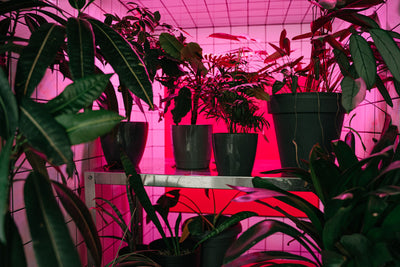
Photo by Zulfugar Karimov via Unsplash.
It's 4 a.m., and the lights in your closet grow have been on for six hours. The tent reads 88F. The window unit in the next room is roaring, the air feels cooler, and the hygrometer still shows humidity stuck far too high for flower. The leaves look fine now. In three weeks the buds will tell a different story.
So the useful question isn't which AC is better in general. It's which one holds temperature and humidity in a small sealed space without dragging the rest of the house along with it.
We'll work through it in the order you'd actually make the decision: heat load, humidity load, odor, install constraints, then cost and the legal and electrical caveats. Some current-rule details, like refrigerants and tax credits, I couldn't verify, so I'll flag those for you to confirm.
Key takeaways
- A ductless mini split cools one zone quietly, which suits most closets and finished basements better than tying into house ductwork.
- Plants add a large latent humidity load, so many growers pair any AC with a dedicated dehumidifier instead of trusting the AC alone.
- Ducted setups share house air, so odor and humidity can travel through the vents unless the grow gets its own sealed supply and return.
Why Small Grows Overheat and Swamp Fast
Every watt your light draws ends up as heat in the room. One watt is about 3.41 BTU/hr, so a 600W draw puts out roughly 2,000 BTU/hr, and that's before you count ballast or driver losses, fans and a dehumidifier running in the same space. In a sealed closet there's no passive exchange to carry any of it away. Temperature starts climbing within the first hour of lights-on.
Heat is only half the problem. A mature flowering room moves liters of water per day through transpiration, depending on plant count and size, and that moisture has to go somewhere. In a heavy room the latent (humidity) load can rival the sensible (temperature) load. An AC that only cools the air will leave you swampy.
Here are the numbers to hold:
- Lights on: roughly 75-82F
- Lights off: roughly 65-72F
- RH in mid-late flower: 40-50 percent
- Vapor pressure deficit in flower: check your cultivar's guidance and log it against temperature and RH
Basements change the picture. The ground buffers them, so they usually start cooler than a closet upstairs. But summer dew points push moisture indoors, and dehumidification becomes the bigger fight. Many basement growers barely need cooling in spring and fall and then get hammered by humidity in July.
Know which problem you have before you shop. A closet with a 600W light is a heat problem first. A damp basement with eight plants is a moisture problem first. Most rooms are some of both.
How Ductless Mini Splits Work in a Grow Space
A mini split pairs an outdoor condenser with a wall-mounted indoor head, linked by a small refrigerant line set. No ductwork is involved. You run the line set and a condensate drain through the wall, and the system cools one zone.
Most modern units are inverter-driven. The compressor ramps up and down instead of cycling hard on and off like a window unit, so temperature holds much tighter and the noise stays low. For a grow, that tight swing matters, since the lights-on spike is exactly what you're trying to flatten.
Footprint is the other big win. The head mounts high on a wall and takes almost no floor space, which is valuable when your closet is already full of tent, pots and fans.
The weakness is moisture. Most mini splits are sized for human comfort, not plant transpiration. In dry mode they can short-cycle or under-remove water in a heavy flower room. Plan on a separate dehumidifier rather than expecting the dry setting to carry a full canopy.
Installation usually means a line set through the wall, a condensate drain and, in most places, a licensed HVAC tech to handle the refrigerant. Check your local code before you drill anything. Also ask the installer about refrigerants. New residential equipment has been moving to lower-GWP options, mainly R-454B and R-32, which are mildly flammable (A2L). I couldn't confirm the current EPA specifics, so verify them with your installer and on epa.gov.
Where the head goes matters too. Keep it where its airflow isn't blasting straight onto the canopy, and where condensate can drain by gravity or a small pump.
Ducted Systems: Sharing the House Air Handler

Photo by Jonathan Cooper via Pexels.
Central AC uses one air handler and a network of ducts. To add a grow, you either tap a zone or build a dedicated branch off the trunk. If your basement already has trunk lines running through it, that can look like a cheap shortcut.
The upside is real. If the existing system has spare capacity, you may not need a new outdoor unit at all, and there's no extra hardware on your wall.
The downsides arrive quickly. The grow now lives on the whole-home thermostat. The house wants a comfortable living temperature and humidity, while the room wants different numbers at night, and there's one set of controls arguing over both.
Shared returns also carry odor and humidity wherever the air goes. A grow branch needs its own sealed supply and return, and ideally carbon filtration, so nothing from the room mixes with the living space.
Then there's load. An air handler sized for the home can be overworked by a heavy added load, which causes short-cycling and poor dehumidification in the rest of the house. You can end up with a clammy living room because the grow ate the system's capacity.
Before you touch shared HVAC, check your lease, your insurance policy and local home-grow rules. Modifying ductwork in a rental, or in a way your insurer wouldn't expect, creates problems that outlast any single harvest.
Ducted vs Ductless: Side-by-Side for Basement and Closet Grows
Here's how the two stack up for a basement or closet grow:
| Factor | Ductless mini split | Ducted (shared) |
|---|---|---|
| Independence from house | High, own zone and controls | Low, tied to home system |
| Install complexity | Line set, drain, often licensed tech | Sealed branch, duct work, balancing |
| Noise | Quiet indoors | Depends on handler location |
| Odor control | Contained to room | Risk via shared returns |
| Humidity handling | Limited, add a dehumidifier | Limited, strains house system |
| Space used | Small wall head | Little visible hardware |
Ductless wins on independence, quiet and tight single-zone control. Ducted wins when the basement already has capacity and runs and you don't want extra visible hardware.
Sizing decides more than the category. A closet grow under about 4x4 ft of footprint often needs only 6,000-9,000 BTU of cooling, but size to your actual heat load and have it checked rather than guessing. An oversized unit short-cycles and leaves humidity high. An undersized one runs nonstop and still loses the afternoon.
Portable and window units are a third, cheaper option. Portables vent hot exhaust or pull in outside air, and window units leak around the frame. Neither suits a sealed room with odor control, though they can work as a stopgap for a first run.
Humidity, Odor and the Dehumidifier Question
Plan on a standalone dehumidifier in both setups. A 35-50 pint unit with an external drain or pump is common for small rooms, then adjust to the actual moisture load. A four-plant closet and a twelve-plant basement are different animals.
Put it inside the grow space, or tie its condensate to a drain. Emptying a bucket daily gets old by week three and eventually gets skipped.
For odor, a carbon filter on a sealed exhaust loop keeps smell out of ducts and living areas. A ductless room still needs it for any air you vent.
If you exhaust, keep the room at slightly negative pressure so air leaks in rather than out. Basements add a safety note: mind combustion appliances like furnaces and water heaters. Negative pressure can backdraft them, so get a carbon monoxide detector and have the setup looked at if gas appliances share the space.
Finally, measure. Use a hygrometer with logging and review the lights-off period closely. RH spikes after lights-out are the classic bud-rot setup in basements, because temperature drops while moisture hangs in the air. If your log shows humidity climbing overnight in late flower, fix it before the next week, not after.
Cost, Rules and Picking Your Setup
Ductless usually costs more up front for installation but offers lower running cost thanks to inverter efficiency. Ducted can be cheaper if capacity and runs already exist. Get actual quotes for both, since local labor and equipment prices vary widely.
Don't count on tax credits. The federal 25C heat pump credit was slated to end for equipment placed in service after Dec 31, 2025, and it likely never applied to cultivation equipment anyway. Verify at irs.gov before you budget around it.
Electrical is the hidden line item. Dedicated 240V circuits are common for mini split condensers, so budget for an electrician and any permits. Add the grow's own load and make sure you aren't piling it on an already busy panel.
Home-grow rules on plant counts, odor and inspections vary by state and city. Check your regulator before installing anything permanent, especially anything that involves cutting into walls.
The decision rule is simple. Closet or sealed room: pick ductless plus a dehumidifier. Large basement with spare air handler capacity and a separate sealed branch: ducted can work. If you're unsure, run the load numbers first and let them make the call.
The air conditioner you pick counts for less than whether you sized it to the real heat and moisture load and gave the room its own control. A perfect unit in the wrong size still fails, and a modest one that's matched to the room can carry a whole run.
Before your first flip, log temperature and RH through a full lights-on and lights-off cycle, then adjust. Fix the overnight spike while the plants are still in veg. Outcomes vary with your climate, space and genetics, but well-bred seeds from Seedtiva reward a stable room, and a stable room is something you can build.
Sources
- Heat Pump vs. Mini-Split: Choosing the Right System for Your Home
- Old House, No Ductwork: Your Complete HVAC Options in 2026
- Mini Split vs Heat Pump: Ductless or Ducted?
- Mini-Split Systems for Cannabis Grow Rooms: What to Know First
- Ducted vs Mini-Split Heat Pump 2026: Which to Choose?
- Integrated HVAC Systems for Cannabis Cultivation Have the Lowest Life Cycle Cost