LED Grow Light Tech Worth Watching Right Now
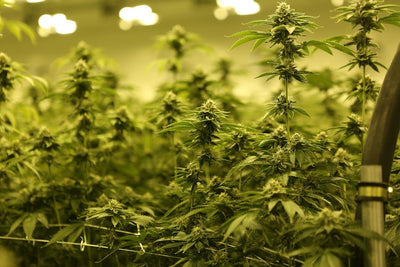
Photo by Ivan S via Pexels.
You bought a bar-style fixture two years ago. Now the same model sits on the manufacturer's site with new diodes, the same wattage and a price that moved a few dollars. Does the swap change anything for the light over your plants?
Usually less than the marketing suggests. Most LED news is incremental, and the changes worth your attention are diode quality, red-heavy spectrum and better controls. Headline wattage is the weakest signal on the page.
One caveat up front. The specific 2026 updates covered here come from manufacturer material, with no independent testing behind them. So this article keeps two piles apart: what is claimed and what is proven.
Key takeaways
- Mars Hydro and Spider Farmer updated lineups with Bridgelux LEDs and Osram deep-red diodes, but the claims come from the manufacturer alone.
- Efficacy in µmol/J only matters if the number is backed by third-party data like a DLC listing or an LM-79 report.
- A fixture refresh is not proven in the tent until a full flower cycle shows consistent light levels across the canopy and no early diode drift.
Diode Platform Swaps: What the 2026 Refreshes Actually Change
Mars Hydro says its FC series was updated in 2026 with Bridgelux 3030 LEDs and Osram deep-red LEDs aimed at flowering and fruiting. The series is described as eight models, covering seedlings through later stages, and pitched as high efficiency without commercial-system pricing.
Spider Farmer's SE Series, a bar-style lineup, reportedly moved to a Bridgelux high-efficiency platform on updated models. The stated key output and efficiency specs stayed the same.
Now the caution. The source is a manufacturer blog with no publication date and no verifiable µmol/J figures. Read it as a signal of direction, not proof of performance. The post even concedes that the 2026 SE version is recent and that real-world performance has to be observed over time. That is an honest line, and I would take it at face value.
So why care about a swap that leaves the specs alone? Because that is where cheap fixtures usually cut corners:
- Supply stability: a established diode platform means the maker can keep building the same light for years.
- Binning consistency: tightly binned diodes give an even spectrum and output from one fixture to the next.
- Lumen maintenance: better diodes hold their output as hours pile up, so the light reaching your canopy at month 30 is closer to what it was at month 1.
None of these show on a spec sheet. A same-specs diode refresh from a known LED maker is mildly good news, nothing more, until someone measures it.
Efficacy Numbers: Reading µmol/J Without Getting Fooled
Efficacy is micromoles of photosynthetic photons per joule of electricity. It drives your power bill and your heat load per unit of light, so it is the number worth understanding.
Well-designed fixtures commonly claim roughly 2.5 to 3.0 µmol/J. A claim on a product page is not a measurement, though. Before you trust one, run through these checks:
- Diode or fixture? Diode-only figures ignore driver losses. The fixture-level number is the one you pay for.
- Is it listed? Look for a DesignLights Consortium horticultural listing, or an independent LM-79 style test report.
- Is it current? I could not confirm any new efficacy record or DLC specification change for this piece. Check the DLC qualified products list directly for today's thresholds.
Efficacy also has diminishing returns. Going from 2.3 to 2.7 µmol/J saves real electricity over a year of 12-hour flower days, and I would not wave it away. But a better-built fixture with even coverage beats a slightly higher number with hot spots every time.
A fixture that hits 1000 µmol/m²/s in the center and 500 at the edges wastes the efficient photons it makes. Uniformity is the other half of efficiency, and it never appears in a single headline figure.
Deep Red, Far-Red and UV: Spectrum Tuning That Has Real Logic
Spider Farmer markets Osram 660nm diodes as Hyper red on the SE Series. Deep red sits near the peak chlorophyll absorption region, and these diodes are efficient photon producers. Heavy red in flower is sound in principle.
But a claim of boosted harvest performance from one spectrum tweak deserves a test against your own baseline. Weigh the light, count the days, and compare.
Far-red is the more interesting lever. Around 730nm it drives shade-avoidance stretch and can speed the flowering transition when used at lights-off or as a supplement. The price is extra stretch, so plan your training before you add it.
There is also the Emerson effect. Far-red combined with red raises the photosynthetic rate, and that is well established in plant physiology. Gains in cannabis canopies are less documented, so treat it as promising, not settled.
UV-A and UV-B are popular for trichome and terpene claims. Evidence is mixed. Overexposure stresses leaves and can damage gear and eyes, so start with short, low-dose runs and watch leaf edges for a week before extending.
I did not verify any new cannabis-specific spectrum research for this piece. Apply the same skepticism to spectrum marketing that you give efficacy claims.
Form Factor and Controls: Bars, Quantum Boards and Dimming
Bar-style fixtures spread diodes over a wider footprint. That usually means more even canopy coverage and lower hot-spot risk than a few concentrated COBs. Quantum-board and bar designs also run cooler per diode, so passive-cooled units cut fan noise and failure points compared with actively cooled high-wattage lamps.
Dimming is the underrated feature. Running below full output is often more efficient and gentler on diode lifespan. A dimmable driver also lets you ramp by stage, and daisy-chaining with controller compatibility makes that practical across a whole tent or room.
Typical PPFD targets, as general guidance and not guarantees:
| Stage | PPFD (µmol/m²/s) |
|---|---|
| Seedlings and clones | 200 to 400 |
| Veg | 400 to 600 |
| Flower | 600 to 1000 |
Go higher only with added CO2 and a dialed-in environment.
Heat affects humidity control too. Less radiant and driver heat makes temperature control easier. Still, recheck your temperature and humidity readings at canopy level after any light swap, because leaf temperature and transpiration shift even when the room thermostat looks the same.
How to Vet a New Fixture Before You Commit
Vetting a fixture is a short checklist. Work through it before you spend:
- Get a PPFD map at your actual hanging height and canopy footprint, not a peak center reading on a spec sheet.
- Look for independent verification: a DLC listing, a third-party report, or reviewer measurements with a quantum sensor.
- Check warranty, driver brand and parts. The driver usually fails before the diodes do, so replacement availability matters.
- Run a side-by-side. Because the 2026 refreshes are recent, hang a new fixture beside a known light for one cycle. Compare canopy PPFD, temps and yield before upgrading a whole room.
Mind the source of whatever reviews you read. Comparisons published on a manufacturer's own site, including ones about its competitors, are marketing. Weigh them accordingly.
Better light only pays off with genetics that can use it. Seedtiva offers quality genetics, and well-bred seeds are what turn extra photons into better flower. Outcomes still vary with your setup, climate and genetics.
The pattern worth watching is quiet: better diodes, deeper reds and smarter dimming, not dramatic new fixtures. The best upgrade is usually the evidence-backed one, not the newest.
Give any freshly updated light one controlled cycle against your current lights before you commit. The grower who measures beats the grower who trusts the spec sheet, and a quantum sensor costs far less than a mistake across a full room.
Sources
- 2026 Top 5 Energy-Efficient Grow Lights - Tested & Reviewed
- 9 Best LED Grow Lights for 2026 Home Gardens — LED Grow Lights Depot
- 2026 Trends in LED Grow Light Technology for Indoor Plant Cultivation
- 🌞 The Holy Grail of LED Grow Lights Has Arrived: Meet the 2026 Nova Su
- New LED Grow Light Technology for Commercial Farms (2026)
- Best LED Grow Lights [2026]: Tested and Ranked - Urban Grown Home