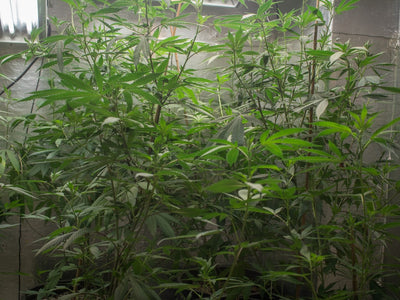
Feeding Massive Outdoor Colas: A Week-by-Week Nutrient Plan
Photo by surfwiz17 via Pixabay.
Walk out to the garden right now, mid-September, and most Northern Hemisphere outdoor photoperiod plants that flipped in mid-August to early September are deep into late flower or already ripening. The stretch is long over. The colas that are going to get massive already have their structure set, and what happens in the next few weeks of feeding decides whether those colas actually pack on weight and density, or whether they stay airy and undersized relative to what the plant could have produced.
Genetics and sun exposure get all the credit for big outdoor colas, but the nutrient program from flip to harvest is what actually turns a well-lit, well-bred plant into one that fills out its cola structure and can physically hold that weight without snapping a branch. A plant that's starved of potassium in week 6 doesn't build the stalk strength it needs in week 10. A plant fed high nitrogen into week 9 doesn't ripen cleanly no matter how good the genetics are underneath.
This breakdown is built around where most growers' plants actually sit this time of year: peak bulking behind them, ripening and the fade in front of them. It walks through the full arc from flip to cut, but the emphasis is on the back half, because that's the window most people are standing in right now, and it's also the window where mistakes cost the most. Over-feeding nitrogen late, skipping the flush entirely, or ignoring potassium when stalks need it most -- any one of these is enough to lose flavor and density in the final two weeks, right when the plant should be delivering its best.
The NPK Shift: From Veg Nitrogen to Bloom Phosphorus and Potassium

Photo by Elsa Olofsson via Unsplash.
Every feeding schedule for outdoor giants starts with the same basic shift: veg wants nitrogen, flower wants phosphorus and potassium, and the transition between the two isn't a light switch. During veg, a typical Grow formula runs somewhere around 10-5-5, all that nitrogen going toward building the leaf canopy and branch structure the plant will need to support flower later. That heavy-N ratio is correct for veg and wrong for almost everything that comes after it.
Once the plant flips, nitrogen demand drops sharply while phosphorus and potassium demand climbs. Bloom formulas should follow that curve, moving to something like 3-12-6 through early and mid flower, then tapering further to a P/K-heavy 0-10-10 blend in late flower. For outdoor giants specifically, most experienced growers settle into a blend close to a 1-3-2 NPK ratio through the bulking phase -- enough residual nitrogen to keep fan leaves photosynthesizing hard, but built around the P and K the plant actually needs to fill out cola mass.
The reason this matters goes beyond just following a label. Phosphorus drives the cellular division underlying bud formation -- it's the nutrient behind the calyx stacking and density that turns a loose flower into a dense one. Potassium does something different but equally critical: it regulates stomatal function and the internal water pressure (turgor) that keeps a heavy, swelling cola from drooping or snapping its own branch. A cola that's phosphorus-rich but potassium-starved will still bulk up, but the stem underneath it won't have the structural integrity to hold it there.
None of this is a one-time switch you flip at week one of flower and forget. It's a gradient, adjusted week by week as the plant moves from stretch into bulk and finally into ripening, with the ratios shifting gradually rather than jumping from one bag to another overnight.
Weeks 1-4 After the Flip: Transition and Early Bulk
The first three weeks after the flip are still, functionally, stretch. The plant hasn't stopped vegetative growth yet -- it's finishing that out even as it starts setting the bud sites that will become your colas. This is the window growers most often mistime: they wait for full, visible flower before switching nutrients, when the better move is to start tapering nitrogen and introducing bloom nutrients as soon as the first pistils show, even while the plant is still stretching. Waiting too long here means playing catch-up on bud development for the rest of the cycle.
Around week 3 to 4, do a light defoliation pass -- not a hard strip, just enough to open up the lower bud sites to light and airflow. This matters more outdoors than in a controlled tent, because outdoor humidity swings overnight and after rain create the exact conditions bud rot thrives in, and dense lower canopy is where it starts.
This is also when potassium silicate applications should begin, not later. Silicon strengthens stalk cell walls while the plant is still building structure, before the colas actually get heavy. Applied early, it produces pithier, more load-bearing stems by the time bulking hits its peak in weeks 5-7. Applied late, it's playing catch-up on a stalk that's already under load.
Staking and trellising need to happen on the same timeline logic: before the plant leans, not after. Outdoor giants have a nasty habit of snapping under their own weight once colas swell, and by the time you notice a branch bowing, the fix is reactive instead of preventive. Get stakes, cages, or a trellis net in place while the plant is still upright and flexible enough to train without stress.
Start your mold prevention routine now too -- preventive airflow management, canopy spacing, and monitoring, not a reactive spray program once you spot the first bud rot lesion. By the time symptoms show outdoors, you've usually already lost part of the cola.
Weeks 5-7: Peak Bud Bulking

Photo by Kym MacKinnon via Unsplash.
Weeks 5 through 7 are when outdoor colas put on the bulk of their final mass, and phosphorus and potassium demand peaks right alongside it. This is the heart of the bloom formula's job -- hold that 1-3-2 NPK blend steady and let the plant do what it's built to do. Watch your runoff or soil EC closely through this stretch; it's easy to over-apply nutrients chasing bigger buds, and the first sign of pushing too hard is usually burnt tips on the fan leaves, not the buds themselves.
Keep the potassium silicate applications going through this window too. Cola weight is increasing fast now, and stalk strength needs to keep pace with it -- this isn't a one-and-done application from week 3, it's an ongoing program through peak bulk.
Outdoor plants are particularly exposed to calcium and magnesium deficiency during this heavy bulking phase, more so than indoor plants on a controlled feed schedule. Watch for interveinal chlorosis -- yellowing between the veins while the veins themselves stay green -- along with rust-colored spotting on lower leaves. Both are classic cal-mag signs, and outdoor conditions (heavy rain leaching the root zone, or hard tap water that masks a deficiency until it's advanced) make this more common than growers expect.
For organic growers running living soil, this is the window to top-dress worm castings every 3-4 weeks and run a weekly compost tea application. The goal isn't to add raw nutrients directly so much as to keep soil microbial activity healthy, because that biology is what's actually making nutrients available to the roots in an organic system. A tired microbial base during peak bulk is a bottleneck no amount of top-dressing fixes on its own.
Keep adjusting your trellis as colas thicken and branches bow further under the added weight -- this isn't a set-it-once job, it needs a check every few days through this stretch as the plant's structure changes fast.
Weeks 8-9: The PK Boost Window

Photo by Yash Lucid via Pexels.
For a strain running a roughly 14-week photoperiod cycle, the classic PK booster window sits around weeks 10-12. But a lot of outdoor strains finish in an 8-10 week flowering window, and for those plants, that same physiological peak-bloom point lands around weeks 8-9 instead. The calendar week matters less than where the plant actually is in its flowering arc -- match the booster to flowering progress, not the date.
A common protocol here is a PK 13/14 supplement dosed around 15 ml per 10 liters, run alongside your base bloom nutrients rather than replacing them. That last point matters: PK boosters are exactly that, a boost layered on top of an already-balanced bloom feed, not a substitute for it. Pull your base nutrients to run a booster alone and you'll shortchange the plant on everything else it needs during peak demand.
Cap the booster at one to two consecutive weeks. It's tempting to keep running it longer once you see the response, but extended use risks phosphorus lockout and broader nutrient antagonism -- excess P can interfere with the plant's uptake of other elements, undoing the gain you were chasing. Two weeks is the useful window; beyond that you're mostly adding risk without adding benefit.
Watch the plant itself for confirmation that it's responding: trichome development accelerating and calyxes visibly swelling are the cues to look for. If you're not seeing that response within the first week, don't just add more -- check your EC and pH first, because a booster on top of an already-loaded feed can push soluble salts past what the roots can use.
Time this window off your strain's total flowering time, not a fixed week number on a generic chart. A grower running an 8-week indica-leaning outdoor strain and one running a 12-week sativa-dominant strain should not be applying their PK booster in the same calendar week -- they should be applying it at the same relative point in each plant's own flowering arc.
Week 10 Onward: Ripening, the Fade, and When to Cut Nitrogen

Photo by CRYSTALWEED cannabis via Unsplash.
This is where most outdoor giants sit right now, publishing in mid-September: past peak bulk, into ripening, heading toward a late September or October finish depending on strain and region. It's arguably the highest-leverage window of the whole feeding schedule, because it's where growers either protect the density and flavor they've built, or undo weeks of good feeding with one bad call.
A healthy plant shows what growers call the fade in its final 10-14 days -- fan leaves yellowing as the plant translocates stored nitrogen and phosphorus out of the foliage and into the buds themselves. This is a normal, desirable process, not a deficiency to correct. Adding more nitrogen once the fade starts is one of the most common and costly mistakes in the entire cycle -- it flattens flavor, delays ripening, and works directly against what the plant is trying to do on its own.
Standard guidance is to stop all nutrients 10-14 days before harvest and switch to plain, pH-balanced water, giving the plant time to process and use up stored salts rather than leaving them sitting in the tissue at harvest. This flush period is what lets the ripening buds taste like the strain instead of tasting like fertilizer.
There's a real debate worth knowing about here. Some 2026 indoor-focused protocols skip the flush entirely, feeding at late-flower strength right up until a day or two before the cut, arguing that a healthy root system uses nutrients efficiently enough that flushing does little besides stressing the plant. That approach has more grounding in hydro and coco setups, where nutrient availability is tightly controlled and there's less buffering happening in the root zone. Outdoor growers running living soil have a different situation -- the soil biology buffers and moderates nutrient availability in ways a coco slab doesn't, so the case for an aggressive flush is weaker.
Match your flush length to your actual medium: fast-draining coco needs the full 10-14 days because it holds onto very little on its own. Living soil, with its microbial buffering, often needs less aggressive flushing to reach the same clean finish.
Reading the Plant: Cal-Mag, Lockout, and Late-Season Troubleshooting

Photo by Tim Foster via Unsplash.
Calcium and magnesium deficiency is the recurring problem outdoor growers run into, and it's worse outdoors than in for two specific reasons: heavy rain leaches calcium and magnesium out of the soil faster than controlled irrigation ever would, and hard tap water can mask an underlying deficiency for weeks before it suddenly shows up as visible chlorosis. By the time you see interveinal yellowing or rust spotting, the deficiency has usually been building for a while.
Cal-mag supplementation matters most during weeks 5-9, when the plant's uptake demand is at its highest during peak bulking. This is not a stage to skip a cal-mag supplement even if the schedule looks fine on paper -- outdoor root zones are simply less predictable than an indoor reservoir.
Phosphorus lockout is the other common late-season problem, usually self-inflicted by over-applying PK boosters past their intended one-to-two-week window. It shows up as dark, blotchy leaf coloring and buds that stall on swell instead of continuing to fill out. If you see this, back off the booster immediately and run a light flush to bring soil EC back down before resuming a normal base feed.
Worth noting: Oregon's 2025 outdoor harvest set a record for the region, and it's a useful reminder that dialed-in feeding at scale genuinely pays off when it's timed correctly to a region's specific finish window -- this isn't just a small-grower nuance, it scales.
Genetics play a real role in how forgiving this whole process is. Well-bred seeds selected specifically for heavy cola production and outdoor vigor respond more predictably to a structured feed program than genetics that were never bred with outdoor conditions in mind -- Seedtiva's genetics are selected with exactly that kind of outdoor performance in mind. And don't assume rain and soil volume buffer everything for you: track runoff EC and pH weekly outdoors just as you would indoors. Salts still build up in containers and raised beds even when it feels like the outdoor environment should be washing everything clean.
None of these week numbers are gospel. Strain, medium, and climate all shift these windows by a week or more in either direction -- an 8-week indica finishing in a cool coastal climate and a 12-week sativa finishing in a hot inland valley are not on the same clock, even if they flipped the same week. Treat this breakdown as a framework for reading your plant, not a calendar to follow blindly regardless of what the leaves are actually telling you.
Right now, in mid-September, the correct move for most outdoor growers is to be backing nitrogen off and watching closely for the fade to start, not chasing a little more bulk with a heavier feed. That instinct to push harder right before harvest is understandable, but it's almost always the wrong call at this point in the cycle.
The colas that finish genuinely massive and resin-heavy are, almost without exception, the ones where the grower fed hard and precisely through the bulking weeks and then had the discipline to pull back and let the plant finish clean. Bulk without a proper finish gets you weight without flavor or density. A clean finish without adequate bulking never had the mass to work with in the first place. Getting both right, in the right order, is what separates a good outdoor harvest from a genuinely great one.
Sources
- Cannabis Flowering Stage: Week-by-Week Guide (2026) – BudTrainer
- Outdoor Cannabis Growing Season 2026: A Starter Guide | Learn | This Is Why I'm High
- Canna Feeding Schedule & Feed Chart 2026: Terra, Coco A&B, and Aqua (EC/PPM Guide)
- The Complete Week-by-Week Cannabis Grow Guide (Seed to Harvest, 2026) – Modern Farms
- Cannabis Feeding Schedule: Expert Week-by-Week Guide - SeedsHereNow Blog