Preventing Bud Rot on Dense Outdoor Colas
Photo by 2H Media via Unsplash.
Every outdoor grower chasing size wants the same thing come September: colas so dense they need staking, so heavy the branches bend, so tight-packed with calyx that trimming them feels like carving a loaf of bread. That density is the whole point of running big genetics outdoors with real sun and real root space. It's also, unfortunately, exactly the structure Botrytis cinerea has evolved to exploit. Gray mold doesn't care how good your genetics are or how much you fed your plants all season. It cares about moisture sitting still against warm, dead-still plant tissue, and a fat cola is basically a moisture trap with a bow on it.
For years growers have swapped bud rot stories that all sound the same: everything looked perfect a week before harvest, then a stretch of foggy nights hit and half the main cola turned to gray mush from the inside. A 2025 study published in the Canadian Journal of Plant Pathology finally put hard numbers behind what field experience had already taught the hard way, measuring temperature and humidity directly inside greenhouse-grown cannabis inflorescences rather than just relying on ambient weather data. The core finding is the part every outdoor grower needs to sit with: a dense cola generates its own microclimate, measurably wetter and warmer than the air twelve inches away from it. That means the humidity reading on your phone's weather app, or even a hygrometer hung in your canopy, can be quietly lying to you about the conditions your actual bud is sitting in. This piece walks through the biology behind that gap, the specific danger window it creates, and the interventions the data shows actually move the needle -- starting with the single biggest lever available to any grower, at any budget.
How Botrytis Actually Kills a Cola From the Inside Out
Botrytis cinerea belongs to a category of fungi plant pathologists call necrotrophs, and that classification explains almost everything about why bud rot is so deceptive. Unlike a biotrophic pathogen that needs living tissue to survive and therefore has some incentive to keep its host alive, a necrotroph kills the cell first and then feeds on the wreckage. It releases enzymes and toxins that rupture plant cell walls, and only after that tissue is dead does the fungus actually colonize and consume it. That sequence is why a cola can look completely normal from the outside on a Tuesday and be liquefying from the inside by Friday -- the visible fuzz is a late-stage symptom, not an early warning.
The lab data behind this is about as clean as pathology research gets. The 2025 study found peak conidial, meaning spore, production occurring at 20°C and 94% relative humidity, with a correlation coefficient of r=0.87 at P<0.001. In plain terms, spore output tracked almost perfectly with those specific conditions, which is a remarkably tight relationship for anything measured in a live growing environment. But you don't need lab-perfect conditions to lose bud. Botrytis can rip through inflorescence tissue rapidly whenever RH sits above roughly 70% combined with moderate temperatures in the 17-24°C range -- which describes an awful lot of September and October nights in temperate climates.
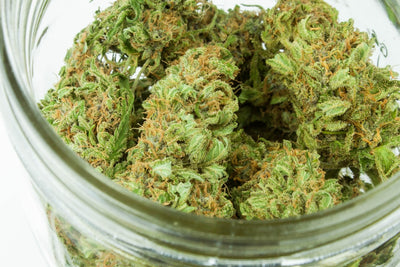
What makes dense colas specifically vulnerable comes down to structure. Tight calyx-to-calyx packing traps moisture from dew, rain, and the plant's own transpiration in pockets where air simply cannot circulate. That trapped moisture has nowhere to evaporate, so it sits against tissue for hours, sometimes overnight into midday, giving spores exactly the window they need to germinate and invade. By the time you spot the telltale gray-brown fuzz, or notice a sugar leaf gone limp and hollow, pulling away from the cola with almost no resistance, the infection is not localized. That bud, and often a significant radius of surrounding tissue, is already lost -- the visible symptom is the end of the process, not the start of it.
Why Your Cola Is Always Wetter Than the Weather App Says

During the 49-day flowering stage, the cola microclimate registers notably lower ambient readings than the surrounding air, with humidity at just 14 g/m³ and temperature at 22°C, highlighting the gap that can foster bud rot if unmanaged.
The most useful number to come out of the 2025 study isn't about spores at all -- it's about the gap between what's happening inside a cola and what's happening in the air around it. Researchers measured humidity and temperature directly inside 49-day-old inflorescences and compared those readings to ambient conditions in the same greenhouse space. The internal environment ran 15.4% higher in absolute humidity and 2.5°C warmer than the surrounding air. That's not a rounding error. It means a weather station or even a canopy-level hygrometer reading a comfortable 55% RH can be sitting directly next to bud tissue that's effectively marinating in conditions well into Botrytis's preferred range.
This gap gets worse as flowering progresses. The 49-day mark in that study isn't arbitrary -- it corresponds to plants well past the six-to-seven-week point in flower, exactly when density and calyx swell are at their peak and airflow through the cola is at its worst. A grower checking the forecast in week eight of flower and seeing acceptable numbers is, in effect, reading the wrong instrument. The plant itself has become its own weather system, and it's consistently running hotter and wetter than the report suggests.
Timing matters here too. The study tracked highest disease incidence specifically to September and October, at average outdoor absolute humidity readings of 14 g/m3 and temperatures of 20-22°C. Read that back against a typical temperate-climate outdoor grow calendar and the problem becomes obvious: that's not an edge case, that's the exact window most photoperiod plants are finishing flower in. The practical threshold worth internalizing is that RH climbing above roughly 60% during late flower is where risk starts climbing sharply, and overnight is when it bites hardest, since moisture gets trapped inside dense flowers through the dark hours and doesn't evaporate off before morning sun finally warms things up. There's also a genetics implication worth naming plainly: if you're planting a notoriously dense, rot-prone genotype and asking it to finish in that July-through-October stretch in a humid region, you're accepting elevated risk before you've even made a single management decision.
Airflow: The Single Biggest Lever You Can Pull

Photo via Pexels.
Of every intervention tested in the 2025 study, nothing came close to the effect size of airflow. Enhanced air circulation around inflorescences reduced bud rot incidence by 66 to 92% -- a range wide enough to reflect real-world variability, but even the low end of that range dwarfs what any spray program achieved on its own. If you're only going to fix one thing in a humid-climate garden, this is the one with the data behind it.
In practice, that means treating airflow as an active management task through the back half of flower, not a passive hope. Selective defoliation of large fan leaves shading dense colas opens up pockets where stagnant air was pooling. Wider plant spacing, even if it costs you some density per square foot of garden, lets air actually move between plants instead of just around the perimeter of a canopy that's grown into itself. In regions with naturally low wind, oscillating or box fans positioned at canopy height aren't overkill -- they're doing the job the environment isn't doing for you.
There's a useful technical target underneath all this: keep leaf temperature 6-8°C above the dew point and hold vapor pressure deficit, VPD, in the 1.2-1.6 kPa range through late flower. That combination keeps moisture actively moving off plant surfaces rather than condensing and sitting there. It's the same logic indoor growers use to manage transpiration, applied to a garden where you can't just dial a controller and walk away.
The study's authors were specific enough to call out reducing planting density during the July-through-October high-risk window as a stated strategy, not a vague suggestion tacked onto a broader best-practices list. That's worth taking literally if you're planning next season's layout. Finally, don't underestimate the mechanical side of this: stake and support heavy colas so they aren't drooping into neighboring foliage or resting against wet ground. A cola touching damp soil or another plant's leaf canopy is losing airflow and actively wicking up moisture at the same time -- a double failure that staking and trellising solve for the cost of some twine and stakes.
Biocontrols and Legal Sprays: What Actually Works
Here's the regulatory reality first, because it shapes every option after it: federal law still blocks the vast majority of conventional fungicides from carrying a cannabis label, so the realistic legal toolkit for most growers is state-approved 25(b) minimum-risk products and biocontrol microbes. That's a narrower shelf than a tomato grower gets to work from, but it's not an empty one, and the 2025 study actually put some of these products through controlled testing rather than leaving growers to guess.
Rootshield HC, a Trichoderma harzianum-based biocontrol, was applied at 10 g/L on flowering days 14, 21, and 28 in the study and measurably reduced disease incidence. The specific schedule matters as much as the product choice here -- this wasn't a one-time spray but a repeated application tied to calendar days in flower, front-loaded before density and risk peak rather than reactive to symptoms. Bacillus subtilis and Bacillus amyloliquefaciens work on a similar principle but a different mechanism: these bacterial biocontrols colonize plant surfaces and physically compete with Botrytis spores for the same space and nutrients the fungus needs to establish itself. That competitive exclusion only works if the beneficial microbes get there first and stay topped up, which means early and repeated application, not a single treatment held in reserve as insurance.
It's worth being blunt about the limits here: these are preventive tools, full stop. Nothing in this legal toolkit reverses rot once tissue has gone necrotic. Once you see the gray fuzz or the collapsed sugar leaf, the correct move is removal -- cut out the affected material and the surrounding buffer zone and discard it, not spray it and hope. The better strategy is building a rotation schedule keyed to flowering week, starting well before symptoms could plausibly appear, because by the time gray mold is visible to the eye, the infection driving it has already been active inside the bud structure for days.
Timing the Harvest and Choosing the Right Genetics

Photo via Pexels.
Weather forecasting through the last two to three weeks of flower deserves the same attention most growers reserve for the first two weeks of veg. If a multi-day stretch of rain, fog, or just stubbornly high humidity is showing up in the forecast, harvesting a few days ahead of your original plan is very often the better trade than gambling whole colas on conditions clearing up. A slightly early harvest costs you some potential swell and maybe a percentage point or two of yield. A rot outbreak in the final week can cost you the center of the plant.
Post-harvest handling matters just as much as the field decisions. Dry material down to roughly 58-62% relative humidity, which corresponds to a water activity of about 0.65 or below, before sealing anything in jars or bins. Sealing up bud that's still holding excess moisture doesn't solve the mold problem -- it just relocates it into an airtight container where you won't notice until you crack the lid and get hit with that unmistakable off smell.
On the genetics side, breeding trends heading into 2026 are leaning toward faster finishing times and naturally airier, more open bud structure rather than chasing raw density for its own sake. That's a useful direction for humid-climate gardens specifically, though it's fair to say most of that framing is coming from breeder marketing rather than peer-reviewed trials -- take it as a reasonable planning input, not gospel. This is genuinely one area where starting material matters: Seedtiva selects genetics with cultivation notes covering structure and finishing time specifically so growers working humid regions can plan their season around known risk factors rather than discovering a rot-prone structure in the middle of an October fog bank. Even with strong genetics, though, outcomes still depend heavily on local climate, plant spacing, and how tightly you manage airflow and moisture through the danger window -- no genotype is bulletproof once temperature and humidity line up in Botrytis's favor.
Stack these interventions in the order the data actually supports, not the order that feels most satisfying. Airflow comes first, full stop -- a 66-92% reduction in disease incidence isn't a marginal improvement, it's the difference between losing a few outer buds and losing the center of your cola. Biocontrol timing layers on top of that, applied on a flowering-week schedule rather than held in reserve as a rescue treatment that, by definition, arrives too late to matter. Genetics and harvest timing sit below both of those as risk management tools -- they shift your odds and give you more room to work with, but they were never going to be a standalone fix.
If you're growing outdoors in a humid, temperate climate, stop treating the July-through-October stretch as bad luck when it shows up. It's a defined risk period with a known cause, and the 2025 data on September-October disease incidence makes that almost calendar-predictable. Plan spacing, defoliation timing, and spray schedules around that window every season, the same way you'd plan around your last frost date.
The real takeaway underneath all of it is where the battle is actually happening. It's not on the weather app, and it's not even fully captured by a hygrometer hanging in your canopy. It's inside the dense structure of the cola itself, in that pocket of trapped air running 2.5°C warmer and over 15% more humid than everything around it. Manage that microclimate directly -- through airflow, spacing, and timing -- and you're managing the thing that actually determines whether your biggest colas make it to harvest intact or turn to mush three days before you were going to cut them down.