Fixing Humidity Problems in a Cannabis Grow Tent
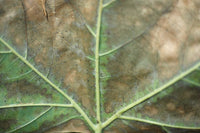
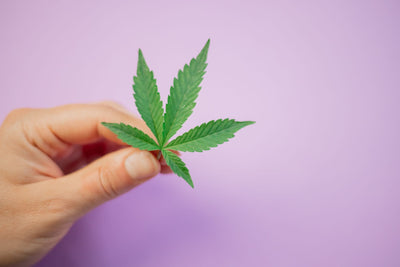
Photo by stux via Pixabay.
You check the tent and everything looks right: lights dialed in, nutrients on schedule, canopy even. Then you pull back a fan leaf three weeks into flower and find a cola going soft and brown from the inside out. Humidity swings are the single most common reason a grow that looks dialed-in on paper still ends up with bud rot, stalled growth, or buds that just never seem to pack on the density they should. It's rarely one catastrophic mistake — it's a tent that sat at 68% RH for four days during week 5 because nobody was watching the numbers closely enough.
Here's the part most growers miss: most humidity problems aren't actually humidity problems. They're airflow problems, or lung room problems, wearing a humidity costume. You can buy the biggest dehumidifier on the market and still get gray mold if stagnant air is sitting under your canopy for hours at a time, or if your exhaust fan is just pulling in more wet air from the room next door. Chasing the humidity number alone, without fixing what's actually moving — or not moving — the air, is how people end up buying a second dehumidifier they didn't need.
This article gives you the exact RH and VPD targets by growth stage, and more importantly, the specific mechanical fixes that actually change those numbers — not the generic advice to crack a vent flap and hope for the best.
RH and VPD Targets by Growth Stage

Target relative humidity should be gradually decreased throughout the plant's lifecycle, starting at 75% for seedlings/clones and tapering down to just 50% by late flowering to prevent mold and bud rot.
Every growth stage has a different relationship with moisture, and treating the whole grow with one humidity target is a fast way to stunt seedlings or invite mold in late flower. Seedlings and clones want it warm and wet: 72-78°F with RH sitting at 70-80%, which works out to a VPD of 0.4-0.8 kPa. Their root systems are tiny and can't pull enough water to keep up with much transpiration demand, so the air needs to do them a favor by staying humid.
Once plants hit vegetative growth and have real root mass, drop RH down to 55-65% at 71-82°F, landing VPD in the 0.8-1.2 kPa range. This is where plants are actively building structure and can handle — actually benefit from — a drier, more demanding atmosphere that pulls water and nutrients up through the plant efficiently.
Flower weeks 1-3 hold at 55-65% RH and 70-80°F. A lot of growers try to drop humidity hard the moment flower starts, which is a mistake — small buds transpire very little and the canopy is still filling in, so forcing RH too low here just stresses plants without any payoff. By weeks 4-6, as buds thicken and density increases, bring RH down to 50-60%; denser bud structure holds moisture longer after watering or misting, and that moisture needs somewhere to go besides the inside of your colas.
Late flower — week 7 through harvest — is the mold window, and it's the one stage where I'll tell you to ignore VPD charts if they conflict with humidity. Target 65-75°F and 45-55% RH, full stop. If your VPD calculator says you should be running humidity higher to hit an ideal VPD number at that temperature, ignore it. Humidity wins in late flower, every time, because Botrytis doesn't care about your VPD chart.
Use VPD as your fastest-reacting diagnostic lever throughout the grow. If VPD reads too high, your first move is adding moisture, not cranking down temperature. If VPD reads too low, pull moisture out before you touch the thermostat. Temperature is slow to shift and slow to stabilize in a small tent; humidity swings fast, so it's the first dial to turn.
Why Your Exhaust Fan Isn't Fixing High Humidity

Photo by nazanin mohammadi via Unsplash.
I get some version of this message weekly: I bought a 6-inch inline fan rated for way more CFM than my tent needs, and humidity still won't drop below 70%. The fan isn't broken. It's doing exactly what it's built to do — pulling air through the tent — the problem is what it's pulling in. A powerful exhaust fan does nothing for your humidity if the air it's drawing from the room is already sitting at 75% RH while your target inside the tent is 45%. You're not removing humidity, you're just trading tent air for room air that's equally wet.
This is the part people skip: the tent is only as dry as the room feeding it. Growers obsess over the tent's internal climate and completely ignore the lung room — the space the intake air is pulled from. If that room is a damp basement corner, a laundry room, or anywhere near a bathroom vent, you're feeding your tent a steady diet of moisture no amount of internal fan power can fix.
The actual fix is simple and it's not another gadget for inside the tent: move your dehumidifier out of the tent and into the lung room instead. Dry the air before it ever reaches the intake, and your exhaust fan's job gets dramatically easier because it's no longer fighting a losing battle against wet source air. Spider Farmer's own setup guidance recommends refreshing tent air roughly every 2-3 minutes for stable humidity control — that math only works if the air coming in is actually drier than the air going out.
An oversized exhaust fan paired with no filtered, dried intake source just recirculates the same humid air faster, which can actually make swings worse, not better, since you're cycling moisture through the tent more frequently without ever reducing the total moisture load. Before you buy anything else, go stand next to wherever your tent pulls intake air from and ask yourself honestly whether that spot is dry. If it's near a shower, a washing machine, or an unventilated crawlspace, you've found your actual problem.
Dialing In Dehumidifiers, Fans, and Airflow
The core fix for persistent excess humidity is combining two different jobs — air exchange and active moisture removal — rather than expecting one tool to do both. A fan moves air; it doesn't remove water from it. A dehumidifier removes water; on its own, in a tent with dead air pockets, it can't reach all the moisture sitting under a dense canopy. You need both working together, sized correctly for your tent volume.
Oscillating fans inside the tent need to move air through the canopy, not just across the top of it. Stagnant air pockets near the lower canopy, where fan leaves overlap and light barely reaches, are exactly where mold gets its foothold — it's warm, damp, and still. Position fans so they're pushing air down into the lower third of the plant, not just blowing across the tops of your colas.
Defoliating excess fan leaves does double duty here: it reduces the total transpiration load adding moisture to tent air, and it opens up physical pathways for airflow to actually reach those dense inner colas instead of getting blocked by a wall of leaves. This matters more in flower, once bud sites are established and large fan leaves are mostly just shading lower growth anyway.
Don't let your extraction fan cycle off during the dark period — keep it running through lights-out. Humidity commonly spikes overnight because temperature drops, air holds less moisture at the same absolute humidity level, and relative humidity climbs as a result. Pair that with a fan that shuts off at night and you've built the exact cool, damp, still-air conditions mold loves. Smoothing out the lights-on to lights-off temperature swing — keeping it to within 10-15°F rather than letting it crash 20+ degrees — removes a big chunk of that overnight spike risk on its own.
Finally, size your dehumidifier to actual tent volume and your ambient climate, not just square footage. A 4x4 tent in a humid basement needs a meaningfully larger pint-per-day rating than the same tent in a dry climate-controlled room, even though the floor space is identical.
Overwatering, Soil Moisture, and Humidity Feedback Loops
Nobody thinks of their watering can as a humidity source, but constantly wet soil in a sealed tent is adding moisture into that environment around the clock, not just at the moment you water. Every gram of water sitting in the medium eventually evaporates into the tent air, and if you're watering on a fixed schedule rather than responding to actual soil conditions, you're very likely overwatering and quietly pushing your RH higher than your dehumidifier can keep up with.
Water only when the top inch of your growing medium is dry — check it by hand, pushing a finger in, or use a cheap moisture meter rather than watering because it's Tuesday. Plants in vegetative and flower don't need daily watering in most setups; letting the medium dry down between waterings also trains roots to grow outward searching for moisture, which builds a stronger root system overall.
Container choice matters more here than people expect. Fabric pots breathe and dry faster than plastic containers of the same size, which reduces the window of standing moisture available to evaporate into your tent. An oversized plastic pot holding way more soil volume than the plant's root system currently needs is basically a slow-release humidity source sitting in your tent for days after each watering.
Check your trays and saucers too. Runoff that collects and sits after watering keeps evaporating long after the soil itself has started drying, quietly feeding humidity back into the tent for hours. Dump standing runoff promptly instead of letting it sit as a passive humidifier under your pots.
There's a feedback loop worth understanding here: overwatered, stressed root systems don't transpire efficiently. A plant with waterlogged roots pulls up less water and releases less moisture through its leaves than a healthy plant would, which throws off your VPD math even when your sensors look perfectly normal. You can have a tent reading ideal RH and temperature with a VPD calculator telling you everything's fine, while the plant itself is stressed and underperforming because its roots are sitting in water. The sensor tells you about the air; it doesn't tell you about the plant.
When Humidity Is Too Low
Low humidity gets less attention than high humidity because it doesn't cause the dramatic, visible disaster that mold does, but it's just as capable of tanking a harvest. It's especially common in winter when indoor air is naturally dry, or in any setup running an oversized exhaust fan that's pulling too much dry ambient air through the tent. When RH drops too low for the temperature, VPD spikes too high, and plants respond with curling, clawing leaf tips and uptake problems that can mimic a nutrient deficiency even though your feed schedule is correct.
Seedlings and clones are the most vulnerable to this by far. Their root systems are small and underdeveloped, so when the air around them is dry and demanding a lot of transpiration, they simply can't keep up — you'll see wilting and tip burn on plants that are otherwise perfectly healthy and well-fed. This is why the 70-80% RH target for that stage isn't a suggestion; dry air at the seedling stage can stall a clone's development for a week or more.
The fixes here are mechanical, same as the high-humidity side. A humidifier sized correctly to your tent's actual volume is the most direct fix. Reducing exhaust fan speed, if you're running a fan controller or speed-adjustable inline fan, cuts down how much dry outside air gets pulled through. Placing a shallow tray of water near the intake gives passive evaporation a chance to pre-humidify incoming air. In a pinch, temporarily taping off part of your ducting to reduce total airflow volume works too, though it's a short-term patch, not a permanent setup.
Misting plants directly is tempting because it's immediate, but it's a band-aid, not a fix — RH spikes for twenty minutes and then crashes right back down once that surface moisture evaporates, and you've done nothing to address the underlying dry air. Whatever fix you use, keep humidifier placement away from direct airflow onto canopy; you don't want to solve an overall dry-tent problem by creating one persistently wet patch on your plants that becomes a localized rot risk of its own.
The Real Cost of Getting It Wrong: Mold and Botrytis
The science behind the late-flower humidity target isn't arbitrary. University extension plant pathology guidance is consistent on this: cool temperatures combined with high humidity and any surface moisture on plant tissue directly favor Botrytis cinerea, the gray mold fungus, establishing infection inside flower buds. It needs moisture to germinate and cool, still air to spread, and a dense bud structure gives it plenty of places to hide from view until it's already done damage.
The recommended bloom-stage defense is RH below 50% combined with strong, consistent air movement across and through the canopy. That combination is the single biggest lever you have against gray mold — more than any spray, more than any preventative product. Even a modest reduction in humidity, something like dropping from 58% down to 50%, meaningfully cuts infection risk, which is why a fix as unglamorous as adding one more oscillating fan or moving your dehumidifier into the lung room actually matters at harvest time.
These aren't abstract home-grow concerns — they scale up to real commercial consequences when humidity control fails at volume. In September 2026, Missouri's Division of Cannabis Regulation recalled Juicy J's cherry limeade infused pre-rolls after they failed testing for Aspergillus, a mold genus that, like Botrytis, thrives under exactly the cool, damp, poorly ventilated conditions this article has been walking through. Around the same period, Colorado's Marijuana Enforcement Division expanded a mold-related health and safety advisory against cultivator Higher Grade, covering product sold between August 29, 2025 and February 4, 2026 — a window spanning nearly six months of flagged product, which tells you this wasn't a single bad batch but a systemic humidity failure somewhere in their process.
Those are licensed, tested, commercial operations with far more infrastructure than most tent growers have access to, and they still got caught by the same basic failure: humidity and airflow management that wasn't tight enough during flower. Scale doesn't fix this problem automatically — the fundamentals have to be right regardless of whether you're running one tent or a warehouse.
If you take one thing from all of this: humidity control in a tent is really airflow and room-level management wearing a humidity costume. Before you buy another dehumidifier, another humidifier, or another fan, go figure out where your lung room air is coming from and whether your existing fans are actually reaching the lower canopy. Most of the persistent, won't-go-away humidity problems I see traced back to one of those two things, not a lack of equipment.
Track VPD alongside RH and temperature rather than watching any one number in isolation — VPD will tell you faster than anything else when something's drifting before it becomes a visible problem. But remember the hierarchy when the numbers conflict in late flower: if your VPD chart wants humidity higher than your mold-safety target allows, humidity wins. Every time. A slightly suboptimal VPD for the last two weeks of flower costs you a little potential yield. Botrytis costs you the whole cola, and sometimes the whole plant next to it.
It's also worth saying plainly: genetics matter here more than people give them credit for. A vigorous, well-bred plant suited to your climate handles a humidity swing from 55% to 68% for a couple of days without blinking, while a weaker or poorly-adapted plant under the same stress stalls out or opens the door to mold. That's part of why we put so much emphasis on solid genetics at Seedtiva — healthy, robust plants give you a wider margin for error on the days your equipment or your attention slips, and in a hobby where the climate inside a four-foot cube can swing on you overnight, that margin is worth more than people realize until they don't have it.