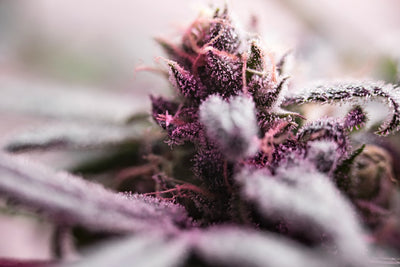
Homemade Nutrient Recipes from the Prohibition-Era Grow Room
Photo by Krista Glīzdeniece via Pexels.
Pull up General Hydroponics' origin story and you'll land in 1980, in a small operation built around the idea that plants could be fed something more dialed-in than whatever the local garden center happened to stock. Advanced Nutrients didn't show up until 1999. Scotts, the lawn-and-garden giant that eventually bought General Hydroponics outright, didn't even take cannabis seriously as a category until 2013, when a company rep walked into a garden store in Yakima, Washington and noticed just how much of the floor space was devoted to hydroponic equipment. That visit led to the 2015 acquisition. Do the math and you'll notice the gap: cannabis has been cultivated in North America for well over a century, but a legitimate, cannabis-specific nutrient industry has existed for maybe four decades of that, and a mainstream one for barely ten years.
So what were growers feeding their plants for the other hundred-plus years? Whatever was already around. Barns, kitchens, garden sheds, and farm supply stores became the entire supply chain, because there wasn't a legal alternative and asking questions at a store that specialized in flowering fertilizer was its own kind of risk. Some of what came out of that improvisation was crude. A lot of it wasn't -- it was sound, low-tech horticulture that happened to predate the marketing department. This is a look at what actually went into the bucket, decades before there was a bottle made for it.
Why Growers Had to Improvise

Photo by Andrew Smith via Unsplash.
There's a reason the timeline looks the way it does. Cannabis existed in a strange legal limbo for most of the 20th century, which meant no company could put its name on a bag of nutrients and market it specifically for growing pot without inviting a level of scrutiny most businesses weren't willing to risk. General Hydroponics and Advanced Nutrients were early exceptions, feeling their way into a niche that barely had a public face. Everyone else who wanted to grow well had to solve the problem themselves, using whatever a hardware store, feed supply, or kitchen already had on the shelf.
Fox Farm is the clearest example of what grew out of that vacuum instead of a corporate lab. The company is based in Humboldt County, California -- about as close to ground zero for illicit-era cultivation as it gets -- and its early formulations came directly out of the growing culture already thriving in the hills there, not out of an R&D department chasing a new market. That's a meaningfully different origin story than a lawn-care conglomerate deciding cannabis looked profitable.
The improvisation habit itself goes back further than most people realize. Early prohibition-era farmworkers, especially in the Southwest and California's Central Valley, used cannabis both as a folk remedy and as a supplemental income crop, growing it alongside legitimate agricultural work with the same tools and inputs they used on everything else. There was no separate cannabis supply chain because cannabis wasn't treated as a separate crop -- it got whatever the corn, the tomatoes, or the citrus got. That set a tone that lasted generations: resourcefulness over formal supply chains, because a formal supply chain simply didn't exist.
What's easy to miss is that none of this was backwoods guesswork dressed up as tradition. Manure, bat guano, fermented plant matter -- these track real, well-understood horticultural chemistry. Growers weren't inventing agronomy from scratch; they were applying farming knowledge that had existed for centuries and adapting it to a plant that happened to be illegal. The marketing came later. The chemistry was already there.
Banana Peel Tea and Fermented Plant Ferments

Photo by Monstera Production via Pexels.
Banana peel tea might be the single most common home remedy passed between growers who never met each other, which tells you something about how obvious the logic was once someone figured it out. Peels soaked in a bucket of water for a few days release potassium as they break down, and potassium is exactly what a flowering plant is hungry for -- it drives the internal water regulation and enzyme activity that support bud swell and density. No lab, no order form, just kitchen scraps most households were throwing away anyway.
The more refined version of that idea is a fermented plant juice, essentially a homegrown cousin of the Korean natural farming technique known as FPJ. The method is simple and was passed around almost verbatim from grower to grower: chop up a fast-growing, nutrient-dense plant -- comfrey was the favorite, banana peels also worked -- and mix it with an equal weight of brown sugar. The sugar draws moisture and nutrients out of the plant matter through osmosis while feeding the fermentation process, and after five to seven days sitting covered at room temperature, you strain off a dark, sharply sweet-smelling liquid concentrate.
Comfrey earned its reputation for a specific reason beyond convenience. It's a deep-taprooted plant that pulls potassium and other minerals up from soil layers most garden plants never reach, effectively mining nutrients that would otherwise stay locked below the root zone. That made comfrey ferment noticeably more potent as a potassium source than banana peels alone, and growers who had access to a patch of it treated it like a free, self-renewing input.
The appeal wasn't just nutritional. These ferments cost nothing, used material already in the kitchen or garden, and left no paper trail -- no receipts, no suspicious purchases at a hydro store that might get a customer's name on a list. That mattered enormously to someone growing under prohibition.
Diluted at roughly 1:500 with water, these ferments still show up in flowering rooms today as a supplemental potassium boost during the bulking-up weeks of flower. Nobody running a serious grow treats it as a replacement for a full nutrient line -- it's a booster, not a foundation -- but the underlying chemistry earned its long shelf life.
Bat Guano: The Flowering-Stage Workhorse

Photo by https://kaboompics.com/ via Pexels.
If there's one input from the prohibition era that reads almost exactly like a modern bloom nutrient label, it's bat guano. Guano is naturally loaded with phosphorus and potassium along with a meaningful dose of nitrogen, which puts it close to a full-spectrum flowering fertilizer without anyone having to blend it. Before synthetic bloom boosters existed, that combination was hard to come by in a single, naturally occurring input.
Growers worked it into soil ahead of the flip to flower, mixing it into the top few inches so the microbial breakdown could start releasing nutrients gradually rather than all at once. Because guano is concentrated, dumping too much directly against roots risked a salt buildup that could burn root hairs, so a lot of growers brewed it as a tea instead -- steeping it in water for a day or two and watering the resulting liquid in, which spread the nutrient load more evenly and reduced the risk of overdoing it near the stem.
Not all guano was treated equally, either. High-phosphorus varieties, generally sourced from bat species that fed heavily on insects, were specifically sought out for bud development in exactly the way growers today shop for a bloom nutrient with a high middle number on the NPK label. The instinct to chase a phosphorus-heavy input for flowering isn't new -- it's the same instinct, just without a marketing team attaching a product name to it.
What's notable is how directly this one carried forward. Bat guano is still sold today as a standard organic soil amendment, stocked right alongside compost and worm castings at garden centers that have nothing to do with cannabis cultivation. Of everything covert growers relied on before commercial blends existed, guano is one of the few inputs that needed zero reinvention to fit into legal, modern organic growing. It simply moved from a discreet purchase at a farm supply store into an openly marketed product, with the underlying use case unchanged.
Guerrilla Growing: Fertilizer That Didn't Need a Trip Back

Photo by Mark Stebnicki via Pexels.
Growing outdoors on remote public land or unmonitored private acreage came with a constraint indoor growers never had to think about: every trip back to the site was a risk. A grower hauling jugs of liquid fertilizer up a trail, over and over across a season, was making themselves visible to hikers, land patrols, and law enforcement in a way that a single, well-timed planting visit never would.
That constraint shaped the whole feeding strategy. Liquid fertilizer is heavy, awkward to carry any real distance, and needs to be reapplied on a schedule -- exactly the kind of repeat exposure a guerrilla grower couldn't afford. Powdered and slow-release fertilizers solved the problem instead. They're light enough to pack in with a single planting kit, cheap enough to buy without raising eyebrows at a farm supply counter, and formulated to release nutrients gradually over weeks or months rather than needing to be reapplied every week or two.
Site prep, as a result, tended to happen once. A grower would dig a planting hole and work in well-rotted manure or a specialist compost blend directly into the backfill, front-loading the site with organic matter that would break down slowly over the growing season. A spoon of Epsom salts -- magnesium sulfate -- often went in at the same time, since magnesium is a core component of chlorophyll and a deficiency shows up fast as pale, yellowing leaves in plants that otherwise look healthy. One dose at planting, positioned right where the root system would eventually reach it, could carry a plant through months without anyone needing to come back and correct a deficiency by hand.
Peat moss or a similar water-retentive amendment usually went into that same hole, because irrigation systems weren't an option -- running lines or hauling water on a schedule meant more equipment left in the woods and more chances of a grow being spotted. Peat helped the soil hold moisture between visits that might be weeks apart, buying the plant some buffer against a dry stretch.
None of this was optimized for convenience. It was optimized for survival with minimum human presence, which meant a single, carefully loaded planting hole had to function almost like a slow-release feeding system on its own, carrying a plant through an entire season with as few return trips as possible.
What Actually Held Up, and What Didn't
Some of these old inputs earned their long careers honestly. Manure and bat guano deliver real, substantial macronutrients, and both are still standard components in organic soil mixes sold commercially today. The chemistry behind them was never in question -- what was missing was precision. A grower working a manure pile into soil by feel had no way to know the actual nitrogen content of what they were adding, so results depended heavily on the source material and how well-aged it was.
Banana peel tea and comfrey ferments sit in a similar spot. They deliver a genuine potassium bump, and that part of the folk wisdom holds up under scrutiny. But without a way to measure actual PPM or verify an NPK ratio, two growers making what they'd call the same recipe could end up feeding wildly different concentrations, depending on how ripe the peels were, how long the ferment sat, or how much water it got diluted with at the end. It worked, but it wasn't repeatable in any strict sense.
Epsom salts are a good example of something that was correct in principle and risky in practice. Magnesium deficiency is real, it's common, and magnesium sulfate is still a legitimate correction for it. But applied without any soil testing to confirm the deficiency existed in the first place, repeated Epsom salt applications could push sulfate levels higher than a plant wanted, creating a new imbalance while trying to fix one that may not have even been there.
That's really the throughline across all of it: growers were dosing blind. No pH meter, no EC meter, no calibrated feeding schedule -- just accumulated experience and a willingness to watch the plant closely for signs something was off. Commercial nutrient lines solved that consistency problem by giving growers a known, repeatable formulation and the tools to measure exactly what's being delivered.
And yet plenty of today's organic-leaning growers haven't abandoned the old toolkit -- they've just added instruments to it. Guano, compost tea, and Epsom salts are still shelf staples in serious grow operations, now paired with a PPM meter instead of a guess. Worth remembering too: no feeding program, homemade or bottled, does much for weak seed stock. Genetics set the ceiling before a single nutrient hits the soil, which is exactly why starting with well-bred genetics -- the kind Seedtiva focuses on -- matters as much as anything in the bucket.
None of this deserves to be filed under primitive. Guano, manure, and kitchen ferments were addressing real, specific nutrient needs -- phosphorus for flowering, potassium for bud swell, magnesium for chlorophyll production -- decades before anyone could buy a bottle labeled for cannabis and back it up with a lab analysis. The people running these recipes weren't guessing randomly; they were applying agricultural knowledge that had been around far longer than the plant's legal status had been a problem.
What's actually changed isn't the underlying chemistry so much as the precision around it. A calibrated EC meter and a verified NPK ratio replace a grower's practiced eye and a decade of trial and error, and that's a real improvement -- fewer surprises, more repeatable results, less risk of quietly overdosing a plant on something like sulfate without ever knowing it happened. But it's worth being honest that the guesswork wasn't always wrong. It was just unmeasured.
The one thing no era of nutrients has ever fixed is weak genetics. A perfect feeding schedule, homemade or bottled, can't pull strong yields out of poor seed stock, and outcomes will always depend on climate, setup, and the genetics you started with -- not just what's in the feeding bucket. That's as true now as it was for a grower brewing guano tea in a coffee can fifty years ago.
Sources
- How to Make Homemade Cannabis Fertilizer from Scratch | MSNL Seeds.com Blog
- Creating Your Own Cannabis Fertilizers from Scratch
- Custom Cannabis Nutrients | Save $$ Mixing Your Own Salts
- Homemade fertilizers for your Cannabis Cultivation in a Natural Way
- Make Your Own Cannabis Fertilizer (With Real Recipes)