Late-Season Hermaphroditism in Multi-Acre Hemp Fields
Photo by David Guliciuc via Unsplash.
Walk a 40-acre hemp field in late July and it looks clean. Uniform canopy, tight colas forming, nothing but female pre-flowers as far as you can see. Walk the same field five or six weeks later and you start finding bananas tucked into bud sites, the occasional stray pollen sac on a branch that was perfectly fine during your last scouting pass, and a creeping sense that something changed while you weren't looking. It did. This pattern shows up often enough on big acreage that it stops looking like bad luck and starts looking like something you could have predicted if you'd known where to look.
That's because it's not random. Late-season hermaphroditism in field hemp is the output of a specific, somewhat predictable interaction between a dropping photoperiod, the accumulated stress load a large field inevitably carries, and genetics that were never selected for sex stability in the first place. A May 2026 review in the journal Plants (Richards, Ryu, Gim, Park et al., DOI 10.3390/plants15111643) pulls together the QTL mapping and environmental physiology behind this, and it gives growers something more useful than folklore: an actual timeline for when the risk window opens and why. The short version is that scale is working against you from day one. A 4,000 square foot indoor room gets identical light, identical irrigation, and identical air movement on every plant in it. A 40-acre field cannot offer that kind of uniformity no matter how good your equipment is, and that gap between indoor control and field reality is exactly where hermaphrodites get a foothold.
What's Actually Happening Inside the Plant
Hermaphroditism in cannabis isn't a genetic light switch that flips from female to intersex under duress. It's a hormonal shift, specifically in the ratio between auxin and gibberellin signaling within the developing flower. Push that ratio off balance and the plant starts expressing male floral structures alongside female ones, even though its underlying chromosomal sex hasn't changed. That distinction matters for how you think about prevention, because you're not managing a binary trait, you're managing a hormonal cascade that responds to inputs.
The QTL work cited in the Plants review backs this up at the genetic level. Rather than finding one master hermaphroditism gene, the researchers identified multiple loci tied to sex expression, and those loci overlap with genes controlling flowering time and photoperiod sensitivity. In practice this means a plant's tendency toward sex instability is wired together with how it reads day length and when it decides to flower, not sitting off in isolation as a separate trait you could breed out with a single cross.
Layered on top of that genetic predisposition are the environmental stressors every field grower already knows about: shifting photoperiod, temperature swings between hot days and cool nights, inconsistent water availability, and nutrient status that drifts as plants mature. The review is specific on one point worth remembering -- these abiotic stressors don't necessarily act alone. They can compound with each other and with hormonal or chemical inputs already present in the plant, meaning a field dealing with both a dry spell and a cold snap in the same week is carrying a bigger hermaphroditism risk than the sum of those two stressors would suggest individually.
Put a number on it and the scale problem becomes obvious. Industry data generally puts stress-induced hermaphroditism, sometimes called intersexuality or monoecy, at roughly 5 to 10 percent of plants in an affected field. On a small plot that's a handful of plants you can rogue in an afternoon. On a 40-acre field, 5 to 10 percent can add up to thousands of individual plants carrying pollen sacs capable of contaminating an entire seed or flower crop.
Why Shortening Days Are the Trigger, Not Just a Backdrop

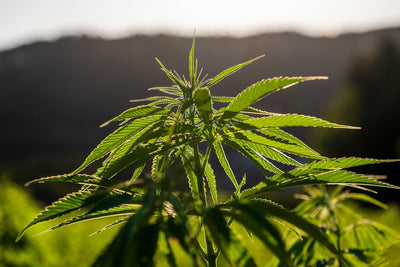
Photo by Mykyta Kravčenko via Unsplash.
Day length isn't just the backdrop against which hermaphroditism happens -- it's the trigger itself. The Plants review found that male flower formation was actively suppressed under a 14-hour photoperiod, which tells you something concrete: there's a day-length threshold where the plant's hormonal machinery keeps male expression switched off, and once you drop below it, that suppression starts to break down.
It's not a clean on/off threshold, though. The review notes outcomes depended heavily on light intensity, how long the shorter photoperiod was sustained, and what developmental stage the plant was in when it experienced that exposure. A plant hitting 13.5-hour days during early pre-flower responds differently than one hitting the same day length three weeks into bulking. This is exactly why you can't just circle a date on the calendar and call it the hermie window -- the risk is conditional on where each plant happens to be in its own development when the days get short enough.
Indoor growers don't deal with this nuance because they control photoperiod directly, flipping from 18/6 to 12/12 in a single day and holding it there. Field-grown hemp doesn't get that luxury. Natural day length declines gradually through late summer into fall, maybe losing two to three minutes a day in most temperate growing regions, which means a field crosses through a wide range of photoperiods over a span of six to eight weeks rather than making one sharp transition. Every day in that window is a slightly different environmental cue, and every plant in the field is interpreting that cue against its own genetic background and stress history.
This gradual decline hits late-planted or late-maturing genetics hardest. A plant that's still deep in flower development as day length keeps dropping past the point where male suppression typically holds is spending more cumulative time in the unstable zone than a plant that finished flowering while days were still comfortably above 14 hours. If you're running genetics with a long flowering window on a late planting date, you're stacking the odds against yourself before a single other stressor even enters the picture.
The Multi-Acre Timing Problem: Flowering Windows Don't Line Up

Male hemp plants flower well before females across all varieties, but the gap varies widely—from about 15-20 days in Carmagnola and Fibranova (low) to as much as 60 days in Fibranova (high), highlighting significant variety-dependent differences in flowering timing.
Here's where field agronomy runs into a problem indoor growers rarely have to think about: flowering timing isn't uniform, even within what looks like a single, consistent genetic line. The Plants review documents male flowering preceding female flowering by about 20 days in the Carmagnola variety. In Fibranova, that gap stretched anywhere from 15 to 60 days depending on sowing date alone. Change when you put seed in the ground and you change how far apart male and female flowering fall, sometimes by a factor of four.
Flowering duration itself varies just as dramatically across hemp genotypes, ranging from as short as 4 days to as long as 99 days in the data the review pulls together. Think about what that spread means operationally. If you've got one genotype finishing its entire flowering cycle in under a week and another still flowering three months later, you don't have one risk window to manage, you have a rolling series of overlapping windows stretching across most of the season.
Multi-acre operations almost never run a single, perfectly uniform genetic line planted on a single day, and that's exactly the setup that creates trouble. Mixed genetics or staggered planting dates mean different sections of the same field hit peak photoperiod sensitivity in different calendar weeks. Scout the north block in week one of September and it might look completely clean, while the south block planted ten days later is entering its own unstable window right as you're wrapping up and moving on to other tasks.
Fields planted from mixed or farm-saved seed make this nearly unmanageable. Farm-saved seed in particular tends to carry a wide genetic spread in flowering time and day-length sensitivity, since it was never selected for uniformity in the first place, and planting it essentially guarantees you'll have overlapping risk windows scattered through the field instead of one defined period you can scout hard and then stand down from.
This is the strongest practical argument for uniform, stabilized genetics paired with single-pass planting on any acreage where seed purity or flower quality actually matters commercially. A field where every plant entered the ground on the same day and carries the same flowering timeline gives you one risk window to manage intensively, instead of three or four smaller windows bleeding into each other across six weeks.
Field Stressors You Can Actually Control at Scale
You can't control photoperiod and you can't control genetics once seed is in the ground, but there's a real list of field stressors you do have leverage over during the finishing weeks, and water tops it. Irrigation gaps during late-season dry spells are one of the most common triggers for the auxin:gibberellin disruption described in the research, and on big acreage, irrigation uniformity is never perfect. Pivot end-guns, drip laterals losing pressure at the far end of a run, and low spots that drain faster than the rest of the field all create pockets of water stress that an aerial pass or quick ground check won't catch until plants are already showing bananas.
Nutrient status deserves the same attention, especially nitrogen late in flower. Plants should be tapering nitrogen uptake as they move through bulking, and uneven fertigation across a large pivot or drip zone can hit some sections with a late nitrogen spike right when they should be winding down. That kind of mistimed input adds another layer of hormonal disruption on top of whatever photoperiod stress is already in play.
Heat during the finishing weeks compounds rather than simply adds to the problem. A stretch of 95-degree afternoons landing on a field that's already navigating the photoperiod-driven instability window doesn't just create two separate stress events, it pushes plants further into the hormonal imbalance territory than either stressor would on its own, consistent with the synergistic effect the review describes.
Mechanical and chemical stress count too, and they're easy to overlook because they don't feel like plant physiology. Herbicide drift from a neighboring row crop being sprayed, or equipment running late passes through a field and clipping branches, both register as stress inputs the review flags as capable of acting synergistically with hormonal shifts already underway.
The practical response is straightforward even if it's labor-intensive: once day length drops below roughly 14 hours, put scouting on a strict weekly schedule rather than an as-needed one. Walk every block, not just the ones that looked fine last time, and rogue any plant showing bananas or pollen sacs immediately, before anything has a chance to shed. A pollen sac caught a week early is a non-event. One caught after it's opened can compromise an entire seed lot downwind.
Breeding and Sourcing Your Way Out of the Problem
Mapped QTLs change the breeding conversation. When sex expression and photoperiod sensitivity loci are identified rather than inferred from field observation, breeders can select directly for sex stability instead of waiting to see which plants hold up under stress season after season. That's a meaningfully faster and more reliable path to genetics that don't fall apart under the exact conditions multi-acre fields reliably produce.
Feminized seed helps with part of the problem but not all of it. It reduces the baseline risk of male-driven cross-pollination since you're not carrying male chromosomal genetics into the field in the first place, but it does nothing to stop stress-induced hermaphroditism, because that mechanism is hormonal rather than strictly chromosomal. A feminized plant under enough combined photoperiod and water stress can still throw pollen sacs. Feminized seed narrows one risk category, it doesn't close the door on this one.
Genetic background still matters more than almost any other single factor here. Some cultivars hold sex expression stable under real field stress and others fall apart at the first dry week or temperature swing, and that variation is exactly why starting with quality, well-bred genetics matters more on large acreage than almost anywhere else in the operation. Seedtiva's approach to genetics is built around exactly this kind of stability, selecting lines that hold up under field conditions rather than only performing well in controlled environments. That said, no seed line is a guarantee -- outcomes still vary by climate, local stress load, and how the field itself is managed, so excellent genetics need to be paired with the irrigation, nutrient, and scouting practices covered above, not substituted for them.
Seed production fields carry an extra layer of requirements on top of all this. Isolation distance from other cannabis plantings matters as much as genetic selection for keeping unwanted pollen out of a female seed crop, and synchronized planting dates across the whole field matter just as much, since staggered sowing is exactly what creates the overlapping male and female flowering windows described earlier. Get the isolation and timing right and you've closed off two of the biggest contamination pathways before a single plant even starts flowering.
None of this is mysterious once you lay it out. Late-season hermaphroditism on big acreage is what happens when genetics with unresolved sex-stability traits, real hormonal biology, and the stress load that comes standard with managing hundreds of acres all converge at exactly the moment photoperiod drops through its most sensitive range. Every piece of it is explainable, and most of it is at least partially foreseeable if you're tracking day length and planting dates instead of just watching the calendar.
There's no spray or single product that fixes this, and anyone selling one is skipping past the actual mechanism. The real fix is reducing how many stressors are stacked on the plant during the last six to eight weeks of the season -- tightening up irrigation uniformity, holding nitrogen inputs steady instead of letting late spikes happen, keeping equipment and spray drift away from finishing blocks -- while starting the season with genetics actually bred for sex stability rather than genetics that simply yielded well somewhere else.
The growers who come through September with the cleanest fields aren't the ones with the fanciest input program. They're the ones who put scouting and rogueing on a fixed schedule tied to day length, starting before 14-hour days arrive, and who keep walking every block of the field instead of assuming last week's clean check still holds. By the time bananas are visible from the truck window, you've already lost the window where catching them actually mattered.
Sources
- Hermaphrodite Cannabis Plant: Causes, Signs & Prevention
- Hermaphroditism in Cannabis sativa L.: Impacts, Inducers, and Industry Implications - PMC
- Preventing and Managing Hermaphroditism in Cannabis
- Hermaphroditism in Marijuana (Cannabis sativa L.) Inflorescences – Impact on Floral Morphology, Seed Formation, Progeny Sex Ratios, and Genetic Variation
- Hermaphrodite Cannabis Plant — Causes & Prevention