Old-School Outdoor Growing Wisdom That Still Holds Up
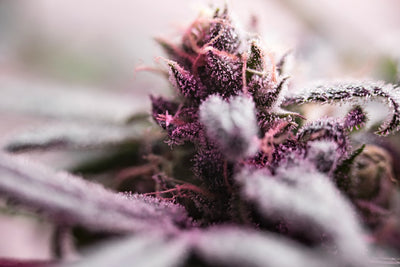
Photo by levan simonshvili via Pexels.
Drive north out of San Francisco on 101, and somewhere around the Mendocino-Humboldt line the hills stop being vineyards and start being something else entirely. That shift happened for a reason. In the late 1960s, a wave of people left Haight-Ashbury looking for cheap land and distance from everything the city had come to represent, and they landed in the steep, forested backcountry of Humboldt, Mendocino, and Trinity counties. Nobody called it the Emerald Triangle yet. It was just remote, half-logged timberland with decent water and nobody around to ask questions.
What those transplants built over the next two decades wasn't a marketing region or a tourist trail -- it was an entire outdoor cultivation tradition, developed by people with no hydroponic shops, no LED catalogs, and no internet grow forums to lean on. They figured out soil, sun angles, frost timing, and genetics the hard way, through seasons of trial and failure on land they couldn't easily leave. Legalization eventually crashed the economics of that world, consolidating production into fewer, bigger, more corporate operations. But the agronomy those early farmers worked out by hand is still correct. It's not nostalgia to go back to it -- it's that modern cultivation science keeps independently confirming what they already knew.
Where This Knowledge Actually Comes From
The Emerald Triangle didn't start as an agricultural project. It started as an exodus. When the Haight-Ashbury scene soured in the late 1960s, a lot of people who'd been drawn there for the music and the culture went looking for someplace quieter, and the logging roads of Humboldt, Mendocino, and Trinity counties offered cheap, overlooked land tucked into steep ridgelines and river valleys. There was no cultivation infrastructure out there -- no nurseries stocking clones, no hydro stores, no extension office handing out soil test results. If you wanted to grow anything, you worked with what the land gave you: native soil, seasonal rain, and whatever sun exposure your particular slope happened to catch.
That isolation is exactly what forced the first generation of Emerald Triangle growers into becoming real agronomists rather than hobbyists. They had to understand drainage, organic matter, and microclimate because there was no product to buy that would fix a mistake. The real inflection point came when Ed Rosenthal's Marijuana Growers Guide started circulating through these hills and gave farmers a shared technical vocabulary for the first time. That's when sinsemilla -- seedless, unpollinated female flower -- went from a rumor to a standard practice, and outdoor potency and bag appeal jumped in a way the market had never seen before.
The genetics that came out of that period weren't accidents. Strains like Humboldt OG and Emerald Triangle Kush, along with countless landrace crosses that never got formal names, were the product of decades of selection under real outdoor pressure -- actual rain, actual pests, actual frost dates -- not climate-controlled trial and error in a tent. And none of this got written down anywhere formal. It moved the way real craft knowledge usually does: parent to kid, neighbor to neighbor, one growing season handed down at a time on small family farms that measured their operations in plants, not acres.
Why Fewer People Carry This Knowledge Forward Today
The math that sustained small Emerald Triangle farms for decades simply doesn't exist anymore. During prohibition, a pound of quality outdoor flower could fetch $3,200 to $5,000. That price supported the labor-intensive, hand-tended approach these farms were built on -- individually staked plants, hand-trimmed harvests, soil built over years instead of bought in bags. Once California's legal market matured, wholesale pound prices fell to somewhere between $300 and $800, and that collapse gutted the economics of doing things the slow way. You can't pay for hand labor and years of soil-building at those margins, not when larger indoor and light-dep operations can out-produce you on volume.
The regulatory side tells the same story from a different angle. California's Department of Cannabis Control announced the end of its provisional licensing program in January 2026, framing it as evidence of a maturing, more professionalized market, with roughly 8,000 annual licenses now active across the state. Maturing is one word for it. A 2024 report from Humboldt County's Planning and Building Department put harder numbers on what that maturation looks like locally: more than 2,125 cultivation permit applications were filed, but only 1,068 were ever approved. 657 were denied or withdrawn, and another 400 are still sitting in pending status with no resolution in sight.
Enforcement has compounded the squeeze. Officials have shut down more than 1,200 unpermitted operations, and by their own estimates, over 1,400 cultivation sites have disappeared from the landscape since the 2016 baseline count. Some of that is unlicensed operators getting cleaned out, which regulators will tell you is the point. But a lot of what's disappearing is small legacy growers who couldn't clear the permitting and compliance costs, not because their farming was bad, but because the economics never penciled out at legal-market prices. Every one of those closures is a farm where decades of hands-on, site-specific knowledge just stops getting passed on. That's the real reason this is worth writing down now, while there are still people left who learned it firsthand.
Plant It in the Ground, Not Just a Pot
Container growing is convenient, and for a lot of situations it's the right call. But legacy Emerald Triangle farmers planted straight into native ground for a simple reason: a container, no matter how large, puts a hard ceiling on root mass, and root mass is what ultimately determines how big a plant can get and how much water and nutrient uptake it can sustain through a long outdoor season. Put a plant in the ground with a clear path to spread its roots, and it can reach a genetic ceiling that no fabric pot will let it touch.
That only works, though, if the native soil actually supports it. Heavy clay or compacted ground will choke roots just as effectively as an undersized pot, so legacy growers didn't skip the soil work -- they just did it months ahead of time, working in aged compost, worm castings, and coarse material like pumice or rice hulls to open up structure and improve drainage long before anything went in the ground. This is also where the technique sometimes called the gopher-hole or pit method comes from: dig a planting hole far larger than the root ball actually needs, backfill it with amended soil, and give the plant an easy, biologically rich zone to establish in before its roots ever hit the tougher native ground around it. It's essentially a soft landing that buys the root system time to build strength before it has to work for every inch of expansion.
Mycorrhizal fungi inoculated right at transplant made this even more effective. These fungi form a genuinely symbiotic relationship with cannabis roots, extending the plant's effective root zone far beyond what the roots alone could reach, and they've got the added benefit of helping trap and kill root-feeding nematodes before they do real damage. It's one of the cheapest, lowest-effort additions you can make at transplant and the payoff compounds all season.
The tradeoff is time. Bigger root architecture means bigger plants, but it also means a longer runway to fill that structure out, so legacy growers planned backward from their local first-frost date and chose strains and transplant timing accordingly. A plant that needs an extra two or three weeks to finish isn't a problem in a Trinity County valley with a long dry fall -- it can be a disaster in a Mendocino ridge that gets hit with early October rain.
Soil as a Living System, Not a Feeding Schedule

Photo by sarangib via Pixabay.
A lot of what gets marketed today as regenerative agriculture is just a rebranding of how Emerald Triangle farmers grew out of necessity for decades. There was no corporate nutrient line selling bottled solutions into remote hill country back then, and there wasn't much appetite for harsh synthetic inputs anyway among growers who were, culturally and practically, suspicious of anything that looked like industrial agriculture. So soil biology stayed intact season after season because nobody was nuking it with salts and pesticides in the first place.
Instead, the feeding strategy was the soil itself. Compost, cover crops, and mulch did the work that a bottled feeding schedule does in a modern indoor grow, except the effects accumulated year over year instead of resetting with every crop cycle. A farm that built its soil carefully for a decade had a living system -- fungal networks, beneficial bacteria, a stable pH buffer, consistent cation exchange capacity -- that no single product application could replicate in one season. That's the direct ancestor of what now gets certified under formal regenerative-agriculture standards.
You can see that lineage made explicit in operators like Dylan Mattole, who farms a one-acre licensed outdoor property in Honeydew Valley and chairs the Humboldt County Growers Alliance. His farm runs on regenerative practices and carries a wildlife contingency conservation certification -- essentially a modern, formalized version of habits that legacy growers in that same valley were already practicing forty years ago without a certificate to show for it.
Mulching is a good example of a small habit with outsized payoff. A layer of straw or leaf litter over the root zone moderates soil temperature and holds moisture far more evenly than bare ground, which matters enormously when you're running a long outdoor season through the heat spikes that typically hit in late summer. Less temperature and moisture swing means less irrigation stress on the plant, which translates directly into steadier growth and fewer stress-triggered problems like nutrient lockout or early flowering stress responses.
The bigger point legacy growers understood instinctively is that biologically active, well-built soil buffers against disease pressure in a way no single bottled product can match. That's why the old guard obsessed over compost quality -- turning it properly, sourcing good inputs, letting it age -- far more than they ever obsessed over any specific nutrient brand. The soil was the product. Everything else was just supporting it.
Timing, Genetics, and Reading the Land
Nothing about legacy outdoor growing worked off a generic calendar, because no two patches of ground in the Emerald Triangle experience the season the same way. A farm tucked into a Mendocino drainage can catch an early October storm that waterlogs colas and invites botrytis, while a drier Trinity County valley twenty miles away stays clear for another three weeks. Experienced growers planted and planned harvest windows around their own microclimate's actual rainfall and frost history, not a date pulled off a seed packet or a forum post written for a different region entirely.
Genetics had to match that same local reality. Landrace-derived strains bred specifically for a region's season length and humidity profile tend to finish cleaner and shrug off mold pressure far better than genetics selected purely for indoor performance, where humidity and airflow are dialed in by a controller rather than by weather. A strain that's never had to survive an outdoor September fog bank has no track record worth trusting for one.
That kind of site-specific knowledge is best understood in the people who actually hold it. Johnny Casali, a second-generation farmer, still works the same Humboldt property he grew up on roughly fifty years ago -- which means he's watched that exact piece of ground go through five decades of seasons, droughts, and wet years, and he's adjusted his approach to it accordingly rather than importing generic advice onto it. Huckleberry Hill Farms tells a similar story on a longer timeline, with more than 45 years spent refining outdoor cultivation around Paradise Punch, a strain the farm has grown on that same land for over four decades. That's not branding -- that's genetics and site knowledge compounding together across a timespan most modern operations never get the chance to reach.
It's the same principle Seedtiva builds genetics around: outdoor resilience isn't a fixed trait a strain either has or doesn't, it's a performance that depends on matching the right genetics to your actual climate, soil, and setup. A strain that thrives in a long, dry Trinity County fall won't necessarily behave the same way in a shorter, wetter season elsewhere, and any honest breeding program accounts for that rather than promising one strain will perform identically everywhere.
None of what made the Emerald Triangle's reputation was a workaround for lacking better technology. Planting in amended native ground, building soil biology instead of leaning on bottled nutrients, timing a harvest around your own valley's frost history instead of a generic calendar -- these were sound agronomic decisions that happened to get made before anyone had the vocabulary of regenerative farming to describe them. Modern grow science keeps circling back and rediscovering the same conclusions under new terminology, which should tell you something about how solid the original instincts were.
The economics of the legal market are going to keep pushing small legacy operations out, and the permit numbers out of Humboldt make that trajectory pretty clear already. That's a real loss, because the knowledge those remaining farms carry wasn't written down anywhere formal -- it lived in people who spent decades on the same ground. Writing it down now, while there are still working examples like Casali's farm or Huckleberry Hill to point to, matters more than it would have ten years ago.
Whatever you're running -- a few plants in a backyard corner or a licensed outdoor acre -- the lesson holds the same shape. Matching genetics and technique to your actual land and season will consistently outperform copying someone else's feeding schedule from a different climate entirely. Outcomes always depend on your soil, your weather, and what you start with, so take the old-school groundwork seriously and build from there.