Pot Size and Root Mass: The Yield Multiplier Growers Ignore
Every gram you harvest above the trellis line was built by a root system below it. Growers obsess over light spectrum and PPFD, dial in EC to the tenth of a point, and then plunk a plant that's going to finish at 4 feet into a 3-gallon nursery pot and wonder why yields plateau. Pot size isn't a logistics decision -- it's a root architecture decision, and root architecture is the single biggest limiter on how much biomass a plant can physically support.
Get container sizing right and you're feeding a root mass capable of driving vigorous uptake all the way through a heavy flowering pull. Get it wrong -- in either direction -- and you're fighting yourself for the entire cycle.
Why Root Mass Is the Real Yield Ceiling
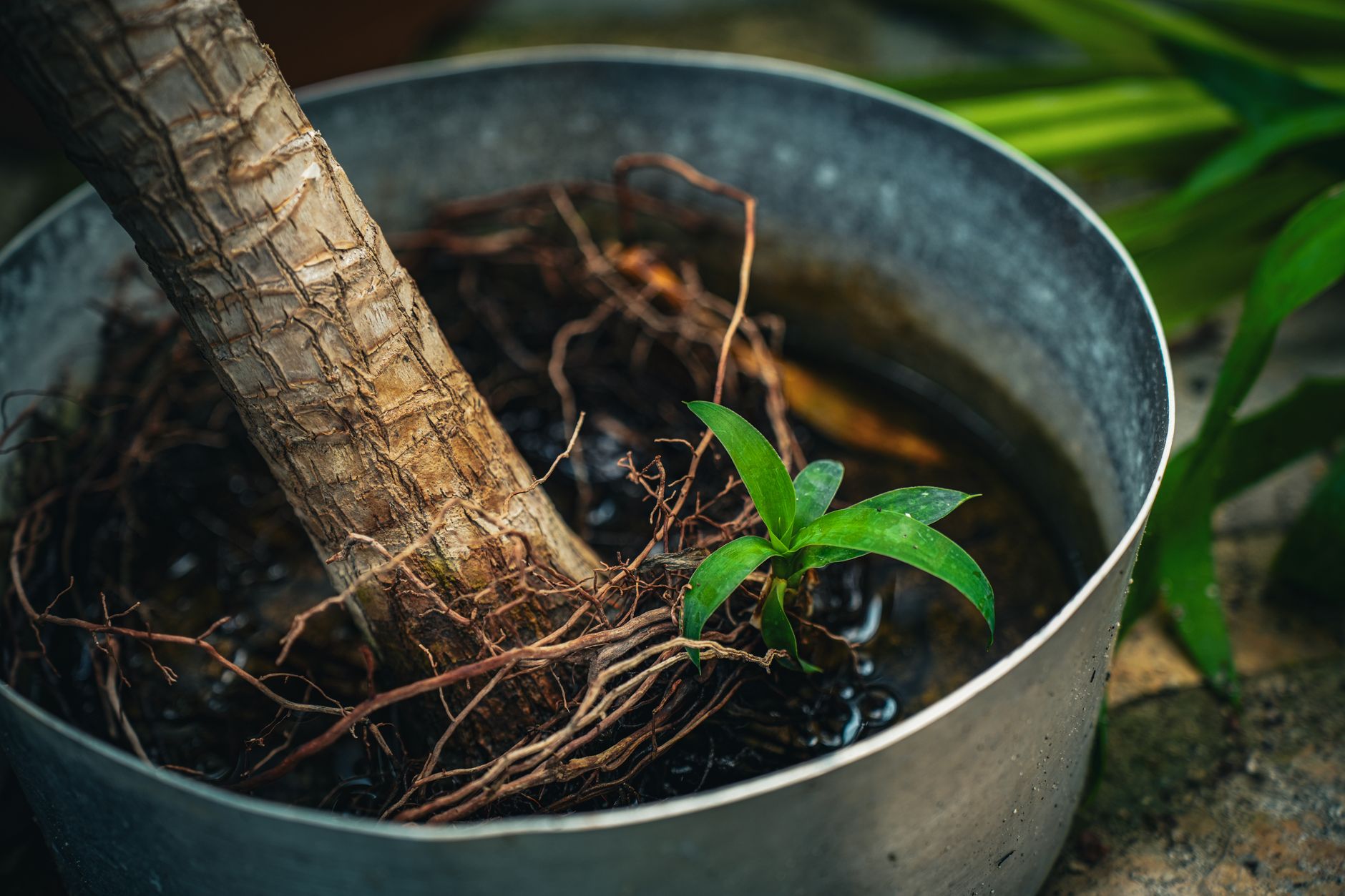
Photo by Yetkin Ağaç via Pexels.
Above-ground growth is a direct function of below-ground capacity. Roots aren't just anchors -- they're the interface for water, nutrient uptake, and a huge amount of the plant's hormonal signaling (cytokinins produced in root tips drive shoot branching and vigor). A restricted root zone caps how much the canopy can transpire, which caps photosynthetic throughput, which caps flower mass no matter how good your lighting is.
The relationship isn't linear, though. There's a well-documented phenomenon in container horticulture called "root binding" or pot-bound stress: once roots hit the container wall and start circling, the plant senses the physical limit and shifts into a defensive, reproductive-forward mode -- often triggering early flowering signals in photoperiod plants under stress, or just stalling vegetative growth outright. You'll see it as a plant that looks "stuck" -- leaves that stop getting bigger, slowed stretch, and a canopy that never fills in the way the genetics should allow.
On the flip side, a root system with far more soil than it can colonize wastes water unevenly, invites overwatering and root rot (especially in living soil or coco with heavy microbial activity), and delays the plant's ability to establish full uptake capacity before flip. Both extremes cost you yield -- the goal is matching container volume to the plant's actual growth trajectory at each stage.
Sizing by Growth Stage: A Practical Framework

Photo by Anna Khomutova via Pexels.
Rather than picking one final pot size and hoping for the best, think in stages. Most experienced growers run a 2-3 pot progression from clone/seedling to finish:
- Seedling/clone (0-2 weeks): Solo cups or 4-inch pots. Oversized containers at this stage hold excess moisture around a tiny root ball, which is the #1 cause of damping off and stunted seedlings.
- Veg transition (2-4 weeks): 1-3 gallon pots. This is where roots need room to branch laterally and establish a fibrous mat before the big push.
- Final container (pre-flower through harvest): Sized to mature plant height and expected finish weight -- see the sizing table logic below.
As a rule of thumb for final container size relative to expected canopy size indoors: 1-2 gallons of soil per foot of expected final height is a reasonable starting ratio for soil or coco-soil blends, adjusted up for sativa-leaning genetics with longer roots and down for compact, bushy indicas. A plant expected to finish at 3 feet does well in a 5-7 gallon pot; a 5-6 foot plant in an SOG or large single-plant setup wants 15-25 gallons to really express its yield potential. Autoflowers are the exception -- since they don't get a vegetative reset, going straight into their final 3-5 gallon container from the start avoids the transplant stress that costs them precious days they don't have time to recover.
Transplanting Without Setting Growth Back

Photo by Priscila Dramisino via Pexels.
Every transplant is a controlled trauma event -- some root damage is unavoidable, and the plant will pause growth for 2-5 days while it recovers. The goal is minimizing that pause and timing it so it doesn't collide with a critical growth window.
Transplant when roots have visibly reached the edge of the current container but haven't started circling -- pull the plant and check; you want to see white root tips throughout the medium, not a solid wall of roots against the pot wall. Waiting too long means undoing root-bound stress on top of transplant stress, a double hit that can cost a full week of stunted growth.
A few practices that consistently reduce transplant shock: water thoroughly an hour before transplanting so the root ball holds together, avoid breaking up the root mass unless it's severely circled (light finger-combing of the bottom third is usually enough), and transplant into a medium with similar moisture content to what the plant was in -- dropping a moist root ball into bone-dry new soil causes an immediate water potential gradient that stresses roots. Transplant in the evening or under lower light intensity when possible to reduce transpiration demand while roots reestablish.
As a scheduling rule: get all transplanting done before flip to 12/12, ideally with at least 10-14 days of veg recovery time in the final pot. Transplanting after flower has started is a last resort only -- it will cost you flower development time you can't get back.
Fabric Pots vs. Plastic: How Container Type Changes the Math

Photo by GB The Green Brand via Pexels.
Container material changes root behavior enough that it shifts your sizing decisions. Plastic pots hold water longer and roots that hit the wall circle indefinitely, which is exactly the root-binding scenario you're trying to avoid. Fabric pots (grow bags) air-prune roots -- when a root tip hits the fabric wall and is exposed to air, it stops elongating and instead branches, producing a denser, more fibrous root mass rather than a few dominant circling roots.
Practically, this means fabric pots can run slightly smaller than an equivalent plastic pot for the same plant size, since the root system is packed more efficiently rather than wasting energy circling. It also means fabric containers dry out faster (more surface evaporation), which is generally a benefit for oxygenation and root health but requires more frequent watering -- factor that into your irrigation setup, especially in high-heat rooms or late flower when demand peaks.
Smart pots and similar fabric containers are the default choice for most experienced indoor growers running soil or coco specifically because of this root-quality effect. Plastic still has its place -- it's better for hydro-adjacent setups, reservoirs, or any system where you're controlling moisture precisely and don't want the extra evaporation. Air pots (with perforated walls rather than fabric) push air-pruning even further and are worth considering for growers chasing maximum root density in a fixed footprint, like tight vertical racks.
Matching Pot Size to Genetics and Grow Style

Photo by Mubinuddoula Arefin via Pexels.
Not every strain wants the same container math, and this is where a lot of generic advice falls apart. Sativa-dominant genetics tend to develop longer, more exploratory root systems and reward deeper containers even at moderate plant heights -- a tall, narrow pot often outperforms a short, wide one of equal volume. Indica-dominant and many modern hybrid genetics build denser, more lateral root mats and do fine in wider, shallower containers.
Grow style matters just as much as genetics. In a Sea of Green (SOG) setup running many small plants per square foot, smaller final containers (2-3 gallon) are correct -- you're relying on plant count and uniform small colas, not individual plant size, so oversized pots just waste space and money. In a Screen of Green (ScrOG) or large single-plant setup, you're building one plant to fill a large canopy footprint, and that plant needs 15-30+ gallons of root room to physically support the water and nutrient demand of a dense, filled-in screen through 8-10 weeks of flower.
This is also where starting with well-bred, vigorous genetics pays off -- quality seed stock with strong natural root development gives you more headroom to push container size and training techniques without the plant stalling out; weak or unstable genetics often can't take advantage of the extra root space you give them. Whatever the strain, match your pot progression to how that particular plant actually grows rather than a one-size-fits-all number, and adjust based on what you observe each cycle -- climate, medium, and feeding schedule all shift the ideal slightly from setup to setup.
Pot size decisions made in the first two weeks of a plant's life echo all the way through to trim day. Undersized containers cap root development and trigger stress responses that stunt the whole cycle; oversized ones waste resources and invite overwatering problems. The fix isn't complicated -- size containers to the growth stage, watch root development rather than the calendar, and match final pot volume to the plant's actual mature size and your training style.
Dial this in alongside your lighting and feeding program and you'll notice the difference less in any single metric and more in overall plant vigor -- faster recovery from stress, denser canopy fill, and flowers that finish heavier because the root system underneath them was never the bottleneck.
Photo by Yetkin Ağaç via Pexels.