Silica for Stronger Stems: Platinum Cookies Under Heavy LED
Photo by beasternchen via Pixabay.
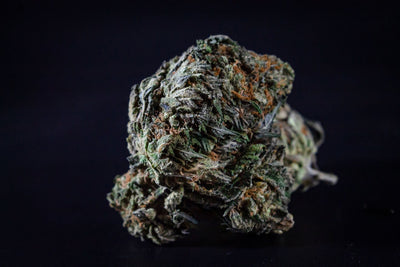
Platinum Cookies has a reputation for being one of the more forgiving structural strains you can run indoors -- short internodes, a naturally compact frame, branches that don't sprawl looking for light. That reputation is earned. But put that same plant under a modern LED array pushing 900-1200 PPFD through bloom, let it pack on the dense, resin-heavy colas this genetic is known for, and you'll still find stems bowing, sometimes snapping, under cola weight they were never mechanically prepared to carry. The plant isn't weak. The room is missing something outdoor plants get for free.
Silica supplementation is one of the few inputs in a cultivator's toolkit that addresses this specific problem head-on rather than around the edges. It's not another NPK play, and it's not going to show up as a yield multiplier on a nutrient label chart. What it does is reinforce the physical architecture of the plant -- cell walls, epidermal tissue, the stuff that determines whether a stem holds a two-ounce cola upright at week seven or folds over into the canopy below it. That distinction matters, and it's worth understanding before you start dosing.
This piece walks through why silica matters specifically in a high-intensity, climate-controlled LED room, what it's actually doing at the cellular level (and what it isn't), and how to time supplementation correctly across a Platinum Cookies cycle so you're not wasting product or, worse, reinforcing tissue too late to matter.
Why Indoor LED Canopies Need Silica That Outdoor Plants Don't
Outdoor cannabis plants build stem strength the same way a sapling on a windy hillside does: through repeated mechanical stress. Wind load, temperature swings, the plant physically flexing and micro-tearing and repairing tissue day after day -- this is thigmomorphogenesis, and it's a well-documented response across the plant kingdom. The result outdoors is shorter internodes, thicker cortical tissue, and stems that are structurally over-built relative to what a calm day actually demands. It's a built-in safety margin.
Indoor rooms running stable, high-output LEDs strip that trigger out entirely. There's no wind, no thermal cycling beyond whatever narrow band your HVAC holds, and often very little air movement beyond a couple of oscillating fans pointed at the canopy for CO2 exchange. Under 900-1200 PPFD at bloom, Platinum Cookies will build flower mass aggressively -- that's the point of running that light intensity -- but the stem tissue supporting those colas develops with none of the mechanical stimulus that would normally toughen it. You end up with a plant that's putting on dense, top-heavy weight on a frame that was never mechanically tested against anything harder than its own gravity.
Silica is the primary lever growers have to compensate for that missing stimulus. Silicon deposits in cell walls and epidermal tissue, physically stiffening the structure from the inside rather than relying on the plant to build that toughness through stress response. It's not a substitute for airflow or gentle stem training, but in rooms where those tools are already maxed out, it's the input that actually changes the physical properties of the tissue itself.
A mid-2026 review in Horticulturae synthesizing cannabis-specific silicon research through May of that year confirmed this is still a maturing area of study -- there's no massive body of cannabis-specific silicon trials the way there is for, say, tomatoes or rice. But the review found the fertigation mechanics are consistent across the available data: silicic acid, potassium silicate, calcium silicate, and nano-SiO2 formulations all tie back to structural reinforcement and improved stress tolerance. For a grower running a heavy LED canopy, this is exactly the scenario where stem-limited weight capacity, not light intensity or nutrient availability, becomes the actual ceiling on how much flower you can hang on a plant.
What Silica Actually Does to a Stem (and What It Doesn't Do)

Photo by Kindel Media via Pexels.
It helps to be precise about what silicon is doing biologically, because the marketing language around silica products tends to blur it with general plant nutrition. Silicon isn't classified as an essential nutrient for most plants, cannabis included, but it's what's called a beneficial element -- and cannabis takes it up readily and puts it to structural use. Once absorbed through the roots as silicic acid, it moves up through the xylem and deposits largely in cell walls and epidermal layers, forming a kind of internal scaffolding that physically thickens and stiffens tissue. That's a mechanical effect, not a metabolic one.
A 2024 study in the New Zealand Journal of Crop and Horticultural Science put some real numbers behind this. Using a biostimulant treatment on cannabis, researchers documented a 2.1-fold increase in leaf silicon content, statistically significant at p = 0.001. That's a substantial uptake response, and it's the kind of data point that supports silica supplementation as a legitimate structural tool rather than folk wisdom passed around grow forums.
What the same study did not find is just as important: silicon supplementation did not increase uptake of potassium, phosphorus, or other primary and secondary nutrients. That directly contradicts a claim you'll see repeated in a lot of product marketing -- that silica somehow makes your whole feeding program more efficient by boosting general nutrient uptake. It doesn't. Budget it as a structural input, full stop.
There's also a practical wrinkle that changes how you should be running a silica program: once silicon is deposited into cell wall structure, it's locked there. The plant cannot remobilize it to new growth the way it can shuttle nitrogen or phosphorus from older fan leaves toward developing bud sites. Every new inch of stem and every new leaf has to get its own silicon supply through continuous root uptake -- there's no internal redistribution safety net. That immobility is the entire justification for supplementing from clone through harvest rather than dosing heavily once flowering starts and calling it done.
Potassium silicate specifically carries a secondary benefit worth mentioning: a February 2026 cultivation guide cited suppression of powdery mildew at up to 95% efficacy, layered on top of whatever structural gains you're getting. It's not a fungicide replacement, but it's a real add-on benefit of that particular silica source.
Dosing Timeline: Clone to Harvest on a Platinum Cookies Cycle

Photo by Washarapol D BinYo Jundang via Pexels.
Because silicon can't be remobilized, the timing question isn't really a question -- supplementation needs to start at clone or early veg, well before you're thinking about flower structure at all. Waiting until stretch begins means you're trying to reinforce a stem framework that's already substantially built without the silicon it needed while it was forming.
Platinum Cookies works with a compressed timeline here. It's a compact, minimal-stretch phenotype with an 8-9 week flowering run, which means the window where stem elongation and fiber development are happening fast is short and dense rather than long and gradual. Roughly weeks 4 through 8 -- the applicable stretch phase and the heart of bud-set -- is when stem elongation and lignin/silica-reinforced fiber strengthening are both peaking simultaneously. This is the highest-demand period for silica in the whole cycle, and it's also exactly when cola weight starts accumulating fast enough to expose any structural shortfall.
On the fertigation side, there's a mixing order that matters more than people expect. Silicate products tend to be alkaline and can spike reservoir pH significantly, plus they can react with calcium and other minerals already in solution, forming precipitates that clog drip emitters or cloud a reservoir. The standard practice is to introduce silica into your water a few days ahead of your other nutrients, or at minimum mix it into fresh water and let pH stabilize before adding your base nutrients, rather than dumping everything into the reservoir at once and hoping for the best.
Supplementation should carry through late flower, even though it might feel counterintuitive once main stems already look sturdy. New tissue -- upper bud sites, secondary branches still filling in, the last few nodes of vertical growth -- keeps forming through the final stretch of bloom, and none of that new tissue benefits from silicon applied weeks earlier. The plant simply can't move it there.
None of this reduces to one universal PPM target you can copy-paste across setups. Product concentration varies a lot between silicic acid, potassium silicate, and nano-SiO2 formulations, your source water may already carry meaningful dissolved silica, and reservoir management practices differ room to room. Dial in dosing based on how the plant responds -- stem diameter, node spacing, how colas hold up under their own weight -- rather than chasing a specific number you read somewhere.
Matching Silica Strategy to a High-PPFD Platinum Cookies Setup

For Platinum Cookies during bloom, recommended light intensity ranges from 900 to 1200 µmol/m²/s PPFD, with the high end 33% brighter than the low end. Data source: PlanaCan.
Platinum Cookies typically tests in the 19-24% THC range and carries a naturally sturdy, compact growth habit that already gives it a structural head start most strains don't have. That's a genetic advantage, not a reason to skip silica -- it just means you're reinforcing a good starting frame rather than trying to compensate for a floppy one.
A well-matched LED setup for this strain runs full-spectrum white supplemented with 660 nm deep red, with bloom-phase PPFD held in the 900-1200 umol/m2/s range, measured directly at canopy height with a PAR meter rather than estimated from fixture wattage. That's a wide range, and where you sit within it matters a lot for how aggressive your silica program needs to be.
Push toward the top of that range -- 1100, 1200 PPFD -- and photosynthetic output climbs fast, bud density climbs with it, and cola mass accumulates at a rate that outpaces what a stem built for the lower end of that range can comfortably support. In practical terms: the harder you push light intensity, the more structural insurance you need underneath it. Silica isn't optional at 1200 PPFD the way it might be a nice-to-have at 700.
The payoff shows up in canopy management, not just in fewer broken branches. Well-reinforced stems reduce how much you need to lean on staking, trellis netting, or SCROG structures to keep a dense multi-plant room upright. That's real labor and material savings in a commercial or large personal grow, where every hour spent re-tying leaning colas at week 6 is an hour not spent on something else.
Genetics still set the ceiling here, though. Seedtiva's Platinum Cookies seed stock is selected specifically for structural sturdiness -- tight node spacing, thicker native stem diameter -- which is the right foundation to build a silica program on top of. Silica reinforces good genetics; it doesn't manufacture structural integrity out of a plant that wasn't bred for it in the first place. Outcomes here still depend on your specific setup, water quality, and how tightly you manage the rest of the environment.
Common Mistakes That Waste a Silica Program
The most common mistake is simple timing: growers start silica only once flowering begins, often triggered by seeing the first heavy colas start to lean. By that point most of the vegetative stem framework is already built, and since silicon deposited earlier can't retroactively appear in tissue that formed without it, you're reinforcing new growth from that point forward while the load-bearing lower stem stays exactly as thin as it was.
A second mistake is expecting silica to function like a feeding upgrade -- something that makes your existing nutrient program hit harder. The 2024 data showing no increase in potassium, phosphorus, or other nutrient uptake should put that idea to rest. If you're budgeting silica against expected yield gains the way you would a new bloom booster, you're going to be disappointed. Budget it against snapped branches and staking labor instead, where the real return actually lives.
On the mechanical side, mixing silicate products straight into an active nutrient reservoir without managing pH first is a fast way to waste both the silica and the rest of your feed. Silicates are alkaline and calcium-reactive; skip the pH adjustment and you can get precipitation that clouds your reservoir and clogs drip lines, which in a fertigation setup means uneven feeding across the room, not just a wasted dose.
Another one: growers stop supplementing once stems look thick enough to handle the current load, treating it as a problem that's been solved rather than an ongoing input. New upper-canopy growth after that point -- the tissue forming in the last two or three weeks of bloom -- gets none of the silicon applied earlier, because it wasn't there yet to take it up. Stopping early just relocates the weak point higher in the plant.
Last, don't treat silica as a standalone mildew solution. That 95% powdery mildew suppression figure from potassium silicate is real, but it's a benefit layered on top of decent airflow and humidity control, not a replacement for it. Run a silica program in a room with stagnant air and RH sitting at 65% through flower, and you'll still get mildew -- the silica just buys you a bit more margin, it doesn't erase the underlying environmental problem.
None of this is about squeezing extra grams out of a Platinum Cookies plant. Silica supplementation under a heavy LED canopy is a structural investment, and the return shows up as things that don't happen -- branches that don't snap in week 7, colas that don't need three stakes and a length of garden wire to stay upright, harvest days that don't involve untangling a leaning canopy before you can even start trimming.
The fact that silicon can't be remobilized once it's deposited is the detail that should actually shape how you run the program. It means the discipline of supplementing continuously from clone through late flower matters far more than which specific product or brand you're using. A mediocre silica source applied consistently from week one will outperform a premium one started in week five, every time, because the plant simply can't retrofit silicon into tissue it already built without it.
If you're running Platinum Cookies toward the top end of that 900-1200 PPFD window -- and there's good reason to, given how well this strain responds to intensity -- silica shouldn't be sitting in the category of things you reach for when a plant looks like it's struggling. It belongs in the standard program from day one, right alongside your base nutrients, as a routine cost of pushing light that hard rather than an emergency fix reserved for the one plant that started to lean.
Sources
- PlanaCan
- The Complete Power Si Silica Supplement Guide for Cannabis (2026): Ori – Modern Farms
- Best Silica for Cannabis Plants for Stronger Stems and Stress Resilience – The Yogic Garden
- Cannabis Silica Supplement for Stronger Crops – Plant Life Co Shop
- Silica's Hidden Potential: Maximizing Cannabis Growth and Quality