Why 72°F Is the Danger Line for Pythium in DWC Reservoirs
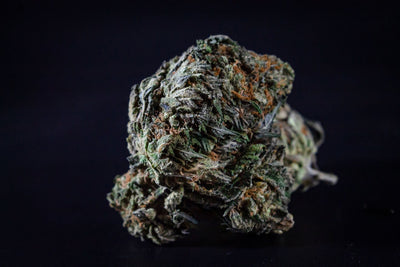
Photo by AndreasAux via Pixabay.
Pythium isn't something that drifts in through a cracked window or hitches a ride on a bad batch of nutrients. It's already there, in the biofilm on your net pots, in the dust that settles on your reservoir lid, probably in the water line feeding your tote. It's an opportunist waiting for conditions to tip in its favor, and warm water is exactly that invitation. Cannabis roots living in 78°F water aren't fighting off an invading army so much as losing a home-field advantage they didn't know they had.
Ask any grower who's run deep water culture for more than a season or two what number they watch, and you'll get the same answer: 72°F. It's become the line in the sand for reservoir temperature, repeated in forums and grow guides until it sounds like gospel. But the reason 72°F matters has less to do with Pythium itself and everything to do with dissolved oxygen. Heat doesn't just make water a nicer place for a pathogen to swim -- it strips away the oxygen that roots need to defend themselves in the first place.
This isn't just forum wisdom passed down without scrutiny, either. Zamir Punja's lab at Simon Fraser University has been isolating and identifying the actual Pythium species showing up on commercial cannabis roots since 2018, giving growers real species-level data instead of guesswork. That research matters because DWC is a high-stakes bet: done right, it produces some of the fastest vegetative growth rates you'll see in any home-scale system, roots doubling in mass in a matter of days. Done wrong, root rot can take a thriving plant to visibly collapsing in 48 to 72 hours, because in DWC the roots are the plant's only lifeline to water and nutrients. There's no soil buffer, no coco to slow the damage down.
What's Actually Happening in the Water at 72°F

Photo by Sienna via Unsplash.
Water's capacity to hold dissolved oxygen falls as temperature rises, and the drop-off isn't gentle once you cross into the low 70s. Going from 68°F to 72°F -- just four degrees -- can knock dissolved oxygen down by roughly 10 to 15%. That doesn't sound dramatic until you remember that in DWC, dissolved oxygen is the entire respiratory system for the root zone. There's no soil structure creating air pockets, no perlite channels venting gas exchange. The oxygen dissolved in that reservoir water is what the roots are breathing, full stop.
When roots get oxygen-starved, they don't just grow slower. They lose the ability to maintain the cellular defenses that normally keep opportunistic microbes out of root tissue -- things like reactive oxygen barriers and the general metabolic energy needed to wall off an infection site. A root under oxidative stress is a root with the door left open. That's the real mechanism behind the 72°F rule: it's not that heat directly triggers Pythium, it's that heat disables the plant's own defense system at the exact moment conditions get more favorable for the pathogen.
And conditions do get more favorable. Pythium is an oomycete, not a true fungus, and its zoospores are motile -- they swim. Warm, stagnant, low-oxygen water is close to ideal habitat for zoospore movement and reproduction, especially in the thin layer of water right at the root surface where flow is weakest. Anaerobic pockets around root hairs become launch points.
Worth being precise here: 72°F isn't some hardwired biological threshold where Pythium flips on like a switch. It's an industry consensus number built from collective grower experience and the general temperature-DO relationship, not a single fixed trigger point in the pathogen's biology. In fact, some Pythium species are more aggressive in cooler water than others, which is part of why the rule works better as a ceiling than a precise mechanism. Most experienced DWC growers don't treat 72°F as a target at all -- they treat it as the wall they never want to touch, holding steady somewhere below 68°F as the actual working range where both oxygen and root defenses stay strong.
Meet the Pathogen: Which Pythium Species Actually Attacks Cannabis
Root rot gets talked about as one disease, but Punja and Rodriguez's 2018 paper in the Canadian Journal of Plant Pathology made clear it's not that simple. Their work identified Pythium dissotocum and Pythium myriotylum as the species specifically documented attacking cannabis roots -- not a generic root rot organism, but named pathogens with their own behavior and preferences.
Temperature doesn't just affect how aggressive Pythium gets, it actually determines which species you're dealing with. Pythium ultimum tends to dominate in cooler water, which is part of why growers in unheated basements running cold reservoirs aren't automatically safe just because they've avoided the heat problem. Pythium aphanidermatum, by contrast, thrives in warm conditions and is one of the more common culprits behind the classic summer DWC crash. Two growers can both say they got hit by root rot and be describing entirely different organisms with different temperature preferences and different rates of spread.
The scale of the problem in commercial cultivation became clearer with a follow-up study -- Punja, Scott, and Lung's 2021-2022 work, which sampled 140 diseased plants across seven licensed greenhouse operations during the 2018-2019 growing seasons. That's not an isolated hobbyist problem showing up in a handful of forum posts. It's a documented, widespread issue across professional facilities with presumably far more resources for climate control than the average home grower.
This species-level variability is exactly why the same diagnosis -- root rot -- can behave so differently from one grow to the next. One grower's plants might decline over a week, another's over two days, and it often comes down to which Pythium species actually took hold, not just how bad the conditions got. It also explains why there's still no registered chemical fungicide available to cannabis producers for Pythium control. Without that chemical backstop that other agricultural crops rely on, prevention and biological control aren't just best practices in cannabis cultivation -- they're the only real tools growers have.
Reading the Symptoms Before It's Too Late
By the time a plant looks sick above the waterline, the roots have usually been in trouble for days. That lag is what makes Pythium so dangerous in DWC -- the visible symptoms show up last, after the damage that actually matters has already happened.
Start with the roots themselves, because that's where the real information is. Healthy DWC roots should be bright white, dense, and fuzzy with fine root hairs reaching into the water column. The first sign of trouble is a color shift -- roots turning tan, then brown, and losing that fuzzy hair structure as it dies back. Texture changes alongside color. Healthy roots feel firm; infected roots go slimy and stringy, almost slippery between your fingers, and they'll often shed their outer layer if you run them gently through your hand. Smell tells you almost as much as sight -- a reservoir that's developing a sulfur or swamp-like odor is telling you something is decaying in there, and it's not just old nutrient solution.
Above ground, symptoms take longer to show and can be misleading when they finally do. Wilting and drooping, especially in the upper canopy, and yellowing that looks a lot like a straightforward nitrogen or iron deficiency -- these are common first signals growers notice, and they often lead people down the wrong troubleshooting path entirely. You'll see growers dump in more cal-mag or adjust their feed ratios chasing a nutrient deficiency that's really a root function problem. Feed charts check out, pH and EC read exactly where they should, and growth stalls anyway. That mismatch -- everything on paper looking correct while the plant clearly struggles -- is itself a diagnostic clue that the problem is happening below the waterline, not in the reservoir chemistry.
Once Pythium is genuinely established, the timeline compresses fast. Because DWC roots are the plant's only conduit for water and nutrients, losing root function doesn't cause a gradual decline the way it might in soil with its buffering capacity. Growers commonly report going from first noticeable above-ground symptom to serious, visible plant stress in 48 to 72 hours. That narrow window is exactly why root inspection needs to happen regularly, before symptoms show up top-side -- by the time the leaves tell you something's wrong, you're already behind.
Chiller or Coco: Picking the Right System for Your Climate
Reservoir temperature isn't purely a hydroponics problem, it's a room problem first. If your ambient grow space temps regularly climb above 75°F and you don't have dedicated reservoir cooling, running DWC is a genuinely high-risk choice regardless of how carefully you manage everything else. Water sitting in a black or dark tote inside a warm tent will track close to room temperature within hours, and no amount of air stone agitation fully offsets that. In that scenario, coco coir is the more forgiving medium -- it doesn't carry the same catastrophic 48-72 hour collapse risk, and it buys you room for error that water culture simply doesn't offer.
For growers committed to DWC in a warm climate, or running rooms where grow lights or climate control equipment keeps ambient temps elevated no matter what you do, a dedicated inline chiller is the most reliable fix. It's not cheap, but it's the one piece of equipment that takes reservoir temperature off the list of daily worries entirely, holding water steady regardless of what the room is doing.
Short of that investment, there are workable stopgaps. Rotating frozen water bottles through the reservoir is a classic low-cost method, though it needs consistent attention -- it's a manual chiller, and it fails the moment you forget to swap bottles. Wrapping or insulating totes helps buffer against ambient swings. Simply moving reservoirs off hot flooring, especially concrete slabs that pick up radiant heat, can drop a few degrees on its own. Running feed lines through a cooler space before they reach the tote is another trick that adds up in a system where every degree matters.
Light control deserves equal attention, because it's connected to the same problem even though it looks separate. Any light penetrating a reservoir feeds algae, and algae blooms consume dissolved oxygen and leave behind decaying organic matter -- effectively feeding Pythium indirectly even in a properly cooled reservoir. Fully opaque totes, painted or wrapped, aren't optional.
All of this adds up to a system-level decision, not a minor adjustment. Some experienced growers deliberately switch to coco or soil during summer months and run DWC only when their climate cooperates, rather than fighting the thermal load year-round.
Building a Reservoir Pythium Can't Live In

Raising reservoir temperature from 68°F to 72°F reduces relative dissolved oxygen, highlighting how even small temperature increases can meaningfully reduce oxygen availability for roots in hydroponic systems.
Everything about beating Pythium in DWC comes down to making the reservoir an environment it simply can't compete in. That starts with temperature: 65-68°F is the working range worth building your whole system around, with 72°F treated as an absolute ceiling you never want to sit at, let alone drift above for days at a time.
Oxygen is the second lever, and it's one growers consistently undersize. A rough working benchmark is at least 1 watt of air pump capacity per gallon of reservoir volume, delivered through enough air stones to keep the entire volume in visible, constant motion -- no dead zones, no still corners where water sits stagnant. More agitation also means better gas exchange at the surface, which helps offset the DO loss that comes with any unavoidable temperature creep.
Beneficial bacteria inoculants add a biological layer of defense on top of the physical one. Hydroguard-style Bacillus-based products, typically dosed around 2 ml per gallon, work by colonizing the root zone with beneficial microbes before pathogens get the chance -- competitive exclusion rather than direct pathogen killing. It's a preventive tool, not a rescue treatment, so it needs to go in from day one of a reservoir's life, not after symptoms appear.
Full reservoir changes matter more than most growers give them credit for. Topping off with fresh water and nutrients keeps EC and pH looking fine on a meter, but it lets root exudates, dead root matter, and dissolved organics accumulate over time -- exactly the organic load that feeds pathogen growth. A full drain and refill every 7 to 14 days resets that load before it becomes a problem.
Beyond bacteria, there's now real research-backed ground for other biologicals: Enterobacter cloacae, Pseudomonas species, various rhizobacteria, and Trichoderma species have shown legitimate protective effects. A 2023 Punja trial specifically tested Rhapsody ASO, Stargus, Lalstop, and RootShield Plus WP for reducing disease severity in cannabis, giving growers actual data points rather than anecdotal brand claims to work from.
None of this replaces starting with strong genetics. A vigorous, well-bred root system simply tolerates marginal stress better than a weak one, which is one more reason serious growers pay attention to seed quality -- Seedtiva's genetics are bred with that kind of root vigor in mind, though no seed line makes temperature control optional.
Every other variable in a DWC grow -- EC, pH, light intensity, feed schedule -- gets adjusted constantly and forgiven easily. Temperature doesn't work that way. It's the one variable that quietly decides whether your reservoir is growing a cannabis crop or incubating a pathogen population, and it does that decision-making in the background whether you're watching or not.
Growers who hold 65-68°F as a hard rule, not a suggestion, tend to stop thinking about Pythium altogether. It's not that they got lucky or found some magic additive -- they simply never gave the pathogen the environment it needed to compete. That's the real lesson buried in all the species data and symptom checklists: prevention in DWC isn't marginally easier than treatment, it's categorically easier, because once root rot is established there's no registered fungicide waiting to bail you out.
If your grow space runs hot and you can't get a reservoir reliably under 72°F without investing in a chiller, that's not a reason to push forward and hope the air stones compensate. That's your climate and your setup handing you real information about which system you should actually be running. Sometimes the right fix isn't a better protocol -- it's admitting DWC isn't the right medium for the room you've got, and moving to coco until the season or the setup changes.
Sources
- Hydroponic Cannabis Cultivation: Systems, Setup, and | Royal King Seeds USA
- Why Hydroponic Water Temperature Matters - Learning Center
- Optimal Water Temperature for Cannabis in DWC Systems: The Science Beh – RootBox Hydro
- Cannabis Root Rot in DWC Systems: Causes, Symptoms, and Proven Solutions – RootBox Hydro
- The Ideal DWC Water Temperature: How to Keep Hydroponic Roots Healthy