Stabilizing Durban Poison Past F3: A Breeder's Guide
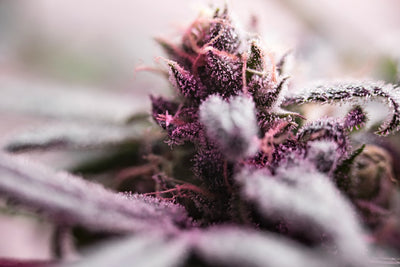
Photo by CRYSTALWEED cannabis via Unsplash.
Grow out a Durban Poison F2 population and it's easy to get cocky. The plants come up looking like siblings: same sativa stretch, same serrated fan leaf, same sweet aniseed-and-licorice funk starting around week four of flower. It looks fixed. It isn't. What you're seeing at F1 and F2 is often just dominant expression covering for a pile of recessive genes still sitting quietly in the background, waiting for the right cross to bring them forward. The real test — the generation where a landrace line either holds together or starts throwing plants that don't belong — is F3.
Durban Poison didn't arrive at genetic stability by accident, and it definitely didn't arrive quickly. Skunkman Sam pulled the original landrace out of southern Africa and spent multiple seasons in California breeding out a stubborn intersex tendency before the line was clean enough to be worth exporting. Nevil Schoenmakers picked it up from there, running it through Holland Seed Bank in Amsterdam through the mid-1980s and helping establish it as one of the foundational sativas of the modern seed trade. DJ Short then spent the back half of the 80s and into the early 90s tightening flowering time and locking in the terpene profile without flattening the sativa effect that made the strain worth keeping in the first place. That's not a weekend of selfing. That's the better part of two decades, spread across three different breeders, each solving a problem the last one hadn't finished.
This article is about the practical mechanics of that work — what actually happens genetically at F3 and beyond, how to set real selection criteria for a Durban Poison line specifically, and how long the process legitimately takes if you're running it yourself instead of reading about it.
Why F3 Is Where Landrace Lines Fall Apart

Photo by Remedy Pics via Unsplash.
Mendelian genetics doesn't care that your F2 plants all look the same. A recessive allele carried by just one parent in the original cross can sit completely hidden through F1 — every plant heterozygous, every plant showing only the dominant trait — and still stay mostly hidden at F2, where roughly a quarter of individuals would be homozygous recessive but that quarter might express a trait you're not even watching for yet. It's at F3, once you start crossing F2 selections against each other or against themselves, that recessive combinations start stacking up in visible numbers. Older strain-stabilization writeups from the cannabis breeding community going back to at least 2020 flag exactly this pattern, and nothing about the underlying genetics has changed since — a line can look clean at F1 and F2 and still throw a real percentage of off-type, wild-variant plants once you push it to F3.
Durban Poison is a textbook case, not a hypothetical one. The original landrace carried an intersex tendency — plants that would throw male flowers under stress even in a supposedly female-only population — that took Skunkman Sam multiple growing seasons in California to breed out before the line was stable enough to hand off. That wasn't cosmetic instability. Hermaphroditic expression in a seed line is a structural problem, because it means the trait can hide in plants that look perfectly female for a generation or two and then reappear the moment you introduce any stress: heat, light leaks, transplant shock, even just an unusually long veg period.
The practical implication for anyone running their own Durban Poison line is simple, if a little unwelcome: don't declare a phenotype fixed because F2 looked clean. Budget time, tent space, and seed count for a real F3 cull before you trust anything. Treat a good-looking F2 as a promising hypothesis, not a finished result. The generation that actually tells you what your line is carrying hasn't happened yet.
The Standard Path: Selfing, Backcrossing, and Bulk F3 Populations

Photo by CRYSTALWEED cannabis via Unsplash.
The standard methodology behind most stabilized cannabis lines, including the framework described in cannabis breeding patents filed over the past decade, is straightforward on paper: self an F1 to produce F2 seed, grow that F2 population out, and either fix your best individuals through cloning or cross F2 plants among themselves to bulk an F3 population. From that F3 bulk you select the plants that actually match your target — flowering time, structure, terpene expression, absence of intersex traits — and repeat the process into F4, F5, and beyond until the traits you care about are running homozygous and showing up reliably in every seedling, not just the lucky ones.
Most current breeding guides put a real number on this: expect three to five generations of selfing or backcrossing, with a genuine cull at every single round, before you can call a line stabilized. That's not a suggestion you can compress by trying harder in one generation. Genetic segregation happens on its own schedule.
For a home or small-scale breeder working with one Durban Poison line, the choice between selfing, backcrossing to a parent, and sibling-crossing an F2 population isn't just academic. Selfing an exceptional individual plant (via colloidal silver or a similar reversal method) locks in that specific plant's genetics fastest, but it also concentrates whatever recessive baggage that plant is carrying — including, potentially, intersex genes. Backcrossing to a known-good parent line reintroduces stability but slows down forward progress toward a new trait you're trying to build in. Sibling-crossing an F2 population — taking two or more strong F2 selections and crossing them against each other rather than against themselves — gives you more genetic diversity to select from at F3, which usually means a better shot at finding the individual that has everything you want, at the cost of a larger population size to grow out and evaluate.
DJ Short's actual work on Durban Poison through the 80s and early 90s fits this pattern closely. He wasn't inventing new methodology — he was grinding through repeated selection cycles, refining flowering time and yield generation over generation, while making sure he didn't accidentally breed out the terpene profile or sativa effect that made the plant worth keeping.
What to Cull: Setting Real Selection Criteria for a Durban Poison Line

Photo by Cannafornia via Pexels.
Flowering window is the single most useful selection trait you have for a Durban Poison line, and it's not close. Sativas are notorious for stretch and finish-time variance, and Durban Poison genetics can spread anywhere from a tight 8-week finish to a noticeably longer finish if the line hasn't been tightened. By F3, the practical target is to select only plants finishing within a five-day window of each other. That's tight enough to give you a predictable harvest schedule and loose enough to still be achievable without an enormous population. Anything finishing well outside that window gets cut from your breeding pool, no matter how good it smells.
Watch closely for intersex expression reappearing under stress — this is Durban Poison's original flaw, and recessive hermie genes are patient. A plant can run clean through veg, clean through the first five weeks of flower, and then throw a handful of male flowers in week seven after a heat spike or a missed watering. That plant needs to come out of your breeding program entirely, not just get harvested early and forgotten. If the trait is recessive, its siblings from the same F2 cross deserve a harder look too.
Terpene profile and vigor need to be scored fresh every single generation, not assumed to carry forward because the parent plant had it. The classic Durban Poison sweet aniseed-licorice note and the characteristic sativa stretch are polygenic traits, meaning they're controlled by multiple genes working together, and that combination can drift or split apart across a cross more easily than a single dominant trait would. Smell every plant at week 5, week 6, and harvest. Note stretch ratios from the switch to flower through week three. Don't rely on memory two generations later.
Here's the cull ratio reality check most first-time breeders underestimate: expect to remove a meaningful chunk of any F3 population — not just the two or three obvious outliers with weird leaf structure. If you're keeping more than half your F3 plants for further breeding, your selection criteria probably aren't tight enough yet.
How Long Real Stabilization Actually Takes

Trait consistency rises sharply in early cycles and climbs to 100% by Cycle 5, then plateaus, showing that repeated backcrossing quickly stabilizes desired traits within five generations.
Humboldt Seed Company's recent work gives a useful, concrete timeline instead of a vague estimate. They were gifted the original Durban cut in 2021 and spent several years and at least four generations sifting through progeny to convert it into an autoflower line while holding onto the true-to-type traits that make it recognizable as Durban Poison in the first place — the licorice terpenes, the sativa vigor, the characteristic high. Four generations of deliberate selection, spread across multiple years, to convert one trait category while preserving everything else. That's the real cost of doing this properly.
A useful outside benchmark comes from a peer-reviewed hemp stabilization study published in 2024/2025, which used controlled flowering, manual pollination, and successive backcrossing to stabilize a target trait over six breeding cycles. Trait consistency hit 100% by the fifth cycle, with the whole process completed within roughly 12 months. That's a faster timeline than the Humboldt case, but it reflects a tightly controlled research environment with manual pollination and a single, well-defined target trait — conditions most home breeders can't fully replicate.
Translated into something a grower can actually plan around: running 2 to 3 generations per year indoors, taking a Durban Poison line from F3 to something you can honestly call fixed is realistically a 12 to 24 month commitment of dedicated selection work. That's not idle time — it's active growing, evaluating, crossing, and culling, generation after generation, with no shortcuts built in.
Set your expectations accordingly, because outcomes here depend heavily on three things: how large your starting population is, how hard you're willing to cull each round, and how much genetic variability the original line was carrying before you started. A line that came from a tight, well-documented lineage will stabilize faster than one pulled from a mixed or poorly-tracked seed batch. There's no universal number of generations that applies to every Durban Poison project — there's only the honest range, and the discipline to keep going until your own data says you're done.
Running Your Own F3-and-Beyond Program at Home

Photo by Gio Bartlett via Unsplash.
Population size matters more than most home breeders assume, and it's usually the first thing people cut corners on because tent space is expensive and seeds aren't free. Selecting from 10 plants at F3 will not reveal the same range of variants as selecting from 40 or 50. If a recessive trait — intersex tendency, an off flowering time, a flat terpene profile — is only showing up in a small fraction of plants, a 10-plant F3 population has a real chance of missing it entirely and letting it ride into F4 undetected. Bigger populations cost more in space and time, but they buy you actual visibility into what your line is carrying.
Keep a mother plant or clone bank of your best F2 and F3 selections before you commit to a cull. Bad cull decisions happen — you're a generation into a cross and realize the plant you tossed had the exact terpene profile you were chasing. A clone bank means you can go back and re-cross instead of losing a promising line permanently because of one hasty decision made under tent-space pressure.
Log everything, every generation: flowering date from switch to harvest, plant structure and stretch, terpene notes at week 5/6/harvest, and any intersex expression however minor. Without written records tracking each plant back to its parent, you're guessing by F4, and guessing is exactly what turns a stabilization project into an endless loop of re-doing work you thought was finished.
Starting from well-bred, genetically stable seed stock — like what Seedtiva offers — gives a real head start compared to starting from an unstabilized landrace collection or a random seed pack of unknown lineage. It doesn't skip the work described above, but it means your F1 and F2 generations are starting from a tighter genetic base, which shows up as less variance and fewer surprises once you hit F3.
Decide your end goal before you start culling hard, because it changes everything downstream. A true-breeding photoperiod line, an autoflower conversion, or simply preserving one exceptional phenotype for clone-only use each demand a different selection strategy — the autoflower conversion needs a completely different trait locked in than the photoperiod preservation project does, and culling for one goal can actively work against the other.
Stabilizing Durban Poison past F3 is slow, deliberate work measured in years and generations, not a weekend project with a shortcut waiting to be discovered. The strain's own history is the proof: it took Skunkman Sam multiple seasons to breed out intersex traits, Nevil Schoenmakers years running the line through Holland Seed Bank, and DJ Short the better part of a decade refining flowering time and terpenes without losing the sativa effect that made the plant worth all that trouble. Humboldt Seed Company's more recent autoflower conversion work followed the same pattern — several years, at least four generations, no way around the grind.
None of these breeders won by finding a clever workaround. They won through rigorous culling, honest record-keeping, and patience across generations that in some cases outlasted entire decades of the cannabis market changing around them. That's the actual lesson buried in Durban Poison's breeding history, and it applies just as much to a home grower with four tents as it did to Skunkman Sam working in California decades ago.
Treat every generation as a checkpoint, not a finish line. A trait that looks fixed at F3 deserves re-confirmation at F4, and again at F5, before you're willing to call a line stable and start handing seeds to other people. The plants that fool you are the ones that look perfect right up until the generation where they don't.