Stop Temperature Swings From Stressing 24/0 Autoflowers
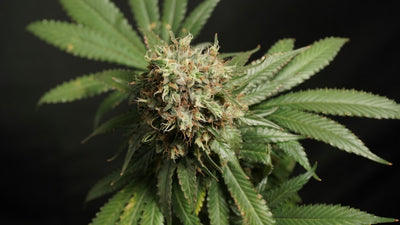
Photo by Everett Pachmann via Unsplash.
You walk into the room at 4 p.m. and the thermometer on the autoflower tent reads 86°F. The memory min/max says it touched 74°F at dawn. That is a 12°F swing in one afternoon, and under a 24/0 schedule the plants lived through every degree of it with the lights blazing.
Autoflowers run an 8 to 12 week clock. A week of stalled growth costs a much bigger slice of the cycle than it would on a photoperiod plant that you can hold in veg for another fortnight. There is no extra time to buy back.
My stance is simple: under 24/0, steady beats perfect. You do not need a flawless 77°F every minute. You need a canopy that stays inside a narrow band, and that is an equipment and placement problem you can solve without guesswork.
Key takeaways
- Under 24/0 there is no night to recover, so HVAC cycling is the main source of temperature swings.
- Aim for a steady canopy of roughly 70-82°F (21-28°C), measured at canopy height, not at the wall.
- A right-sized AC with a tight deadband beats an oversized unit that short-cycles and swings the room.
Why Swings Hurt More Under 24/0
Photoperiod growers get a quiet gift they rarely notice: the dark period. Lights off, the room cools, the plant slows down, and any afternoon spike is forgotten by morning. Under 24/0 there is no reset. Every swing lands on a plant that is photosynthesizing at full tilt.
The commonly cited lights-on canopy range for autoflowers is about 70-82°F (21-28°C). Treat that as a general window, since genetics and setup shift it. The point is less the number than how long and how often you leave it.
Temperature also drags VPD around, even when humidity never moves. Common targets sit near 0.8-1.2 kPa in veg and 1.0-1.5 kPa in flower. A few degrees of warming can push a room out of that window, so stomata respond to a changing demand for water all day long.
Then there is the clock. With roughly 8-12 weeks from sprout to harvest, stress-related slowdowns eat a bigger share of the grow and are hard to claw back. A plant that loses ten days in week three rarely makes them up.
Here is what swing stress tends to look like:
- Leaves taco-ing or curling at the edges
- Slowed internode growth, then a sudden stretch when conditions improve
- Uneven or stretched growth across the canopy
- Inconsistent drinking, with pots drying at different rates between waterings
Several of those overlap with overwatering, heat stress and nutrient trouble, so confirm the temperature data before blaming the plant.
Where the Swings Actually Come From
The lights never turn off, so your heat load is constant. Your cooling, though, is cyclical: it kicks on, drops the temperature, and shuts off. The gap between a flat heat source and a pulsing response is what draws the sawtooth on your graph.
Oversized AC units are the usual culprit. They cool the room fast, hit the setpoint in minutes, shut off, and then let the room creep back up. That is short-cycling, and it produces wide swings no matter how good the thermostat looks.
Dehumidifiers add a second pulse. They dump heat into the room, and when they cycle, you get a small heat bump stacked on top of the lights. In a small, sealed space the effect is easy to see on a log.
Exhaust fans pull in outdoor air, and with it the weather. A cold garage at 3 a.m. or a hot afternoon changes the tent regardless of your setpoint. If your fan is moving a large volume of air from an unconditioned space, your controller is fighting the outdoors.
Before you buy anything, run a quick diagnostic:
- Place a logging thermometer at canopy height.
- Record temperature every few minutes for at least a full day, ideally two, so you catch the daily outdoor cycle.
- Look at the pattern. Peaks that line up with the AC cycle point to equipment. Peaks that follow the outdoor clock, repeating at the same time each day, point to your intake air or insulation.
A day or two of data will usually tell you which of these four problems you have, and that changes what you should spend money on.
Right-Size Your Cooling and Tighten the Deadband
Size cooling to the actual heat load of your lights plus the rest of the equipment, not to the biggest unit that fits the budget. Oversizing is the most common cause of short-cycling. A smaller unit that runs longer holds the room steadier than a big one that blasts and stops.
Inverter and mini-split systems modulate their output instead of cycling fully on and off. They hold a steadier canopy temperature because they trim output to match the load, and with a constant 24/0 heat source that fits well.
Deadband matters too. A tight setting of around 1-2°F either side of the setpoint keeps swings small. Go too tight and the compressor chatters, which wears it out, so check the unit's minimum run time and respect it.
For small tents in cool climates, a properly matched inline fan with ducted heat removal can replace AC entirely. In hot climates it often cannot, because you cannot exhaust your way below the temperature of the air you are pulling in.
Finally, deal with the dehumidifier. Where practical, duct its heat out or put it outside the grow space. Every watt it dumps in the room is a watt your cooling has to chase.
| Approach | Best fit | Main drawback |
|---|---|---|
| Matched AC, tight deadband | Hot climates, rooms | Compressor minimum run time |
| Inverter or mini-split | Steadiest canopy temperature | Upfront cost |
| Inline fan, ducted heat | Small tents, cool climates | Imports outdoor air swings |
Sensors, Airflow, and Controllers

Photo by DREIDK via Pixabay.
A sensor is only useful if it reports what the plants feel. Put it at canopy height, in the same airflow the leaves see, and out of direct light. A probe near the wall or ceiling reads the hottest layer of air and gives you the wrong number to control against.
In larger rooms, use more than one sensor to find hot and cold zones. Mixing fans help by keeping warm air from stratifying above the canopy and cooler air from pooling at the floor.
Controllers from makers such as Inkbird, AC Infinity and TrolMaster can run temperature setpoints and fan speeds. Features and models change often, so check what is current before you buy rather than relying on an old forum thread.
Prefer variable-speed fan control to on/off. A fan that ramps smoothly adjusts extraction in small steps, while an on/off fan slams air in and out and creates its own swings.
Finally, calibrate. Cheap sensors can drift several degrees, which is enough to make a good setpoint a bad one. Park a second thermometer next to the first for an hour and compare. If they disagree, trust neither until you have checked against a third.
Ten minutes of calibration costs nothing and can explain a mystery that hardware upgrades would never fix.
Buffer the Room Against Outside Weather
If your grow space sits on an uninsulated exterior wall or in a garage, it will swing with the weather no matter how good your cooling is. Insulating the walls around the tent or room is one of the cheapest stability upgrades available.
Thermal mass slows temperature changes. Water containers, a concrete floor or other dense material absorb heat during a spike and release it during a dip, which rounds off the peaks of your log.
Where possible, draw intake air from a conditioned space instead of straight from outdoors. For a dedicated room, consider sealing it and giving it its own AC so it stops depending on whatever the weather is doing.
Seal the leaks. Light leaks and air gaps at doors and ducts let uncontrolled air in, and that air undermines your setpoint a little all day long. Gaskets, tape and weatherstripping fix most of it.
Finally, treat the setup as seasonal. Summer and winter change the baseline load, so re-tune setpoints and fan curves when the weather turns. A configuration that was steady in October may swing in July.
- Insulate exterior walls near the tent
- Add water or concrete mass
- Pull intake from a conditioned space
- Seal doors, ducts and seams
- Re-check settings each season
Is 24/0 Worth the Trouble?

Photo by Elsa Olofsson via Unsplash.
Whether 24/0 improves yield is disputed among growers. Some report that 18/6 or 20/4 performs as well or better while cutting energy use. I would not assume either way without controlled-environment research, and I have not seen firm numbers I would quote.
A short dark period does give your equipment and your plants a built-in cooling window. That alone can make temperature control easier, because the heat load drops for a few hours and the AC gets a chance to catch up.
So if your room cannot hold steady under 24/0, switching to 20/4 or 18/6 is a legitimate fix, not a compromise. A stable 20/4 grow will often beat an unstable 24/0 one.
Starting with well-bred genetics also helps. Seedtiva offers quality genetics suited to controlled indoor autoflower grows, and good seed stock gives you a more forgiving plant to work with while you dial in the room.
Outcomes vary by climate, equipment and genetics. Run your own side-by-side comparison: same strain, same room conditions as far as you can manage, two schedules, and a log for each.
The fix is rarely one expensive gadget. It is steady cooling, honest sensor placement, and a room that does not follow the weather. Most swings come from a handful of causes, and each has a modest, practical remedy.
Before you spend anything, log your canopy temperature for a day or two. If the peaks track the AC cycle, look at the equipment; if they track the outdoor clock, look at intake air and insulation. That is the cheapest troubleshooting in the whole grow.
Sources
- Autoflower VPD Chart 2026: Stage-by-Stage Targets for Faster Harvests
- VPD Table & Calculator: Perfectly Control Your Cannabis Grow 2026
- Autoflower VPD Chart: Best VPD by Stage (Temp & Humidity)
- Best Temp and Humidity for Autoflowers (Chart by Stage)
- What is the best autoflower light cycle?
- What is VPD, and how does it affect autoflowers?