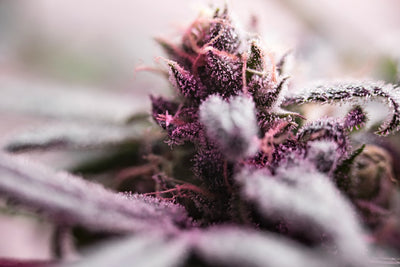
Thai Landrace Sativas and RH Spikes in Week 6 Flower
Photo by ron2025 via Pixabay.
Picture the scenario: you're six weeks into flower on a Thai landrace, spear colas just starting to stretch and fill in, and you check your climate log at 6am to find RH has spiked well above your target overnight. If you were running a dense Kush-leaning hybrid, this is the moment you start pulling fan leaves and setting up a second dehumidifier before your coffee's cold. But this is a Thai. Wispy, open, fluffy buds that seem to shrug off humidity in a way your indica-dominant plants never did. So do you panic, or do you let it ride?
There's no peer-reviewed study out there that takes a Wild Thailand or Ko Chang cut, blasts it with a controlled RH spike in week 6, and measures the botrytis outcome against a matched indica. That specific experiment doesn't exist yet. What follows is built from something more useful for a working grower right now: solid, established plant pathology on how Botrytis cinerea behaves under fluctuating humidity, combined with what we actually know about Thai landrace morphology and how it evolved. The structural argument for Thai's relative resistance is real and defensible. It is not a substitute for data on your specific plant in your specific tent.
Thai genetics do carry a genuine structural advantage from thousands of generations growing under equatorial conditions, and that advantage matters. But week 6 is not the finish line -- it's roughly the midpoint of an 11-to-14+ week flowering cycle that some Thai lines stretch out even longer. Any infection risk seeded now has an unusually long runway to develop before you're anywhere near harvest. The core tension worth sitting with here is simple: relative resistance is not immunity, and a sudden overnight jump in RH behaves very differently, physically, than a slow climb to a slightly elevated average. The number on the meter matters less than how fast it got there and what your air is doing while it sits there.
Why Thai Genetics Grow the Way They Do

Photo by NickyPe via Pixabay.
Thai landraces didn't get their structure from a breeding program chasing a look -- they got it from surviving. Genetics like Wild Thailand and the lines pulled from Ko Chang developed under conditions that never really change: roughly 12 hours of daylight year-round, temperatures that don't swing much, and ambient humidity that sits chronically high through most of the growing season. A plant that holds moisture in tight, dense flower clusters in that environment gets hammered by mold before it ever finishes seed production. Natural selection did the work a breeder would otherwise have to engineer.
What you end up with is thin-fingered, light-green fan leaves that don't shade the canopy heavily, internodal spacing that's often double or more what you'd see on a modern indica-dominant hybrid, and colas that grow as long, fluffy spears rather than dense, rounded clusters. Put a Thai cola next to a tight OG-type nug from a modern hybrid and the difference is obvious at a glance -- one looks like it's been combed out, the other looks like it was compressed in a fist. That's not cosmetic. It's the plant's entire strategy for surviving high humidity written into its architecture.
This open structure isn't a modern breeding trait selected for yield or bag appeal -- it's an inheritance from an environment that punished tight bud structure directly. Air moves through a Thai spear cola in a way it simply cannot move through a dense indica cola, because there's no equivalent of the packed calyx-on-calyx structure that traps humid, stagnant air right at the point where a botrytis spore needs it most.
Why this matters specifically at week 6: bud structure is largely locked in by this point in flower. The internodal spacing was set weeks ago, and the plant is now mostly elongating and filling in what's already there. That means the airiness working in your favor right now isn't a future possibility -- it's already an active, physical feature of the canopy doing real work every hour that RH sits elevated. You're not hoping the plant will develop resistance. It's already built the plant it's going to flower with, and that plant is inherently harder for rot to establish in than the dense hybrid sitting next to it in the same tent.
What a Sudden RH Spike Actually Does, Physically
The instinct to treat an average RH reading as the important number is backwards, and it's worth being precise about why. Industry cultivation guidance consistently treats brief excursions above target as more dangerous than a slightly elevated but stable average. A single day of elevated RH in week 7 can be enough to trigger botrytis onset in a dense cola, even if the days before and after sit comfortably lower. The spike is the event that matters, not the week's mean.
To calibrate how fast this can move: dense indica-dominant hybrids commonly show visible botrytis onset within 48 hours once RH exceeds 55% during week 6, even in tents with decent airflow. That's the baseline a Thai landrace's structural advantage is actually being measured against -- not some theoretical worst case, but a real and fairly common failure mode growers see with tighter-budded genetics.
Peer-reviewed plant pathology work on field crops backs up why the swing itself is the trigger. Research on raspberry crops has shown that rapid RH changes within the 65-85% band produce the maximum release of Botrytis conidia -- the spores responsible for spreading infection. It's not sitting at the top of that range that does the most damage in terms of spore dispersal; it's the transition through that range happening quickly that kicks spore release into high gear.
Grape research adds the mechanism for what happens once spores land. At 21C with no airflow, sustained RH of 94% drove rapid aerial mycelial growth of Botrytis cinerea -- the fungus doesn't just sit dormant, it actively expands outward through the air at the flower surface. Drop that same setup to 69% RH at the identical temperature, and that aerial growth stopped. Same temperature, same crop, same pathogen -- the only variable that changed was humidity, and it was enough to shut down active fungal expansion.
Put those two findings together and the takeaway is specific: it's the combination of a rapid swing through the danger band and stagnant air sitting at the flower surface that opens the infection window. A single meter reading by itself tells you less than knowing how fast you got there and whether your fans are actually moving air through the canopy or just around the room.
Where Thai Landraces Have an Edge -- and Where They Don't
Thai's airy spear colas buy real time here, and it's worth being clear about the mechanism rather than just asserting it works. Water doesn't pool the same way inside a loosely-formed spear cola as it does inside a dense, calyx-packed nug. There's no tight interior pocket for condensation to sit in overnight and slowly saturate. Air exchange through the structure is faster and more complete, which means the localized high-humidity microclimate that botrytis needs to establish is harder for the plant to create in the first place.
That said, relative resistance is exactly what it sounds like -- relative, not absolute. Botrytis doesn't need the whole cola saturated to get a foothold. It needs one localized pocket of trapped moisture, often where a leaf touches a bud site or where two branches have grown close enough to shade each other. Even an airy Thai structure has these spots, just fewer of them and less severe when they occur. A spike that would devastate a dense hybrid might only seed a small, manageable infection point on a Thai plant -- but manageable isn't the same as absent, and that infection point still needs to be found and dealt with.
This is where Thai's extended flowering time cuts against it. These landraces typically run 11 to 14 weeks of flower, with some sourced lines cited as stretching past 20 weeks depending on phenotype and conditions. Week 6 on a plant like this is mid-flower at best -- possibly closer to the front half of the cycle. Any infection that gets seeded now has significantly more time to spread through the canopy before harvest than the same infection would have on a 9-week hybrid. Long flower time is part of what gives Thai its terpene development and effect profile, but it also means a slow-building rot problem has more calendar to work with.
There's also a yield and potency cost to sustained high humidity that has nothing to do with rot at all. A November 2025 study in Frontiers in Plant Science (Corredor-Perilla, Kwon & Park) found that sustained high RH compressed VPD down to 0.25-0.62 kPa in a CBD-dominant cultivar and produced a 75.3% drop in total biomass, a 71% drop in flower biomass, and pushed flowering out by three weeks. The same study measured cannabinoid content directly: CBD-A dropped roughly 4.9x, CBD dropped about 3.2x, and CBC-A dropped roughly 13x under sustained high humidity conditions. That study didn't test Thai genetics or sudden RH swings specifically -- it tested sustained exposure on a different cultivar entirely. But the underlying mechanism, that prolonged high humidity taxes the plant's physiology and cuts both yield and cannabinoid output, doesn't care what the plant's rot resistance looks like. A structurally resistant plant can still lose real weight and potency to conditions that never produce a single visible mold spot.
Target Ranges and How to Respond When RH Spikes

Target relative humidity should be gradually lowered as flowering progresses, dropping from 55% at mid-flower to 50% at late flower, both well below the 65% spike threshold that risks bud rot in this Pure Thai Landrace strain.
Current grower guidance for mid-flower puts the RH target at 50-60%, tightening to 45-55% once you move into late flower and the risk profile shifts further toward rot over growth concerns. That's the range to run toward as a default, Thai landrace or not -- the structural advantage changes how much margin you have for deviation, not what the target itself should be.
VPD deserves equal billing with RH here, not a backseat. For rot-prone late-flower stages, a VPD target of 1.2-1.6 kPa is the number worth tracking alongside your humidity readings, because RH alone doesn't tell you what's happening at the leaf and flower surface once temperature is factored in. Two rooms can both read the same RH and have meaningfully different mold risk if their temperatures -- and therefore their VPD -- are different.
- Airflow first. When RH spikes above 65%, don't reach for the thermostat first -- reach for your fans. Oscillating fans need to be aimed to push air through the canopy and between colas, not just circulate air across the top of the room. Stagnant air at the bud surface is half of the infection equation from the grape research above; moving air breaks that up directly.
- Dehumidify to the room, not the reading. Make sure your dehumidifier is actually sized for your room's real volume plus the heat and moisture load your grow lights add, not just rated for the square footage on the box.
- Don't chase the spike with temperature. Dropping temperature quickly alongside elevated RH raises dew point risk right at the leaf surface, which can create condensation -- the exact localized moisture pocket you're trying to avoid. Bring temperature down gradually if at all.
- Open up the canopy. If the spike coincides with a dense lower canopy, increase spacing between plants and strip lower fan leaves that are blocking airflow around bud sites. This is standard practice but matters more the moment RH climbs.
- Log the event, don't just react to it. A single 24-48 hour spike that gets corrected fast carries a very different risk profile than a multi-day plateau sitting above 65%. Write down when it started, how high it went, and how long it took you to bring it back down -- that record is what tells you whether you got lucky or whether your climate control actually did its job.
The structural case for Thai landraces is real. That open, spear-colaed architecture built over generations of equatorial humidity genuinely buys you more margin for error than you'd get from a dense modern hybrid facing the identical RH spike. That's not a marketing claim, it's a direct consequence of how air moves through the flower structure itself.
But margin for error is not the same thing as a free pass, and the math on flowering time makes that distinction matter more here than it would on a faster plant. An infection point seeded in week 6 on a plant that's got 5 to 8 more weeks of flower ahead of it has a lot of room to grow before you're anywhere near harvest day. The smart move when you see a sudden RH spike isn't to wait and see whether visible rot shows up in a week -- it's to treat the spike itself as the trigger. Check airflow through the canopy, check your VPD alongside the RH number, and correct it fast, before you find out the hard way whether this particular pocket of trapped moisture was one your Thai's airy structure could shrug off.
If you're planning a Thai landrace grow, starting with vigorous, well-bred seed stock -- Seedtiva's genetics included -- gives you a plant that actually expresses that natural airy structure the way it's supposed to, rather than a weak or inconsistent phenotype that loses the advantage you're counting on. But the seed only sets up the plant's potential. Your climate control is what has to show up every single day for the 12-plus weeks it takes to get that plant to harvest, and outcomes here will always depend on your specific setup, climate, and how quickly you catch and correct a swing when it happens.
Sources
- Wild Thailand Strain (Pure Thai Landrace) - Strainpedia
- Thailand Landrace Strain: A Comprehensive Strain Guide - Blog - JointCommerce
- PiffinTen - THE Authority on Cannabis: Thai Landrace: The "Electric" Sativa from the Golden Triangle
- Thailand Landrace Strain: A Comprehensive Strain Guide
- Elevated relative humidity significantly decreases cannabinoid concentrations while delaying flowering development in Cannabis sativa L