The Original Grow Bibles: Underground Manuals of Prohibition
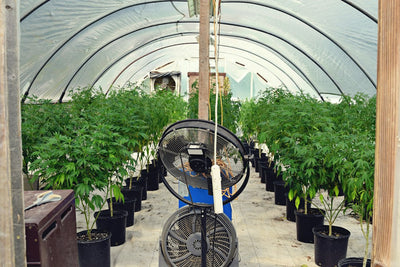
Photo by jarmoluk via Pixabay.
Before there were seed banks with lab certificates of analysis and dispensary menus sorted by terpene profile, there were mimeographed pages passed from one grower to the next, often photocopied so many times the text had gone soft and grey at the edges. Nobody was ordering feminized seeds off a website in 1975. You learned to grow from a book someone handed you in a parking lot, or from a stapled pamphlet tucked behind the counter at a head shop, and you didn't ask too many questions about where it came from.
These weren't casual purchases. During the Reagan-era War on Drugs, simply owning one of these manuals could get you noticed by the wrong people -- a book on your shelf was treated by some prosecutors as evidence of intent, not curiosity. The genre that grew out of that risk runs in an unbroken line from Bill Drake's outdoor handbook in 1970 to Jorge Cervantes' indoor bible, a title that eventually sold more than half a million copies and became the closest thing the cannabis world had to a shared textbook. What follows is the story of how that knowledge got written down, who risked something to write it, and why so much of what they figured out by trial and error is still exactly what serious growers do today.
From Backyard Plots to Basement Grows: The First Manuals

Photo by Alexey Demidov via Unsplash.
Bill Drake's 'The Cultivator's Handbook of Marijuana,' published in 1970, is generally regarded as the first serious underground cultivation guide, and it makes sense that it was entirely an outdoor manual. There was no other option -- horticultural-grade HID lighting wasn't yet part of the hobbyist world, and nobody had worked out how to replicate a California summer inside a closet. Drake's book dealt in things growers could actually control outdoors in that era: soil amendment, seed selection, timing around the natural photoperiod, and basic pest management. It read more like an agricultural pamphlet than anything resembling the glossy grow guides that came later, but it proved there was an audience hungry for real information.
A decade later, Ed Rosenthal and Mel Frank's 'The Marijuana Grower's Guide,' first appearing around 1980 and revised in 1981, became the defining text of the sinsemilla era. Rosenthal in particular understood that growers needed more than folklore -- they needed something closer to applied botany, written by people who'd actually run the numbers on light cycles and plant sex. The timing mattered too: this book landed right as the Reagan administration was ramping up drug enforcement, which meant the audience reading it had real reason to be careful about who saw them with it.
These books moved through a specific, narrow distribution network -- head shops that kept them under the counter, mail-order operations that shipped in plain brown packaging, and a word-of-mouth chain where owning a copy signaled you'd graduated from curious to committed. There was no university extension office publishing bulletins on cannabis agronomy, no land-grant college research station running trials on flowering response to spectrum. Drake, Rosenthal, and Frank were filling a total vacuum, and they were doing it as private citizens with no institutional backing and considerable personal legal exposure. That's worth sitting with -- everything a home grower takes for granted today about nutrient timing or training techniques had to be worked out by people risking prosecution to write it down.
Jorge Cervantes: The Pseudonym Behind the Indoor Bible

Photo by Hameen Reynolds via Pexels.
George Van Patten didn't put his real name on 'Indoor Marijuana Horticulture' when he published it in 1983, and given the political climate, that was the obvious call. He wrote under the name Jorge Cervantes, and the first edition was a modest thing by today's standards -- 96 pages, black and white throughout, saddle-stitched with a couple of staples down the spine rather than perfect-bound. It didn't look like a bible yet. It looked like something you'd find wedged in a tackle box.
What made the book different from the outdoor manuals that preceded it was how it was researched. Van Patten didn't just theorize about indoor technique from a desk -- he embedded himself in active illegal grow operations to see what was actually working, and he did it in disguise. He later described his getup as a 'Che Guevara/Bob Marley look': a black dreadlock wig, a black goatee, a beret, and sunglasses. It sounds almost theatrical now, but the disguise served a real purpose -- it let him move between grower communities and gather firsthand technical detail without exposing his actual identity to people who could, and sometimes would, talk to federal agents.
He kept that identity secret for more than 25 years. It wasn't until February 8, 2010, on NPR's 'Tell Me More,' that he publicly confirmed George Van Patten and Jorge Cervantes were the same person. That timing wasn't random -- the Obama administration's Ogden Memo and its broader hands-off posture toward state medical marijuana programs had shifted the risk calculus enough that a long-hidden author felt it was finally safe to attach his name to his own work. In between, in 1990, he founded Van Patten Publishing specifically to manage what had become a sprawling catalog of editions, translations, and updates -- a business built entirely around a name that, for over two decades, wasn't his.
Black Thursday: When the DEA Came for the Grow Shops

Operation Green Merchant (1988-1992) dismantled nearly 3,800 grow operations, outpacing the roughly 1,700 arrests reported by Wikipedia and 1,262 arrests noted by Cannabis Culture through 1991.
The grow manuals never existed in isolation from the broader underground economy they were teaching people to build. Magazines like High Times and Sinsemilla Tips ran display ads for hydroponic reservoirs, HID ballasts, and CO2 systems, and those ads created something federal investigators could actually use: a paper trail connecting equipment sales to specific customers. A subscription list or a mail-order receipt was, in the eyes of the DEA, evidence.
That paper trail led directly to what growers still call Black Thursday. At 6:03 a.m. on October 26, 1989, coordinated federal task forces hit hydroponic and indoor-gardening shops simultaneously across 46 states. This wasn't a scattered series of local busts -- it was a single, synchronized operation aimed at severing the retail infrastructure that supported indoor cultivation nationwide. The three primary targets were High Times magazine, Sinsemilla Tips magazine, and Nevil Schoenmakers' Holland's Seed Bank, each representing a different piece of the same supply chain: media, technical publishing, and genetics.
Black Thursday was the visible peak of a longer campaign, Operation Green Merchant, which ran from 1988 to 1992. The numbers depend on who's counting -- Wikipedia's tally puts it at 1,698 arrests and 3,794 dismantled indoor grows, while Cannabis Culture cites 1,262 arrests and $17.5 million seized by the end of 1991. Either way, the scale was substantial, and the fallout was severe for the people at the center of it. Sinsemilla Tips couldn't survive the pressure and folded in late 1990. Nevil Schoenmakers spent 11 months fighting extradition before he was ultimately forced to sell his genetic lines to Ben Dronkers of Sensi Seeds -- a transfer of ownership that reshaped the European seed bank landscape for decades afterward.
Why the Books Survived When the Shops Didn't

Photo by Sergey Torbik via Pexels.
Here's the structural difference that let the written knowledge outlast the businesses built around it: a hydro shop has a storefront, inventory, and a lease -- all seizable, all raidable. A book has none of that. Text describing a cultivation technique is nearly impossible to prosecute as drug paraphernalia in the way a reflective hood or a CO2 burner can be, because information itself doesn't fit neatly into the paraphernalia statutes that gutted the retail side of the industry during Green Merchant.
Cervantes kept working through the exact years when hydro shops were getting raided and seed banks were fighting extradition fights. In 1993 he released a third edition, retitled 'Marijuana Horticulture: The Indoor/Outdoor Medical Grower's Bible' -- a name that, notably, put 'medical' front and center years before most of the country was ready to hear it. That wasn't just marketing instinct. It anticipated where the legal opening was actually going to appear.
When California passed Proposition 215 in 1996, legalizing medical cannabis use with a doctor's recommendation, the state suddenly needed a body of practical cultivation knowledge to support a new class of legal patients and caregivers who'd never grown anything before. The 'Grower's Bible' filled that role almost immediately, becoming the de facto textbook in the training programs that sprang up around California's new medical cultivation framework. It's a strange bit of historical sequencing worth pausing on: the underground knowledge base went legitimate, functionally, years before the plant itself did. The information had already proven durable enough to survive a federal crackdown; all it needed was a legal framework willing to use it.
The Techniques That Actually Held Up

Photo by Colin redwood via Unsplash.
Strip away the decades and the legal status, and the core technique these manuals popularized is still exactly what serious growers do today: sinsemilla production. Pull the males before they release pollen, keep the females unfertilized, and you get seedless, resin-dense flower instead of seed-heavy buds diluted with reproductive material the plant didn't need to put resin into. Drake and Rosenthal weren't inventing this from nothing -- it has older agricultural roots -- but their books were what actually taught a generation of home growers to identify and remove males before it was too late, and that discipline remains the baseline standard practice in cannabis cultivation.
The indoor guides had to work around real technical ceilings. HPS and metal halide were the best lighting technology available, full stop, and neither one puts out anything close to what a modern LED fixture delivers per watt. Grow spaces were closets, basements, and spare rooms with low ceilings and no dedicated ventilation infrastructure. That constraint forced real ingenuity -- efficient use of vertical space through low-stress training and screen methods, aggressive use of reflective mylar and panda film to squeeze every photon out of underpowered fixtures, and tight canopy management because there simply wasn't spare square footage to waste. A lot of what reads today as deliberate technique started as necessity.
The photoperiod schedule these books documented -- 18 hours of light to 6 hours of dark during vegetative growth, then a hard switch to 12/12 to trigger and sustain flowering -- is still the exact schedule growers run now, essentially unchanged. What's actually different isn't the biology, it's the precision available around it. Growers today can target specific PPFD and DLI ranges by growth stage, hold VPD within a tight band using environmental controllers, and dial nutrient EC to fractions of a point. Cervantes and Rosenthal were working with thermometers, hygrometers if they were lucky, and a lot of careful observation. The plant hasn't changed. The instruments measuring it have.
From Photocopies to Print Runs: The Legacy

Photo by Shelby Ireland via Unsplash.
Cervantes never stopped building on the original work. It eventually grew into 'The Cannabis Encyclopedia,' which won a Gold Benjamin Franklin Award in 2015 -- a legitimate publishing industry honor for a book descended directly from a 96-page stapled pamphlet written by a man in a dreadlock wig. He's since published more than 50 books across 11 languages, an output that reflects just how far the demand for this information spread once it had somewhere legal to go.
The scale of the original Indoor Bible's reach is worth stating plainly: more than 500,000 copies in print, across Dutch, English, French, German, and Spanish editions. Rosenthal and Frank's original guide is still in print too, decades later, in updated form -- a rare thing for a technical manual from 1980 to still be commercially relevant in any field, let alone one that spent most of its existence illegal.
The tradition didn't stop with the first generation of authors. Greg Green's 'Cannabis Grow Bible' and The Rev's 'True Living Organics' picked up the same thread and carried it into the legal, regulated market, adapting the underground playbook for growers who no longer have to hide what they're doing. What's genuinely different for growers picking up these books today, compared to the readers who first bought them decades ago, is genetic reliability. Cervantes and Rosenthal's readers were working with smuggled seed lines of uncertain, often undocumented lineage -- you planted what you could get and hoped for the best. Modern growers can start from stabilized, lab-tested genetics bred specifically for known traits, which is exactly the kind of foundation Seedtiva focuses on providing. Good technique applied to unstable genetics only gets you so far -- something these authors understood better than anyone, because they rarely had a choice in the matter.
What Drake, Rosenthal, Frank, and Van Patten actually accomplished wasn't just writing down a set of techniques -- plenty of people knew how to grow cannabis by feel before any of them put pen to paper. What they did was build and defend a body of technical knowledge in the open, in print, while federal agents were simultaneously raiding the supply chain that made the techniques possible. That's a categorically different kind of risk than anything a grower faces today, legal state or not. Nobody writing a cultivation guide in 2024 needs a disguise.
Modern growers inherit all of that refinement for free -- decades of documented trial and error condensed into a paperback or a PDF, no photocopier required. But it's worth remembering that the actual mechanics haven't moved much. Sinsemilla production, photoperiod manipulation from 18/6 into 12/12, careful canopy and light management -- these are the same fundamentals these underground authors worked out under threat of prosecution, just measured now with better instruments.
The one variable those pioneers couldn't control was genetics -- they grew what they could smuggle, trade, or stumble into, with no way to verify lineage or stability. That gap is closed now. Technique matters, but it's genetics that set the ceiling on what technique can achieve, and that's the one advantage this generation of growers has that the authors of the original grow bibles simply never did.
Sources
- The Cannabis Grow Bible: The Definitive Guide to Growing Marijuana for Recreational and Medicinal Use | Barnes & Noble®
- The Manual: Underground Cannabis Cultivation & Distribution: Organic Cannabis Wizard, Merlin: 9798316213405: Amazon.com: Books
- Cannabis Grow Bible, 4th Edition : Greg Green : Free Download, Borrow, and Streaming : Internet Archive
- Top 6 Cannabis Grow Books - Sensi Seeds
- Marijuana The Cannabis Grow Bible : .. : Free Download, Borrow, and Streaming : Internet Archive