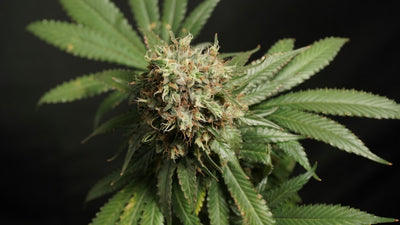
Top High-THC Strains for Experienced Growers in 2026
Photo via Unsplash.
Scroll through enough seed bank listings and you'll start to notice something: everyone's flagship cultivar tests somewhere between 32% and 40% THC. Every single one. That's not a coincidence of good breeding — it's a marketing arms race where a lab number gets treated like a horsepower rating, and the loudest claim wins the click. For a grower who's actually put a few hundred plants through flower, that number alone has become close to meaningless without knowing which lab generated it, what methodology they used, and whether anyone's bothered to replicate the result.
2026 is a strange, useful year to take stock of this. On one hand, you've got genuinely excellent new genetics — Hyper Za, Jelly Donutz, a reworked Godfather OG — putting up numbers that are backed by repeat lab testing and real grower reports, not just a single cherry-picked sample. On the other hand, this is also the year state regulators in Massachusetts, Colorado, California, Michigan, and New York all took action against labs caught inflating potency numbers, in some cases by double digits. Both things are true at once, and a serious grower needs to be able to tell the difference.
So this is two articles stitched into one. First, the strains actually worth a tent or a plot in 2026, from the new high-THC guard down to the autoflowers that have quietly caught up to photoperiod plants. Second, a working method for reading a THC percentage the way someone who's sent their own flower to a lab would read it — with appropriate suspicion, and an eye for where the number actually came from.
The 2026 Potency Leaders: Hyper Za, Jelly Donutz, and the New Guard

Photo by futurefilmworks via Pixabay.
Hyper Za is the name getting passed around grow forums this year for good reason. It's an indica-dominant hybrid averaging around 35% THC, with a terpene profile that's hard to mistake for anything else — heavy gas up front, backing into something closer to vanilla wafer as it cures out. That combination of fuel and dessert notes usually signals a dense myrcene-caryophyllene base with a decent slug of limonene, and in practice it shows up as a plant that packs trichome density onto rock-hard calyxes rather than spreading resin thin across airy buds.
Jelly Donutz is running right alongside it, testing 30-35% THC and currently sitting as the single highest-THC release several breeders have put out. Godfather OG, meanwhile, has earned its nickname honestly — in the crowded field of OG-line hybrids, growers are calling it the Don of all OGs, and lab sheets backing that up land between 28% and 34% THC with the kind of heavy-limonene, fuel-forward profile that made the original OG cuts famous in the first place.
Rounding out this tier, Permanent Marker is testing 28-35% THC with the loud, almost chemical funk its name implies, and Bruce Banner #3 continues to hold its own at 27-30% THC — proof that a genetic line from over a decade ago can still compete with 2026 releases when the breeding stock was solid to begin with.
What all five of these share matters more than the percentages themselves: they're dense, resin-heavy, slower-finishing phenotypes. None of them are forgiving plants. They want flower times pushing 9-10 weeks, they punish sloppy humidity control with bud rot risk given how tight the calyx structure gets, and they respond dramatically to late-flower feeding decisions in a way that a looser, faster sativa simply won't. If you're still learning to read your plants' nutrient demand week to week, these aren't the genetics to learn on. If you've already got your environment and lighting dialed in with precision, this is exactly the tier of genetics that rewards that precision with a noticeably stickier, heavier harvest.
Gorilla Glue #4: Still the Benchmark After All These Years

Photo via Pexels.
It says something that a cross released years ago is still the plant growers reach for when they want a known, reliable high-THC number. Gorilla Glue #4 has been cloned, re-tested, and grown out in more rooms than almost any strain in modern cultivation history, and it keeps landing in roughly the same place: dense resin production, a reliably sativa-leaning high, and THC numbers that hold up under repeat testing rather than a single flattering lab run.
A 2025-26 indoor test run makes the case concretely. Sixteen GG4 plants grown under 600W LED fixtures through a standard 9-week flower cycle averaged 28.4% THC across the group, with the top colas on the best-performing plants peaking at 30.1%. That's not a cherry-picked outlier plant pulled for a marketing photo — that's an average across sixteen plants grown under documented, repeatable conditions. For a cultivar that's been in circulation for over a decade, numbers like that are a meaningful data point, not hype.
That consistency is exactly why GG4 still earns bench space even as newer crosses post higher ceiling numbers on paper. When you need a plant that you already know how to grow — how it stretches, when it's hungry, how it finishes, what its resin coverage looks like at day 50 versus day 63 — GG4 removes most of the guesswork. You're not betting on an unproven release with a single glossy lab sheet behind it; you're working with a cultivar that's been grown out, tested, and documented by thousands of other cultivators before you.
For growers weighing a known quantity against the newer high-THC tier covered above, this is the practical calculus: Hyper Za and Jelly Donutz might top out higher on a good run, but GG4 gets you there predictably, run after run, with a huge body of grower-reported data behind every decision you make along the way. That predictability has real value when you're planning a harvest you actually need to hit a target on, rather than experimenting for the fun of it.
Autoflowers Are Catching Up: 2026 American Autoflower Cup Results

Photo by GB The Green Brand via Unsplash.
The 2026 American Autoflower Cup produced the kind of result that should reshape how experienced growers think about seed selection for next season. 505 Headbanger, entered by Farmer Hatbeard using Mephisto Genetics stock, topped the entire competition at 33.88% THC — the highest-testing entry across the whole field, autoflower or otherwise. That's not an autoflower number padded for a seed bank listing; it's a competition-verified result generated under the same lab conditions as every other entry.
Dr. Manhattan MD wasn't far behind, placing close second at 33.725% THC in a grow-out near Whitefish Mountain, Montana — worth noting given that's hardly a tropical cultivation climate, and the plant still produced a top-tier result. Gold Glue rounded out the podium at 33.142% THC, completing a top three that would have been almost unthinkable for autoflower genetics even five or six years ago, when auto lines were still mostly valued for speed and convenience over raw ceiling potency.
What makes these numbers worth paying attention to isn't just the percentages — it's where they came from. These are competition-lab-verified results from a juried cup, with entries grown by named cultivators under conditions that get scrutinized by other competitors and organizers alike. That matters enormously given how much THC inflation exists elsewhere in the market, a problem the next section digs into in detail. When an autoflower posts 33.88% THC in a setting where cheating gets you publicly disqualified, that number carries real weight.
The bigger signal here is structural, not just a good year for a few cultivars. Autoflower breeding has spent the last several seasons closing the gap with photoperiod genetics on nearly every axis that used to separate them — yield, terpene expression, and now ceiling potency. If you've been steering experienced grows toward photoperiod genetics purely because autos couldn't compete on THC, that assumption needs updating. A grower with a compressed timeline or a multi-cycle annual plan now has a legitimate case for building part of a rotation around autoflower genetics without giving up anything meaningful on potency.
Why That 35% THC Label Might Be Lying to You

Hyper Za tops the 2026 verified THC rankings at 35%, followed closely by 505 Headbanger and Dr. Manhattan MD above 33%, while Godfather OG and GG4 trail near 30-31%.
On August 14, 2026, Massachusetts regulators released results from a targeted potency crackdown that should worry anyone buying flower on the strength of its label alone: 13 of 63 tested samples fell outside the state's acceptable potency range. That's roughly one in five failing, in a market worth $1.7 billion annually, with full regulatory infrastructure already in place. And Massachusetts isn't a strict state about this — its law allows a 75-125% variance between the labeled THC number and the lab-confirmed result. Products were still failing a window that generous.
This isn't an isolated incident. Colorado introduced Senate Bill 161 in April 2026 specifically to strip testing lab oversight away from the Marijuana Enforcement Division and hand it to the Department of Public Health and Environment, a direct response to accusations that cultivators were lab-shopping — shuttling samples to whichever facility was known to return the most flattering number. California has pulled operating permits from four separate testing labs since December 2023 over potency inflation, with one lab accused of overstating THC results by as much as 32%. Michigan permanently banned a major testing lab in August 2025. New York recalled more than 54 product lots in March 2026 after discovering falsified test results.
The scale of this problem shows up clearly in the research. A 2026 study found that 48% of licensed cannabis products deviated more than 20% from their labeled THC content — nearly half the market. A separate PLOS One study examining Colorado samples found average observed potency running 23.1% lower than even the lowest value printed on the product's label, which is a striking number given labels are supposed to represent a floor, not a ceiling.
The practical takeaway for an experienced grower or buyer: treat any THC claim north of 40%, like the figures circulating around some Think Tank-line strains, with real skepticism — those numbers sit well outside what's been consistently verified through repeat, independent lab testing. Weight competition-audited results, like the American Autoflower Cup numbers covered above, far more heavily than a seed-bank percentage with no public methodology behind it. A number that survived scrutiny from competing growers and independent judges has earned your trust in a way a packet label hasn't.
Growing for Potency, Not Just Picking a High Number

Photo by CRYSTALWEED cannabis via Unsplash.
Potency isn't a fixed trait baked permanently into a strain name — it's an output of genetics multiplied by execution, and execution moves that number more than most growers want to admit. Light intensity through late flower, the week you cut nitrogen feeding, and how long you actually let cured flower sit before you judge it all shift the final THC number by meaningful margins on the exact same genetic line. Two growers running clones from the same mother can post lab results five or more percentage points apart based purely on how they managed the last three weeks before harvest and the cure afterward.
The GG4 run referenced earlier makes this concrete rather than abstract. Sixteen plants, 600W LED fixtures, a documented 9-week flower cycle, averaging 28.4% THC with peaks at 30.1% — that's what controlled, measured conditions produce from a cultivar that's been grown a million different ways by a million different people with wildly inconsistent results. The genetics set the ceiling; your execution determines how close you actually get to it.
Given everything laid out in the previous section, the smartest filter for an experienced grower choosing where to spend money isn't the percentage on the packet at all — it's whether the breeder publishes real cultivar lineage and actual lab methodology behind their numbers. A breeder willing to tell you which lab tested their flower, under what protocol, and how many samples went into that average is giving you something you can actually evaluate. A bare percentage with no sourcing behind it is marketing copy, full stop.
This is the philosophy behind how we approach genetics at Seedtiva: offering well-bred seeds suited to growers who track their own numbers, keep their own grow logs, and want to replicate a result rather than chase whatever claim is loudest this season. None of that changes the reality that outcomes still vary by climate, equipment, and which phenotype you end up selecting from a pack — any published THC range should be read as a ceiling reachable under ideal conditions, not a promise tied to your specific tent, your specific light, or your specific room.
Strip away the marketing noise and the strains actually worth your grow space in 2026 share one thing in common: they've earned their reputation through repeated, verifiable results rather than a single flashy lab sheet. Hyper Za and Jelly Donutz are backed by consistent testing across multiple runs. GG4 has over a decade of documented grow-outs behind its numbers. The Autoflower Cup winners — 505 Headbanger, Dr. Manhattan MD, Gold Glue — survived scrutiny from competing growers and independent judges in a setting where cheating gets you disqualified publicly. That's a fundamentally different kind of evidence than a percentage printed on a seed packet with no lab name attached to it.
Given that 48% of licensed products tested in 2026 deviated more than 20% from their own labels, and that four California labs have lost their permits over inflation since 2023 alone, the smartest move for any serious grower isn't to keep chasing whichever number is loudest this season. It's to run your own plant, dial in your own cure, and judge the smoke in your own jar over anything printed on a bag. You have more reliable data sitting in your own grow log than most of what's circulating in seed bank marketing copy.
The quieter story underneath all of this is probably the more important one for planning next season: the gap between photoperiod and autoflower potency has effectively closed. That's not a minor footnote — it's a reason to reconsider how you build your rotation if you've spent years defaulting to photoperiod genetics purely for ceiling THC. The plants have caught up. The regulatory environment around THC labeling hasn't caught up to the plants, and probably won't for a while yet. Grow accordingly.