Why Purple Punch Concentrates Turn Grainy in the Fridge
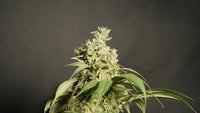
Photo by Terrance Barksdale via Pexels.
A jar of Purple Punch live resin goes into the fridge on Friday, glossy and saucy, the kind of consistency that pulls off the dab tool in a slow ribbon. By Monday it's gritty. Tilt it and you see pale, sandy particles suspended in amber liquid.
The usual reaction is that something went wrong: the batch was weak, the extract spoiled, the shop sold you a dud. In most cases it's a phase change. A dissolved compound came out of solution, and that's all.
Here's what to expect from this piece. The general mechanism is well understood in the industry, and I'll lay it out plainly. Many of the fixes are anecdotal, though, and I don't have cultivar-specific data on Purple Punch. Where something is common practice rather than proven, I'll say so.
Key takeaways
- Graininess is usually THCA crystallizing out of the terpene fraction, a texture change rather than spoilage.
- Cold lowers how much THCA the terpene fraction can hold in solution, so a short fridge stay can trigger sugaring.
- Stable cool room temperature storage and gentle re-homogenizing are the common fixes, though they are anecdotal rather than formally studied.
What Graininess Actually Is
Sugaring is THCA separating from the terpene-rich liquid and forming crystalline solids. The result looks and feels like wet sand or coarse sugar sitting in sauce. Live resin and similar extracts carry a lot of THCA alongside a terpene fraction that acts as a partial solvent, holding some of that THCA in suspension or solution. The balance is delicate, and it doesn't take much to tip it.
What it isn't: mold, and not rancidity. Crystallized THCA is the same molecule it was before, just organized into a solid. Potency doesn't vanish because the texture changed. If anything, the crystals are the most cannabinoid-dense part of the jar.
Cold is one trigger among several. Terpene loss makes the liquid fraction thinner, so it holds less in solution. Moisture can also disturb the mixture and encourage separation. Any of these can act alone, and in a real jar they often stack.
A caveat on sourcing: this is the general understanding among extractors and concentrate handlers. I'm not pointing to a specific study, and I'd treat the finer details, like exact solubility limits, as batch-dependent.
Why Cold Storage Speeds It Up
Think of the terpene fraction as a solvent with a temperature-dependent capacity. Warm, it can keep a certain amount of THCA dissolved. Chill it, and that capacity drops. The same jar that was stable on the counter is now holding more than it can handle, a state called supersaturation.
A supersaturated mixture wants to relax, and it does that through nucleation. A few crystals form, then grow over hours and days by pulling more THCA out of the liquid. That's why a jar can look fine on Saturday and clearly grainy by Monday.
Cold also thickens the liquid. When the jar comes back to room temperature, the viscous phase loosens and the separation is suddenly obvious, which makes the change look more dramatic than it felt in the fridge.
The in-and-out routine makes things worse. Each cycle is a small temperature swing, and swings act as repeated prompts for nucleation. A jar that lives in the fridge door and visits the counter every evening gets nudged again and again.
Then there's condensation. Open a cold jar in a warm room and moisture forms on the glass and the surface of the extract. Water doesn't belong in there. It can worsen texture and shorten how long the jar stays at its best.
Where Purple Punch Fits In
Purple Punch is commonly described as a Larry OG x Granddaddy Purple cross. I haven't confirmed that lineage here, so take it as the commonly reported version. Its terpene profile is often described as caryophyllene, limonene and myrcene dominant, again as reported rather than verified.
That profile isn't unusual. Plenty of cultivars lean on the same three terpenes, so nothing about it points to a special tendency to sugar. I found no cultivar-specific evidence that Purple Punch separates more readily than any other strain, and I won't pretend otherwise.
What does drive the outcome is the batch itself. Three variables carry most of the weight:
- Extraction and processing: how the material was handled, purged and finished.
- THCA content: higher loads are closer to the saturation limit.
- Terpene ratio: a thin terpene fraction has less capacity to hold THCA.
A high-THCA batch with limited terpene content is the one most likely to separate, whatever the genetics. A terpene-rich, balanced batch of the same cultivar may stay saucy in the same conditions.
So the practical move is to judge the specific jar and its extraction method. Blaming the strain name sends you down the wrong path, and it can steer you away from a cultivar you'd otherwise enjoy.
How to Store Concentrates to Avoid Sugaring

Photo by pmv chamara via Unsplash.
The simplest rule is also the best: keep it stable. Use an airtight glass jar, put it in a dark spot, and hold it at a cool room temperature. Skip the fridge-to-counter shuttle that sets off repeated nucleation.
If refrigeration is unavoidable, such as in a hot climate or a warm house, keep the jar sealed. Let it come fully to room temperature before you open it. That limits condensation, which is the moisture problem described earlier.
A few habits help regardless of where the jar lives:
- Choose a jar sized to the amount, so headspace stays small.
- Open it as rarely as you can; portion out what you need in one go.
- Seal it right away and wipe the rim so the lid closes cleanly.
- Keep it away from windows, heat sources and bright light.
Read the label. Extractors and brands often print their own storage guidance, and it was written for that product. Also follow any packaging or storage rules from your state regulator's official site.
To be honest about the evidence: these practices are widely repeated and they make sense given how the mixture behaves. I'm not citing peer-reviewed work to back them, so treat them as sound working habits rather than proven protocol.
Fixing a Grainy Jar
A grainy jar isn't ruined. The first fix is gentle warming. Keep the jar sealed and set it in a low-heat water bath, or leave it in a warm room for a while. Some of the crystals will redissolve into the terpene fraction.
Keep the heat low. High temperatures burn off terpenes, which are the flavor and also the very solvent you're trying to rebuild. Cooking away the terpenes leaves you with a drier, harsher product that sugars even faster.
Once it's warm, stir. A clean dab tool works to re-homogenize the mixture and bring back a more uniform, saucy consistency. Be thorough but quick, so the jar isn't open longer than needed.
Set your expectations accordingly. These results are anecdotal. The jar may re-sugar later, particularly if the terpene fraction was thin to begin with, because the underlying balance hasn't changed.
Plenty of people actually like sugar and sauce. The crystals and the liquid can be dabbed together, and the texture is a preference, not a defect.
Never use a direct flame or a microwave. Both create hot spots that wreck flavor in seconds. Patience and low heat are the whole technique.
Read graininess as a storage signal, not a quality verdict. The jar is telling you how it was handled: temperature swings, moisture, time, a thin terpene fraction. It isn't announcing that the extract was bad.
Since cultivar-specific data on Purple Punch is limited, the most useful evidence is the kind you generate yourself. Take two jars from the same batch, keep one at stable room temperature and put the other in the fridge, and compare them after a week or two. Your climate, your jar and your batch will answer better than any generalization, including mine.