Bipartisan Cooperation and the Future of Federal Cannabis Reform
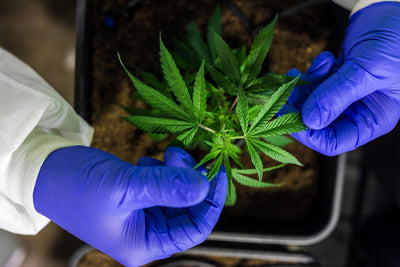
Photo by Elsa Olofsson via Unsplash.
Poll after poll has shown majority support for legalization, and yet Congress has passed almost nothing on cannabis. The gap is structural. A closely divided Congress, a Senate that runs on supermajorities, and a leadership that guards floor time all conspire against any single party's agenda.
That is why cooperation across the aisle is the real story. With the midterm elections just behind us, attention is turning to the lame-duck session and the new Congress that will be seated in January.
This piece looks at the dynamics and the policy threads worth watching, not a bill-by-bill status report. Details change by the week, so check primary sources for anything time-sensitive.
Key takeaways
- Federal cannabis bills tend to stall without support from both parties, because most legislation needs 60 Senate votes to advance.
- Banking access, research, and hemp regulation are the areas where lawmakers from both parties have most often found common ground.
- Bill and agency statuses change fast, so readers should check congress.gov and the Federal Register for current details.
Why Federal Cannabis Reform Keeps Stalling
Start with the Senate. Most legislation needs 60 votes to clear a filibuster, which means a bill backed by one party, even a unified one, rarely gets through on its own. Cannabis proposals have to pick up votes from the other side to move at all.
Then there is the gatekeeping. Committee chairs and party leaders decide what reaches the floor, so a bill with broad public support can sit for years without a vote. Popularity doesn't schedule a markup.
Complicating matters, cannabis remains a mixed issue inside both parties. Within the Republican caucus, views range from championing state autonomy to firm opposition to legalization. Within the Democratic caucus, views range from sweeping reform with social equity provisions to narrower fixes. Cross-party coalitions are a practical necessity, because neither caucus is unified enough to deliver alone.
Meanwhile, the states have run far ahead of Washington. Many have legalized medical or adult use, and each has built its own rules. Businesses and patients are left navigating a patchwork in which the same product can be legal at the state level and still federally prohibited.
That mismatch is the pressure behind nearly every reform push, and it is also why the incremental, bipartisan fixes tend to be the ones with a chance.
Where Both Parties Actually Overlap
The clearest overlap is banking. Lawmakers from both parties have sponsored bills across multiple Congresses to give state-legal cannabis businesses access to financial services, with the SAFER Banking Act the best-known vehicle. The argument travels well: cash-heavy businesses are a public safety concern, and bankers want legal clarity.
Research is another shared concern. Schedule I status complicates clinical studies on cannabis, and lawmakers who disagree on legalization often agree that the country should have better data. Veterans' access and medical use draw similar crossover support, since few members want to be seen standing between a patient and treatment.
States' rights arguments pull in unlikely allies. Libertarian-leaning Republicans object to federal overreach, while progressive Democrats see state experiments, and the communities harmed by enforcement, as reasons to step back. Same conclusion, different motives.
Finally, regulation sells better than legalization. Framed around youth protection, consumer safety standards, and testing and labeling, cannabis policy gives cautious members a way to vote yes without endorsing the plant.
- Banking access for state-legal businesses
- Research barriers tied to Schedule I status
- Veterans' access and medical use
- State autonomy over cannabis policy
- Public safety and consumer protection standards
The Rescheduling and Hemp Tracks
Not all federal movement runs through Congress. Rescheduling marijuana, including a move to Schedule III, runs through DEA and HHS. Lawmakers still have leverage through oversight hearings, letters, and funding decisions, but the process is administrative.
It helps to be plain about what Schedule III would and would not do. It would likely ease the tax burden under Section 280E, which currently bars businesses that traffic in Schedule I and II substances from deducting ordinary expenses. It would not legalize adult-use sales, and unlicensed sales would remain federally illegal. State-licensed operators would still sit in a legal gray zone on other fronts.
Hemp is the second track. Restrictions on hemp-derived THC products were written into the November 2025 appropriations law, and the timing of when they take effect keeps the issue live in late 2026. Hemp businesses, retailers, and consumers all have a stake in how that implementation unfolds and whether Congress revisits it.
Both tracks show how reform arrives through agencies and spending bills rather than standalone legislation. Neither is a clean win for one party.
Before relying on any of this, confirm the current rescheduling status and hemp implementation dates on federalregister.gov and congress.gov. Both processes have moved in fits and starts, and the latest status matters more than any summary.
What to Watch After the Midterms

Photo by TeeFarm via Pixabay.
The first thing to watch is the lame-duck session, the stretch between the election and the new Congress taking office in January. Lawmakers often use it to pass must-pass bills, and those vehicles can carry cannabis provisions. It is a narrow window, and outcomes are far from guaranteed.
After that, a new Congress means starting over. Bills must be reintroduced and sponsors must rebuild their coalitions. Early cosponsor lists are a useful signal, especially when they include members from both parties. A bipartisan lead pair on day one says more than a long list of same-party names.
Appropriations riders deserve steady attention too. Cannabis policy has repeatedly moved through spending legislation, from protections for state medical programs to the hemp language mentioned above. Riders attract less notice than standalone bills, which is part of why they survive.
For readers, the practical advice is simple:
- Follow official sources such as congress.gov, federalregister.gov, DEA, and FDA.
- Confirm what applies in your own state, since federal changes do not automatically alter state law.
- Be skeptical of headlines that treat a committee step as a finished change.
Businesses should talk to a qualified attorney before restructuring around any proposed rule.
The record is fairly clear. The few federal cannabis changes so far, from research and medical protections to the hemp provisions, came from lawmakers who worked across party lines, not from one side winning a messaging fight. That will decide what comes next, whatever the new Congress looks like.
Federal headlines move fast, and early reports are often wrong on details. Treat the primary sources as the final word, and confirm your local law before acting on anything you read, including here.
Sources
- Election Results Bolster Prospects for Marijuana Policy Reforms
- 2026 Congressional Cannabis Voter Guide - NORML
- Bipartisan cooperation could boost federal cannabis reform (Newsletter: November 6, 2026) - Marijuana Moment
- 2026 Cannabis Policy Reform Legislation and Voter Measures
- Federal cannabis reform gets Democratic boost (Newsletter: November 5, 2026) - Marijuana Moment
- Democratic Lawmaker And GOP Trump Advisor Urge Bipartisan Cooperation To Federally Legalize Marijuana - Marijuana Moment