Bipartisan Voices Push Federal Marijuana Legalization
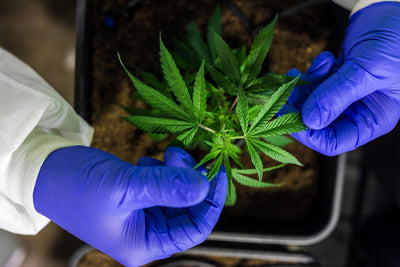
Photo by Simon Gagner via Unsplash.
A Democratic lawmaker and a Republican adviser tied to Donald Trump walking into the same room to make the same argument about marijuana is not something you would have predicted a decade ago. It is the hook of this story, and it deserves a hard look rather than a victory lap.
The pitch, as reported by Marijuana Moment, is that federal legalization requires both parties working together, because neither can deliver it alone. Cannabis has been a partisan football for years, with Democrats usually carrying the big bills and Republicans mostly declining to cosponsor them.
So the question here is practical: can a cross-party message turn into actual votes in Congress? The answer depends on details a speech rarely supplies, and this piece sticks to what can be confirmed while laying out how the machinery works.
Key takeaways
- A Democratic lawmaker and a Republican Trump advisor publicly urged bipartisan cooperation to federally legalize marijuana.
- Passing federal legalization through the Senate generally requires 60 votes, so Republican support is a mathematical necessity.
- State cannabis laws vary widely and federal law still controls marijuana, so readers should confirm local rules.
What the Two Speakers Actually Said
I wasn't able to independently verify the speakers' names, titles, venue or date for this write-up, so check the original Marijuana Moment report for those specifics before citing them. What can be said is the shape of the message: a Democratic lawmaker and a Republican adviser in Trump's orbit both argued that federal legalization needs bipartisan cooperation and will not pass as a one-party project.
If either speaker named particular policy asks, such as banking access, expungement or state-federal coordination, those are in the source and worth reading in their own words. I won't attribute specific proposals to them that I can't confirm.
The appearance itself is the notable part. Cannabis bills have split along party lines in recent Congresses, with the largest comprehensive measures drawing mostly Democratic support and a smaller number of Republican crossover votes. A Democrat and a Trump-aligned Republican sharing a message suggests at least some effort to rebuild that coalition.
Notable is not the same as binding, though. Advisers do not cast votes, and speaking at the same event costs nothing. The signal is worth tracking, but it is only a signal.
Why Legalization Cannot Pass on One Party's Votes
Start with Senate math. Most major legislation needs 60 votes to overcome a filibuster, and neither party typically holds that many seats on its own. A comprehensive legalization bill that Democrats alone support will stall, however popular the policy is with the public.
Complicating things further, cannabis does not sort neatly by party. Republican views are split too, with some favoring state-level freedom and banking fixes and others opposing any loosening on public-health or public-safety grounds. Some Democrats want sweeping social equity provisions, and others are wary of a bill that looks too industry-friendly. Coalition-building here cuts across the usual lines.
History shows the pattern. Comprehensive bills like the MORE Act have cleared the House at points, then run into the Senate and gone nowhere. Passing one chamber is the easier half.
That is where presidential posture matters. Many Republican lawmakers take their cues on contested issues from the White House, and a president who signals openness gives them cover to sign on. A voice from the Trump camp pushing for cooperation is meaningful because it speaks to that group, even if it doesn't commit anyone to a vote.
Legalization Versus Rescheduling: Where Things Stand
Marijuana has long sat in Schedule I of the Controlled Substances Act, the category for drugs deemed to have a high potential for abuse and no accepted medical use. That classification is the root of the conflict between federal law and the many states that have legalized medical or adult-use cannabis.
A federal health agency review recommended moving marijuana to Schedule III. Rescheduling is a different thing from legalization. Schedule III drugs are still controlled substances, and unlicensed sale and possession would remain federal offenses.
In practice, the biggest potential change is tax. Section 280E of the tax code bars businesses that traffic in Schedule I and II substances from deducting ordinary expenses, which squeezes dispensary margins. Moving to Schedule III would likely ease that burden, though how much relief any given operator sees would depend on the final rule and how the IRS applies it. It would not by itself create interstate commerce or open conventional banking.
- Rescheduling: changes federal drug classification, may ease 280E, keeps federal prohibition.
- Legalization: removes marijuana from federal scheduling, which requires Congress to act.
I could not confirm the current status of the DEA rescheduling process. Check the Federal Register and DEA announcements for where it stands before relying on any claim about timing.
What Bipartisan Cooperation Could Look Like in Practice
If bipartisan cooperation is real, the likeliest common ground is narrow. Banking access for state-legal businesses has drawn support from both sides, as has expanded research on cannabis for medical use, including for veterans. Respecting the choices of state-legal markets is another area where libertarian-leaning Republicans and progressive Democrats can meet.
The sticking points are familiar. Democrats often want social equity funding and expungement of past convictions written into any bill. Many Republicans prefer a states' rights framing and resist new federal programs or spending. Reconciling those camps is where earlier bills ran aground.
For people in the industry, the effects would be concrete. Operators would watch for banking and payment access, the tax treatment of their expenses, and whether crossing state lines for sales ever becomes lawful. Patients would care about research, access and insurance coverage. State regulators would want clarity on how federal rules sit alongside their own licensing systems.
None of this changes anything today. Cannabis laws vary widely by state, and federal law still treats marijuana as controlled. Confirm the rules where you live, and treat this article as news analysis rather than legal advice.
Talk about cooperation costs nothing. The real test comes when a member attaches a bill number to it, signs on a cosponsor from the other party, and persuades a committee chair to schedule a markup or a leader to call a floor vote.
So watch for named bipartisan cosponsors and committee action rather than speeches and panel appearances. Those are the markers that separate a real legislative push from a good photo op. Until then, keep following your own state's rules, because they are the ones that apply to you.
Sources
- Democratic Lawmaker And GOP Trump Advisor Urge Bipartisan Cooperation To Federally Legalize Marijuana - Marijuana Moment
- Texas Democrat Talarico Pitches Trump Partnership on Federal Legalization
- Democratic Lawmaker Pushes GOP House Speaker To Put Marijuana Bills On Floor After Trump Support And Nixon Revelation - Marijuana Moment
- Federal cannabis reform gets Democratic boost (Newsletter: November 5, 2026) - Marijuana Moment
- Talarico Wants To Partner With Trump On Legalizing Marijuana If He Wins Texas Senate Race - Marijuana Moment
- Election results 2026 live updates: Voters reject Trump’s GOP as Democrats stack up wins