Brittney Griner: All 50 States Should Legalize Marijuana
Photo by LOGAN WEAVER | @LGNWVR via Unsplash.
Brittney Griner isn't just talking about cannabis as something she survived. She's talking about it as an industry the rest of the country is leaving money on the table by not fully joining. In a recent interview on Into The Mix, the podcast produced by Ben & Jerry's, the WNBA star said plainly that she thinks every state in the country should move toward legalization, not because of some abstract principle, but because of jobs and tax revenue she's watched pile up in states that already made the leap.
That's a notable shift in framing from someone whose name became shorthand for the brutal unevenness of cannabis law around the world. Griner spent nearly ten months in Russian custody after vape cartridges containing cannabis oil were found in her luggage at a Moscow airport in 2022, an ordeal that ended only after a high-profile prisoner swap. Coming from her, an economic argument for nationwide legalization lands differently than it would from a pundit or a lobbyist. It also raises a question worth sitting with: if the conduct that cost her almost a year of her life is legal and taxed in most of the U.S. now, what exactly is still being protected by prohibition in the states that haven't caught up? Her comments, first reported by Marijuana Moment on October 7, 2026, touch on three threads worth untangling: the jobs-and-revenue pitch, the unfinished business of freeing people still locked up for conduct that's now legal elsewhere, and the actual, messy state of U.S. legalization heading into 2027.
What Griner Actually Said

Photo by Jakub Zerdzicki via Pexels.
The comments came in a conversational setting, not a press conference or a policy rollout. Into The Mix, Ben & Jerry's podcast, has made a habit of pairing its ice cream brand with unapologetically political guests, and Griner used the platform to talk about cannabis in terms that sounded more like a business analyst than an activist. Marijuana Moment first reported the remarks on October 7, 2026, and they appeared in the outlet's October 8 daily newsletter roundup, which is often how policy-adjacent celebrity commentary gets picked up before it spreads further.
Her actual words were direct: At this point, I feel like all 50 states...just might as well legalize marijuana. No hedging, no carve-outs for states with different political cultures or rural-urban splits. She followed that with the economic case she clearly wanted to lead with: It's a booming business. It's bringing jobs into communities, bringing revenue into states.
That's not a new argument in cannabis policy circles, but it's one that's aged well. States that legalized early, including Colorado and Washington, have spent close to a decade producing tax revenue data that legalization advocates point to constantly in legislative hearings elsewhere. Griner's version of the pitch doesn't get into the weeds of specific tax rates or earmarked revenue funds, but her instinct tracks with what's actually happened: states that legalized have generally seen significant increases in tax collections tied to cannabis sales, money that's gone toward everything from school construction to public health programs, depending on the state.
Tying Legalization to Criminal Justice Reform

Photo by Magda Ehlers via Pexels.
Griner didn't stop at the economic case. She also said she's working with her team to help free people who are still incarcerated on nonviolent cannabis charges, framing it as unfinished business rather than a side issue. Her phrasing was pointed: there's people that are locked up on nonviolent cannabis charges in states where it's been reversed, decriminalized. The implication is hard to argue with once you say it out loud. Someone can be serving time in one state for the exact conduct that's now a licensed, taxed business two states over.
She described the conditions facing these prisoners as something you would think would be not in our country, a comment that reads as much sharper when you remember she's speaking from direct experience with incarceration abroad, not secondhand outrage. That personal context gives her critique of domestic conditions real weight, even though the systems she's comparing aren't identical.
Her argument lines up with a position reform advocates have been pushing for years: legalization without retroactive relief is incomplete. Several states that legalized recreational cannabis have paired that move with expungement programs wiping old nonviolent convictions off the books, and some governors have used clemency powers to release people serving sentences for conduct no longer criminal in their state. But that process has been inconsistent and slow, and plenty of people remain behind bars in states where legalization either hasn't happened or happened without any look backward. Griner's comments add a recognizable voice to that specific push, one that tends to get less attention than the flashier debates over new dispensary licenses and market size projections.
Her Own Case Still Shapes the Conversation

Photo by Philippe Bonnaire via Pexels.
None of this lands the way it does without Griner's own case sitting underneath it. In February 2022, she was detained at a Moscow airport after customs officials found cannabis vape cartridges in her luggage, oil she said was prescribed for medical reasons permitted under Arizona law, where she had a team at the time. Her defense pointed to authorization connected to the Arizona Department of Health, arguing the cartridges reflected legitimate medical use rather than any intent to violate Russian law, which treats cannabis possession as a serious criminal offense regardless of amount or medical justification.
Russian courts weren't persuaded. She was convicted and sentenced to nine years, spending close to ten months in custody, much of it in conditions that drew international attention and diplomatic pressure. Her release came in December 2022, part of a prisoner exchange negotiated by the Biden administration that swapped her for a Russian arms dealer, a deal that was itself politically controversial but ended her detention.
The case became one of the starkest illustrations available of how differently cannabis is treated depending on which side of a border, or in the U.S., which side of a state line, someone happens to be standing on. Oil that was legal and medically sanctioned in Arizona turned into a years-long federal incident once it crossed into Russian jurisdiction. That whiplash is exactly why her comments about U.S. legalization carry more than the usual celebrity-opinion weight. She's not speculating about what inconsistent cannabis law can cost someone. She's describing it from memory.
The Medical Argument: Fewer Side Effects Than Pills

Photo by Nataliya Vaitkevich via Pexels.
Griner also made a medical case for cannabis, arguing it offers real benefits for people managing chronic illnesses and conditions without the heavier side-effect profile she associates with prescription pain medication. She drew a direct contrast between cannabis and pills, suggesting the latter come with far more physical toll for patients managing long-term pain.
That argument isn't unique to her, and it's one that's shown up repeatedly among patients and a growing number of physicians who have pushed back against reflexive opioid prescribing for chronic pain management. Cannabis obviously isn't a universal substitute for every medication it gets compared to, and the clinical evidence on its effectiveness varies a lot depending on the condition in question. But the broader pattern she's pointing to, patients and doctors looking for lower-risk alternatives after decades of opioid overprescription, is well documented and part of why medical cannabis programs have outlasted even recreational legalization pushes in more conservative states.
That's worth underlining: medical cannabis remains legal in the overwhelming majority of U.S. states, including plenty that have never come close to legalizing recreational use. It's often the more politically durable version of cannabis reform, passing in state legislatures and ballot initiatives where adult-use measures have failed or stalled.
The complication Griner's comments gloss over, understandably for a podcast interview, is that cannabis remains a federally controlled substance regardless of what any individual state allows. That status is exactly what turned her legally sanctioned Arizona medical use into an international incident the moment she crossed a border, and it still complicates things domestically too, including interstate travel with medical cannabis, banking access for medical dispensaries, and research into cannabis-based treatments.
Where U.S. Legalization Actually Stands

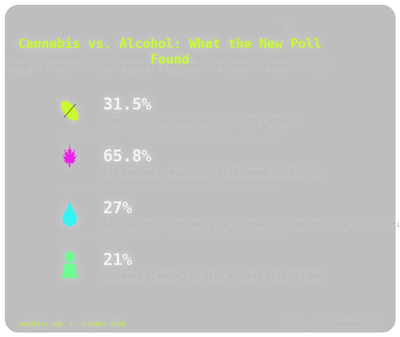
As of late 2026, nearly half of U.S. states (24) have legalized recreational marijuana and another 16 allow medical use only, leaving just 2 states with a full prohibition.
The patchwork Griner is reacting to is real, and it's worth laying out plainly. As of late 2026, roughly 24 states plus Washington, D.C. have legalized recreational marijuana for adult use, a list that's grown steadily since Colorado and Washington state started the trend back in 2012. Another roughly 16 states allow medical cannabis programs without recreational legalization, covering a wide range of patient populations and qualifying conditions depending on the state.
Then there's the smaller group still holding the line entirely. Idaho and Kansas remain among the states with no legal cannabis program of any kind, recreational or medical, putting them increasingly out of step with their regional neighbors.
Federal policy hasn't caught up to any of this in a clean way. Marijuana's rescheduling under federal law remains unresolved, with state officials and industry groups continuing to press the DEA for clearer guidance on what a reclassification would actually mean for banking, taxation, and interstate commerce. It's been a long process with no firm resolution date.
It's also worth noting legalization isn't guaranteed to be permanent once it passes. In Massachusetts, a ballot campaign is actively working to roll back the state's adult-use law, a reminder that the legal landscape can move backward as well as forward depending on local political pressure. Given how much these laws vary and how quickly they can change, readers thinking about cannabis use, medical or recreational, should check current state-specific regulations rather than assuming last year's rules still apply. This isn't legal advice, just a practical note given how fast the ground keeps shifting underneath this issue.
What makes Griner's comments stand out isn't novelty, it's framing. She's not making a moral appeal about personal freedom or bodily autonomy, she's making a balance-sheet argument: jobs, tax revenue, booming business. That's increasingly the register in which legalization debates get won in state legislatures, where fiscal projections tend to move votes more reliably than appeals to fairness ever have.
But the gap between her own case and the current patchwork is the part that should stick with readers longer than the podcast soundbite. She did time over cannabis oil that was legal under Arizona law, in a country where the conduct is treated as a serious felony. Meanwhile, inside the U.S., someone can still be sitting in prison in one state for the exact product another state is taxing and selling in licensed dispensaries. That's not a hypothetical, it's the current map.
Her point about working to free people on nonviolent cannabis charges is the piece that deserves more attention than it usually gets. Legalization that only looks forward, toward new markets, new tax revenue, new jobs, while leaving old convictions and old sentences untouched, is only doing half the job. Real reform means going back through the cases that predate the policy shift and asking whether anyone is still locked up for something that, a few miles away, is now a perfectly legal and taxed transaction.
Sources
- All 50 States Should Legalize The 'Booming Business' Of Marijuana, Brittney Griner Says - Marijuana Moment
- Marijuana Moment - All your cannabis news, in one place
- State officials push DEA for cannabis rescheduling guidance (Newsletter: October 8, 2026) - Marijuana Moment
- Brittney Griner conviction: In which countries is marijuana legal?
- Marijuana Laws by State: Where Marijuana Is Legal in 2026 - The Marijuana Herald