Poll: Cannabis Is Replacing Alcohol for Sober October
Every October, the wellness internet fills up with sobriety pledges and mocktail recipes, but this year's "Sober October" data comes with a twist that cannabis companies are happy to point out: a lot of people aren't replacing their nightly drink with seltzer water, they're replacing it with weed. A new poll released October 7, 2026 by cannabis telehealth platform NuggMD found that 31.5% of cannabis consumers say marijuana has completely replaced alcohol in their lives. Zoom out a bit further and the number gets even more striking -- 65.8% of respondents said cannabis has decreased or eliminated their drinking altogether, compared to fewer than 5% who said it pushed them toward drinking more.
That's not an isolated finding dressed up for a seasonal marketing push. It lines up with a string of research released over the past year or so, including studies on THC-infused beverages, a peer-reviewed survey out of the University at Buffalo, and -- most notably -- a controlled lab study from Brown University that measured the effect directly rather than just asking people to self-report it. Taken together, this body of evidence is starting to look less like a cannabis industry talking point and more like a measurable substitution effect that alcohol companies, policymakers, and public health researchers are going to have to reckon with.
What the New NuggMD Poll Found
NuggMD timed this survey deliberately. Released on October 7, 2026, right in the thick of Sober October, the poll surveyed 1,005 cannabis consumers living in state-legal markets, with fieldwork conducted between September 24 and 26. The margin of error sits at plus or minus 3.09 percentage points, which is tight enough to take the topline numbers seriously rather than treating them as a rounding exercise.
The headline figure is that 31.5% of respondents said cannabis has completely replaced alcohol for them -- not reduced it, replaced it entirely. Beyond that group, another 25.8% said marijuana has greatly decreased their alcohol consumption, and a further 8.5% said it somewhat decreased it. Stack those three categories together and nearly two-thirds of the sample is drinking meaningfully less because cannabis is available to them.
The other side of the ledger is thin. Only 2.7% of respondents said cannabis greatly increased their drinking, and 2.1% said it somewhat increased it -- together, a small share reporting more alcohol use, against 65.8% reporting less or none at all. Another 9.8% said they noticed no change either way. For an industry that's spent years fielding the question of whether legal weed makes people drink more as a package deal, this poll reads as a pretty direct rebuttal. The gap between the increase and decrease columns isn't marginal -- it's roughly 13 to 1.
This Isn't a One-Off Result

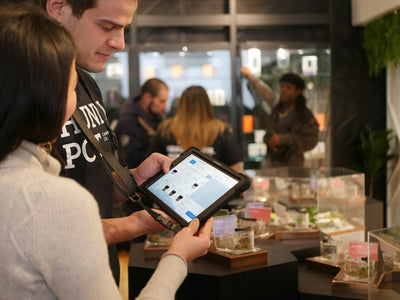
Photo via Unsplash.
Skeptics of any single poll have a fair point: one survey, even a well-constructed one, is a snapshot. What makes the NuggMD numbers harder to wave off is that they're the latest entry in a pattern that's been building since early 2025, not a standalone claim.
Back in January 2025, an earlier NuggMD poll found that 54% of cannabis users said they tend to drink less or not at all after using cannabis, compared with just 9% who said they drink more. Then in August 2026, a study focused specifically on THC-infused beverages found that 65% of participants drank less alcohol during the weeks they were consuming THC drinks. That's a notably similar number to the 65.8% figure from the newest poll, even though the two surveys were measuring different products and different populations.
The most rigorous of the self-report studies came out January 29, 2026, in the Journal of Psychoactive Drugs. Led by Jessica Kruger at the University at Buffalo, the research surveyed 438 adults who use cannabis beverages and found their average weekly drink count dropped from roughly 7.0 to 3.4 -- a substantial reduction -- with 62% of respondents saying they'd cut back on alcohol or stopped drinking entirely since picking up cannabis beverages.
It's worth being honest about the limits here. Kruger's study, like the polls, was self-reported and cross-sectional, meaning it captured a single point in time and relied on people accurately recalling and reporting their own habits. That design can show correlation, but it can't prove cannabis caused the drop in drinking on its own. Still, when four separate surveys across nearly two years, run by different organizations using different methodologies, keep landing on the same general conclusion, it stops looking like coincidence.
The Lab Evidence: Brown University's Controlled Study

A Brown University study found that cannabis use reduced subsequent alcohol consumption, with higher-THC cannabis (~7.2%) leading to a 27% drop versus a 19% reduction for lower-THC cannabis (~3.1%), suggesting higher potency may have a stronger alcohol-curbing effect.
Self-reported surveys all share the same weakness: people might be telling pollsters what they think sounds good, or the kind of person who switches to cannabis might already have been planning to cut back on alcohol anyway. That's where a study out of Brown University's Center for Alcohol & Addiction Studies, reported in late 2025, matters more than any poll could.
Unlike the surveys above, this was a controlled study -- researchers gave participants cannabis of a known potency in a lab setting and then measured what happened to their drinking behavior afterward, rather than just asking them to recall it later. Lead researcher Jane Metrik found that participants who used higher-THC cannabis, around 7.2% THC, drank approximately 27% less alcohol over the following two hours compared to when they hadn't used cannabis. Participants given lower-dose cannabis, about 3.1% THC, still showed a meaningful drop of roughly 19%.
That dose-response pattern -- more THC correlating with a bigger reduction in subsequent drinking -- is exactly what you'd want to see if there's a genuine pharmacological substitution effect at work, rather than just a correlation driven by lifestyle or personality differences between people who happen to prefer cannabis. A lab setting removes a lot of the noise that self-report surveys can't control for: there's no recall bias, no motivated reasoning about how someone wants to present their own habits, no selection effect from who chose to answer a poll.
This is the strongest piece of evidence in the current body of research, because it isolates cannabis's direct effect on behavior rather than describing what people believe about their own habits after the fact. It doesn't replace the survey data -- it corroborates it from a completely different angle.
Sober October Momentum and the Alcohol Industry's Problem
Sober October itself is bigger than it used to be, and the data backs that up. CivicScience polling from early October found that 21% of drinkers aged 21 and older plan to skip alcohol entirely this month, a five-point jump from the same measurement a year earlier. That's a meaningful shift in a single year for a behavior tied to a decades-old holiday-adjacent tradition.
What's notable is what people are reaching for instead. Among those participating in Sober October, cannabis and CBD came out on top as the preferred alcohol alternative at 24%, narrowly edging out non-alcoholic beverages and soda or seltzer, both at 22%. That's a meaningful data point for an industry that's long assumed mocktails and NA beer would dominate the sober-curious space. Cannabis is now competing directly in that lane, and in this survey, winning it.
None of this is happening in a vacuum. Analysts have been tracking slower growth in craft beer and spirits sales in states with mature legal cannabis markets for several years now, and this latest wave of research gives that trend a clearer behavioral explanation rather than just a correlation between two market lines on a chart. Younger consumers in particular have been gravitating toward moderation and sobriety-adjacent lifestyles generally, and legal cannabis has positioned itself as a comfortable middle ground -- intoxicating, but without the hangover or the health baggage people associate with alcohol.
One important caveat: legality still varies enormously by state and country, and cannabis remains federally illegal in much of the world regardless of local law. Readers should check their own local and state regulations before treating cannabis as a substitute for anything, and this shouldn't be read as medical or legal advice.
It's getting harder to write this off as cannabis industry spin dressed up in survey data. Polls can be cherry-picked and self-reported data can be shaky, but a controlled lab study from a respected research center finding a dose-dependent drop in drinking after cannabis use is a different category of evidence entirely. When that lab finding lines up with four independent surveys spanning nearly two years, each run by different organizations with different methods, the simplest explanation is also the most likely one: for a meaningful share of consumers, cannabis really is displacing alcohol.
That has implications beyond marketing copy. Lawmakers weighing cannabis legalization, rescheduling, or tax policy have mostly treated marijuana as a standalone variable -- does it increase use disorder, does it show up in traffic fatalities, does it generate tax revenue. The substitution data suggests that's an incomplete framework. If legal cannabis access is measurably reducing alcohol consumption at a population level, that has downstream effects on public health outcomes, alcohol tax revenue, and liver disease rates that deserve a place in the policy conversation, not just a footnote.
The irony worth watching is that major alcohol companies have already started hedging their bets by investing in THC-infused beverages themselves. If that trend keeps accelerating, the industry most threatened by this substitution effect may end up being the one that profits from it -- just not in the form anyone expected a decade ago.
Sources
- Marijuana Is Helping People To Completely Eliminate Or Reduce Their Alcohol Drinking, New Poll For Sober October Shows - Marijuana Moment
- Marijuana Moment - All your cannabis news, in one place
- 2026 trend: Alcohol out, THC drinks in
- Sober October Participants Drive Cannabis Adoption and Early Holiday Shopping Trends - CivicScience
- More Americans Want To Quit Using Alcohol And Tobacco Than Marijuana In 2026, New Year's Resolution Poll Finds - Marijuana Moment