Florida Gets Two New Weed Legalization Measures for 2028
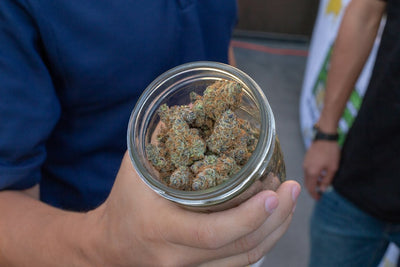
Photo by Mariya Eskina via Pexels.
Florida's recreational marijuana fight is already gearing up for round three, and the activists behind it aren't even waiting to see how the current cycle shakes out. This week, two newly filed ballot initiatives landed with the state, both explicitly aimed at the 2028 general election rather than next year's ballot. That timeline alone tells you something about where things stand: nobody involved believes there's a realistic path to qualifying for 2026 at this point.
The filings come just months after the Smart & Safe Florida campaign, long considered the frontrunner in this space, hit a wall. In March 2026, the Florida Supreme Court declined to hear the campaign's appeal over rejected signatures, effectively closing the door on that effort reaching voters anytime soon. Into that gap step two new measures, Initiative 26-01 and Initiative 26-03, filed by committees that share a chairperson, a treasurer, and even the same Jacksonville Beach mailing address.
Florida voters have already shown they want this. Amendment 3 pulled 55.9% support in November 2024, a clear majority by any normal standard. But Florida isn't normal on this particular point: constitutional amendments there need 60% to pass. That five-point gap is the real obstacle standing between these new petitions and an actual legal marketplace, and it's one no amount of clever drafting can paper over.
What the First Measure, Initiative 26-01, Would Do

Photo by Cova Software via Unsplash.
Initiative 26-01 comes from Floridians for Marijuana, a political committee that only registered in July 2026, making it one of the newer entrants in a field that already includes several better-funded, longer-running efforts. The measure itself follows a fairly familiar legalization template: adults 21 and older could possess up to two ounces of marijuana, with a cap of five grams when it comes to concentrates like vape cartridges or dabs. That split-limit structure mirrors approaches used in several other legal states, where concentrates get treated more conservatively than flower because of their potency.
What's notable here is the commercial structure. Existing medical marijuana treatment centers could pivot into recreational sales immediately once the measure takes effect, set at six months after voter approval. But the initiative doesn't stop at letting current operators expand their business. It also opens licensing to entirely new companies for cultivation, processing, transport, or retail, without requiring those businesses to be vertically integrated the way Florida's medical program currently demands. That's a meaningful departure from how the state's existing cannabis industry is built, and it could reshape who gets to participate if this ever reaches implementation.
The measure also includes standard public-health guardrails: no marketing or packaging designed to appeal to children, and no public smoking or vaping, though private property owners retain the right to prohibit use on their own premises regardless of what state law allows. Interestingly, the initiative builds in a fallback. If the Legislature fails to pass licensing rules and public-consumption regulations before the effective date, the Florida Department of Health would step in and write those rules itself, ensuring the measure doesn't stall out waiting on lawmakers who may have no appetite for the task.
Initiative 26-03 and the Let Florida Vote IV Connection

Photo by Vitaly Gariev via Unsplash.
One month after Floridians for Marijuana filed its paperwork, a second committee called Let Florida Vote IV registered its own measure, Initiative 26-03, in August 2026. On the surface, the two initiatives read as close cousins rather than competitors. Where 26-03 diverges is in its emphasis on business licensing, with language apparently designed to guarantee that opportunities in a future legal market extend meaningfully beyond the handful of companies that currently dominate Florida's medical program.
That measure was submitted to Florida's Financial Impact Estimating Conference on September 29, where it currently sits pending review, a mandatory step before any ballot language can move toward signature gathering in earnest. The conference evaluates the fiscal impact of proposed amendments, and its findings get folded into the ballot summary voters eventually see, which means the outcome of that review carries real weight for how the measure gets perceived.
The more striking detail, though, is organizational. Both committees list Zack Whitson as chairperson and Gloria Maggiolo as treasurer, and both operate out of the same Jacksonville Beach address. That's not a coincidence, and it's not the profile of rival campaigns competing for the same donors and volunteers. It reads instead like a deliberate, coordinated strategy from a single operation running two parallel tracks.
Running two closely related measures at once isn't unusual in states where ballot language can get challenged on narrow technical grounds. If one initiative draws a successful legal challenge over its wording, or runs into trouble with signature validity, having a second, slightly different version in reserve gives the operation a fallback rather than having to start completely from scratch. It's a hedge, essentially, against the same kind of legal setback that just ended Smart & Safe Florida's run.
Why Smart & Safe Florida Didn't Make the 2026 Ballot

Photo by sergeitokmakov via Pixabay.
Before these two newer measures existed, Smart & Safe Florida was the name everyone watching Florida cannabis policy knew. It was the established, well-capitalized effort, backed by the kind of money and infrastructure that signature drives in a state as large as Florida actually require. For a while, it looked like the clear vehicle for getting recreational legalization back in front of voters after 2024's near-miss.
Then the campaign ran into a wall that had nothing to do with public opinion and everything to do with process. State officials rejected tens of thousands of the signatures Smart & Safe Florida had submitted, citing validity issues that pushed the campaign well short of what it needed. The campaign appealed, but the Florida Supreme Court declined to take up the case in March 2026, a ruling that effectively ended any realistic chance of the measure qualifying for this cycle.
That outcome left an opening, and Floridians for Marijuana and Let Florida Vote IV are the groups moving to fill it, this time with their sights set on 2028 rather than trying to rush something onto next year's ballot. It's worth noting that Smart & Safe Florida's effort technically remains pending in some form, which means Florida now has three overlapping legalization pushes in various stages of life.
Whatever shape these campaigns take, they all face the identical numerical requirement: 880,062 valid signatures from registered Florida voters, collected within strict timing windows, just to get a measure in front of voters at all. That threshold alone has proven to be one of the biggest practical barriers in this entire process, regardless of how popular legalization polls.
The 60% Hurdle: Lessons From Amendment 3

Florida's 2024 Amendment 3 to legalize recreational marijuana received 55.9% voter approval, falling short of the state's required 60% supermajority threshold needed to pass.
Go back to November 2024 and the numbers tell an uncomfortable story for legalization advocates. Amendment 3 won 55.9% of the vote, with nearly 6 million Floridians marking yes. In most states, that result passes comfortably. In Florida, constitutional amendments need 60% support, a threshold written into the state constitution specifically to make citizen-initiated changes harder to achieve than a simple majority would allow.
That gap didn't happen in a vacuum. Opposition to Amendment 3 was well-funded and well-organized, including spending tied to Governor Ron DeSantis's administration, which actively campaigned against the measure and helped drive turnout among voters opposed to legalization. It's a reminder that ballot measures in Florida aren't just fighting for yes votes in the abstract; they're fighting an active, resourced no campaign that shows up when the stakes are high enough.
For any campaign trying again in 2028, that's the structural problem sitting at the center of the whole effort. Getting from the mid-50s to 60%-plus isn't a matter of fine-tuning messaging or adjusting possession limits by a gram or two. It requires either converting a meaningful share of no voters or dramatically expanding turnout among supporters in a presidential election year, when the electorate looks different and more unpredictable than a midterm cycle.
And that 60% question only matters if a measure actually reaches the ballot in the first place. Signature-gathering in Florida is an expensive, legally exposed process, as Smart & Safe Florida's experience just demonstrated. Rejected signatures, procedural challenges, and court review can derail a well-funded campaign before voters ever get a say, which means the structural hurdle and the political hurdle are really two separate fights happening at once.
What Comes Next for Florida Cannabis Reform
Both Initiative 26-01 and Initiative 26-03 still have a long road ahead before either one becomes something voters actually see on a ballot. Beyond the Financial Impact Estimating Conference review already underway for 26-03, both measures will eventually need Florida Supreme Court review of their ballot language, a step that has tripped up cannabis initiatives in this state before and one that carries real risk of rejection on technical grounds alone.
Assuming both clear that stage, the campaigns then face the actual signature drive: 880,062 valid voter signatures, gathered under Florida's deadlines and verification standards. Smart & Safe Florida's experience shows how daunting that is in practice, that effort stretched across years and consumed tens of millions of dollars before ultimately falling short on signature validity. Nothing about the process gets easier just because two new committees have entered the picture.
In the meantime, nothing changes for Florida's existing medical marijuana program, which continues operating under its current licensing and vertical-integration rules regardless of how these ballot fights play out. Patients with qualifying conditions can still access medical dispensaries exactly as before.
For everyone else, it's worth being direct: recreational marijuana remains illegal in Florida right now, full stop, and that won't change before 2028 at the earliest, if it changes at all. Cannabis law varies enormously from state to state and country to country, and readers should always check current, specific rules in their own jurisdiction rather than assume a ballot measure in progress has already changed anything on the ground.
Three overlapping legalization efforts, even loosely coordinated ones, say two things at once. It shows there's still real organizational energy behind getting recreational marijuana in front of Florida voters again, enough that activists are willing to file new paperwork within months of a major legal defeat. But it also hints at fragmentation, a splitting of attention, donor dollars, and volunteer hours across multiple petitions when a signature drive of this scale typically demands a single, unified push to have any chance of hitting 880,062 valid names.
None of that fragmentation matters much, though, if the underlying math doesn't change. Florida's problem was never really about convincing people that marijuana should be legal, Amendment 3 already proved a clear majority of voters agree with that premise. The fight has always been about clearing a 60% supermajority requirement that's specifically designed to stop exactly this kind of close-but-not-quite outcome.
So the question heading into 2028 isn't really whether Floridians for Marijuana or Let Florida Vote IV can write better ballot language than Smart & Safe Florida did. It's whether either campaign, or some combination of them, can out-organize and out-spend the kind of coordinated opposition that turned a 55.9% win into a loss last time. That's a fundraising and field-organizing problem far more than a legal drafting one, and it'll determine whether 2028 ends differently than 2024 did.
Sources
- New Florida recreational marijuana proposal aims for 2026 ballot - CBS Miami
- A new recreational marijuana proposal emerges, planned for 2026 ballot
- Florida Marijuana Legalization Initiative (2026) - Ballotpedia
- Recreational Marijuana Would Be Legalized In Florida Under Two Newly Filed Ballot Measures - Marijuana Moment
- Florida Marijuana Activists Collect Enough Signatures On 2026 Legalization Ballot Measure To Trigger Fiscal And Judicial Review - Marijuana Moment