VA Medical Marijuana Patient Survey Probes Recreational Impact
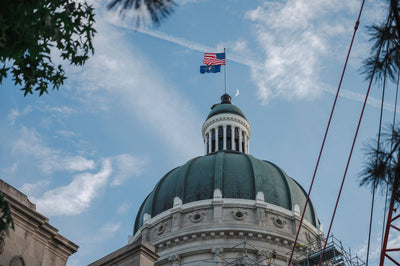
Photo by Jeff W via Unsplash.
Virginia's Cannabis Control Authority wants to know what happens to its medical marijuana program once adult-use sales go live. That's not an abstract policy curiosity. More than 114,000 unique patients walked into a licensed dispensary and made a purchase at some point in 2025, which means the state has a genuinely large population with something to lose, or gain, once recreational storefronts open their doors in mid-2027.
So the CCA has gone back to the people actually buying the product. A new anonymous survey, open now to registered patients, their parents and guardians, and registered agents, asks not just about satisfaction with the current program but about what patients plan to do once they have another, simpler option for buying cannabis legally. The answer could determine whether Virginia's medical system stays a meaningful, well-used pathway or slowly empties out as patients drift toward retail counters that don't require a doctor's note, a state card, or an annual renewal fee.
What the CCA Is Asking Patients

Photo by Jakub Żerdzicki via Unsplash.
The survey itself is short by design. The CCA estimates it takes 10 to 15 minutes, and it will stay open through October 16, 2026, giving patients a full window to weigh in before major adult-use deadlines start hitting in early 2027. Anyone currently enrolled as a registered patient can take it, along with parents or guardians managing a minor's registration and registered agents who purchase on behalf of patients who can't get to a dispensary themselves.
The questions dig into the practical texture of being a medical cannabis patient in Virginia right now. There are questions about how often people use their product, what forms they prefer, flower, vapes, edibles, tinctures, and where they actually source it, including whether they've bought cannabis from retailers outside Virginia. The CCA also wants to know what conditions patients are treating, roughly how much they spend on their regimen, and critically, how and when they obtained their certification in the first place.
That last point gets a notable level of detail. The survey separates patients who got their certification from a regular, ongoing healthcare provider from those who went through a telehealth service, a distinction that's been a point of discussion in medical cannabis programs nationally, since telehealth certification has made entry into these programs faster and more accessible but has also drawn scrutiny over how thorough that process really is. Getting a clearer picture of which pathway patients are actually using gives the CCA a baseline to evaluate the quality and consistency of certification across the program.
The Recreational Legalization Question

Photo by Cova Software via Unsplash.
The most consequential section of the survey is the one asking patients to think ahead. Respondents are given forward-looking answer options that include staying in the medical program and also shopping at adult-use retail stores once they open, rather than a simple either-or choice. That framing matters. It lets the CCA measure not just whether patients intend to abandon the medical program but whether a meaningful share plan to use both systems side by side, which would suggest patients see real value in medical status beyond just legal access to cannabis.
This question doesn't exist in a vacuum. Virginia's path to adult-use retail has been unusually drawn out. Governor Glenn Youngkin vetoed standalone retail legislation in previous sessions, leaving the medical program as the only legal commercial cannabis channel in the state for years after possession was legalized. That changed with HB 30, the budget bill Governor Spanberger signed on June 29, 2026, which builds out the full regulatory framework for adult-use sales after the standalone bill route had repeatedly stalled.
Under that framework, the CCA is required to adopt final adult-use regulations by February 1, 2027, and will begin accepting retail license applications that same day. Actual retail sales aren't scheduled to begin until July 1, 2027. The law caps the number of retail licenses at 350 statewide, a limit meant to control market saturation in the early going, and raises the personal possession limit from one ounce to two ounces. Those are the exact conditions the CCA needs patient-behavior data to plan around before the application window opens.
Why the CCA Cares: Lessons From the First Survey

Photo by Gylain Omer via Unsplash.
This isn't the CCA's first attempt to check in with patients directly. The agency ran its first satisfaction survey online from June 25 through August 9, 2024, drawing more than 800 responses, a solid sample for a program this size. The headline finding from that round was that 82% of respondents said they'd recommend the medical program to a family member or friend, a strong satisfaction number for a relatively young regulatory system.
That first survey wasn't just a feel-good data point, though. It produced an actionable recommendation: expand training and education for the healthcare providers certifying patients, since inconsistent provider knowledge was flagged as a gap. The CCA has since moved on that, rolling out provider education opportunities aimed at improving the certification process on the clinical side, not just the regulatory side.
Jamie Patten, the CCA's acting head, has framed this second survey in similar terms, describing patients as bringing a firsthand perspective the agency can't get any other way and saying the goal is to let that feedback drive actual, implementable improvements rather than sit in a report. Patten has also been clear that the current questions are oriented toward general program feedback, where things have worked well, and where patients still see gaps, rather than being a narrow referendum on any single policy change. It's a continuation of a feedback loop the agency already has evidence works.
The Stakes for Virginia's Medical Program

Photo by GRAS GRÜN via Unsplash.
The scale here is worth sitting with. Over 114,000 unique patients made at least one dispensary purchase in 2025, a figure that reflects years of program growth since Virginia's medical cannabis system first opened. That's a large enough base that any meaningful drop-off after adult-use retail launches would be felt immediately, both in state revenue projections and in the viability of the dispensaries that built their business models around medical patients specifically.
Medical status carries real advantages that adult-use consumers won't automatically get. Registered patients typically see higher possession limits than the general public, tax advantages on purchases, and, in the early period after retail launches, likely better product access and availability while the broader adult-use supply chain is still maturing. Those are real incentives to stay registered, but they only matter if patients know about them and judge them worth the ongoing cost and hassle of maintaining certification.
Other states offer a cautionary pattern here. In multiple states that legalized adult-use cannabis after already running medical programs, medical registrations declined, sometimes sharply, once retail storefronts opened and patients realized they could buy similar products without renewing a medical card. That's precisely the dynamic Virginia regulators are trying to get ahead of, rather than simply react to after the fact. Survey results will feed directly into the CCA's planning, and into conversations with state legislators and other stakeholders, as they finalize rules ahead of the February 2027 regulatory deadline. Given how much of this framework is still being built out, patients and industry watchers alike should check current Virginia law and CCA guidance directly rather than relying on timelines that are still in motion.
What the CCA does with these responses over the next several months is really the whole story here. Patient survey data is only useful if it shapes actual policy, like fee structures, renewal requirements, provider education, or how aggressively the state markets the medical program's advantages once retail competition arrives.
Virginia is in a position few states got to occupy: it can see how this played out elsewhere and still has a runway before its own adult-use market opens. Whether that foresight translates into a medical program that keeps its 114,000-plus patients, or one that quietly shrinks as dispensaries become just another storefront among hundreds, depends on choices regulators are making right now, not ones they'll make after the fact.
Sources
- Medical Cannabis Patient Feedback — Virginia Cannabis Control Authority
- Virginia Officials Launch Medical Marijuana Patient Survey, Including Questions About How Recreational Legalization Will Impact Them - Marijuana Moment
- Cannabis in Virginia
- featured Archives - Marijuana Moment
- Virginia Cannabis Control Authority Launches Statewide Medical Marijuana Patient Survey to Guide Program Changes