Pennsylvania's Hemp Trade Could Vanish on Dec 11
Photo by Simonus18 via Pixabay.
The headline reads like a contradiction: Senate Rejects Bill To Regulate Marijuana And Restrict Hemp THC Products, But It May Be Revived. One bill, two industries, one failed vote. Now set it beside a calendar. The federal hemp-THC cutoff is reported for December 11, 2026, five weeks after the November 3 election.
My argument is simple. The hemp half of Pennsylvania's bargain may get settled in Washington, not Harrisburg. If it does, the Senate that convenes after the election, whether Democrats flip it or it stays divided, will be negotiating over a different set of chips than the ones on the table when the bill failed.
A caution before going on. This reasoning rests on headlines and on the reporting those headlines summarize, not on a close read of the bill text or the roll call. I will mark what the record documents, what I infer, and what I would need to check before anyone treats this as settled.
Key takeaways
- Pennsylvania's failed Senate bill paired adult-use regulation with hemp THC restrictions, so hemp and legalization have been one negotiation.
- The federal hemp-THC cutoff lands Dec 11, 2026, five weeks after the Nov 3 election and before any 2027 session begins.
- If Congress settles hemp, Republican senators lose a bargaining demand, and Democrats lose a concession they could have offered.
One Bill, Two Industries: What the Senate Actually Voted On
Start with what the headline documents. The Pennsylvania Senate rejected a bill that did two things at once: it set up regulation for marijuana and it restricted hemp THC products. The same report said the bill may be revived. That is the whole of what I can state flatly.
The sequence is where I have to be careful. The material I have points to a failed vote in June and also to a final Senate vote on a marijuana regulatory bill scheduled around September 28, 2026. Those may be the same effort revived, or separate votes. The roll call on palegis.us settles it, and anyone citing this fight should read it there. Until then, I treat the record as ambiguous on timing, not on the basic fact that the bill failed.
I am also not going to quote a bill number, sponsor list or hemp section here. I have not read the text. If the hemp language set caps on THC per serving, a licensing scheme or limits on which stores could sell, that detail matters, and it should come from the bill itself, not from a summary.
What I can say is about design. Someone chose to put hemp restrictions and marijuana regulation in one vehicle. That is a drafting decision, and it tells you how the sponsors counted votes. Hemp limits were not a footnote attached to the adult-use framework. They were part of what it cost to get that framework a vote.
The seat arithmetic matters here, because the chamber, not the House, is the choke point. The votes are scarce, so every provision in the bill is a trade.
What the Federal December 11 Cutoff Does to the Hemp Half
Congress redefined hemp in the November 2025 appropriations law, and the effective date is reported as December 11, 2026. I would confirm the statutory language on congress.gov, and check for any FDA or USDA guidance, before relying on my summary of it.
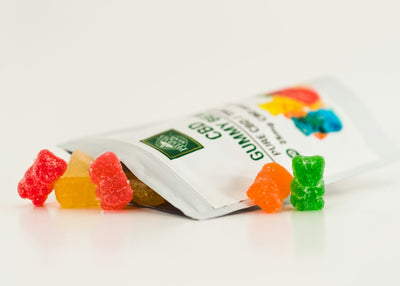
The practical effect, as widely reported, is to narrow what counts as hemp so that intoxicating hemp-derived THC products fall outside it. Products that have sat on gas station shelves and in smoke shops under the hemp label would lose that legal footing. Our piece Hemp-Derived THC Law: What Happens After December 11, 2026 goes through the product-level detail, and I will not retrace it here.
The inference is the part that matters for Pennsylvania. If a federal rule already pulls most intoxicating hemp THC products off the legal market, a state bill restricting them has little left to regulate. You cannot cap or license a category that no longer exists in the form the bill describes.
Timing sharpens this. December 11 lands after the November 3 election and before a new Pennsylvania session begins in 2027. Candidates will have run, and voters will have chosen, while the hemp question was still formally open. Legislators will then arrive in January with that question largely answered by someone else.
That sequence is unusual. Normally a state negotiates over a live market. Here the market may be gone, or reshaped, before the first 2027 draft is written.
The Leverage Shift: Whose Demand Disappears
My read is that the hemp restrictions worked as a Republican-side demand. They were the price attached to marijuana regulation. I need to confirm which senators pushed them, from sponsor statements or coverage, and I would not name anyone on this point without that. The structure of the bill suggests the demand existed. The record does not tell me whose it was.
If Congress moots the hemp rule, that demand is satisfied without a vote. Republicans cannot extract it again, because there is nothing left to extract. Democrats cannot offer it either, because it is no longer theirs to give. A concession that can neither be demanded nor offered has left the table.
What remains are the marijuana questions themselves. In a bill like this those typically include tax rate, licensing structure, social equity provisions, home grow, local opt-outs, and state-store versus private retail. I can only name the ones the bill text actually contained, and I have not read it. Treat that list as the usual menu, not a description of this bill.
Now the two scenarios, both inference. In a Democratic flip, which requires three seats, the majority no longer needs Republican votes and the hemp chip matters little either way. Their problem becomes internal: holding their own members together on the remaining design choices.
In a divided Senate, the loss is bigger. Sponsors lose a ready-made sweetener for skeptical Republicans. They must buy those votes with something that costs them on the marijuana side, such as retail model or tax structure.
The record shows what was in the bill. It does not show what any individual senator will do in 2027.
The Strongest Objection: Hemp May Not Be Moot After All

Photo by Nora Topicals via Pexels.
The best objection is that hemp may not be moot at all. Congress could delay or amend the December 11 date, and I would check congress.gov for pending bills that do so. If a delay passes, my argument weakens considerably, because the hemp trade would still exist and the concession would keep its value.
A second objection is practical. Even with a federal ban, a state may still need rules for enforcement, leftover inventory, non-intoxicating CBD products and hemp farmers. A hemp title could survive in Harrisburg as housekeeping, even if it no longer works as a bargaining chip.
Third, Republican senators may have wanted more than hemp limits. If their objections ran to retail model or tax structure, removing one concession does not move their votes. That is plausible, and I cannot rule it out from headlines.
I concede the larger point: this is a claim about bargaining leverage, and it cannot be proven until the 2027 session. What would settle it is observable. If new bills still carry substantial hemp sections, I was wrong about how senators value the trade. If those sections shrink to enforcement language or vanish, I was probably right.
Why the core idea survives anyway: it does not need a complete federal ban to work. Even partial federal action shrinks the hemp trade, and a smaller trade is a smaller concession. A chip worth less buys fewer votes, whatever else happens.
What to Watch After November 3
Five things are worth watching after November 3, and each is checkable.
- The seat count. Democrats reportedly need to flip three state Senate seats. Verify the current split and which seats are up with the Department of State or Ballotpedia.
- The December 11 date. Watch for any federal delay or amendment, and for FDA or USDA guidance in the five weeks after the election.
- The first 2027 bill text. See whether hemp provisions are dropped, kept as enforcement language, or rewritten. That shows how senators now value the trade.
- Republican signals. Note which senators who opposed the June bill move, and what they say they want instead. Rely on reported statements, not guesses.
- Your own exposure. If you buy, sell or invest in anything touching hemp THC, check current state and federal law first.
That last point is not a formality. State law and the federal hemp rule can both change, and they may change on different schedules. Nothing here is legal advice, and the rules vary by where you operate.
If hemp leaves the table, Pennsylvania's adult-use debate becomes a debate about the marijuana market on its own terms. That may be cleaner, because the argument narrows to tax, licensing and retail. It may also be harder, because the easy sweetener is gone and every remaining provision has to carry its own weight.
The open question is the one I cannot answer from headlines. If a concession costs nothing to remove, does that make a deal easier, or does it remove the reason anyone had to make one? The 2027 bill text will say.
Sources
- Pennsylvania Senate Rejects Bill To Regulate Marijuana And Restrict Hemp THC Products, But It May Be Revived - Marijuana Moment
- Pennsylvania Senate Schedules Final Vote Today on Marijuana Regulatory Bill
- Pennsylvania will legalize adult-use marijuana if Democrats flip 3 state Senate seats in November, legislators say
- Senate Bill 1035 Information; 2025-2026 Regular Session - The Official Website of the Pennsylvania General Assembly
- Cannabis in Pennsylvania
- Pennsylvania Senate Committee Schedules September 29 Vote on Bill Allowing Medical Marijuana Use in Hospitals
- Pennsylvania Senate Schedules October 19 Vote on Bill Allowing Terminally Ill Patients to Use Medical Marijuana in Health Care Facilities
- Pat Vance