Can Hemp Insulation Reach Fiberglass Price Parity?
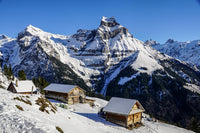
Photo by Freek Wolsink via Pexels.
A whole truckload of hemp fiber went through the Jerome, Idaho line and came out the other end without a single sellable product. That is the most concrete detail we have about Hempitecture's manufacturing push, and it says more about the road ahead than any press-release capacity number could.
Here is the plain status. As of this writing, a second Idaho production line is unconfirmed. So is any claim that hemp insulation has reached price parity with fiberglass. I could not verify either, which means this piece is a reasoned scenario analysis, not a news report.
The useful question is conditional. What would have to be true about fiber supply, line throughput and policy for hemp insulation to compete with fiberglass on price within three to seven years? The answer turns out to depend less on ambition than on boring operational details.
Key takeaways
- Hempitecture's Jerome, Idaho plant lost a full truckload of fiber to startup problems in its first year, per a November 2023 report.
- Fiber that varies by field and seed genetic, plus sourcing from Montana and Alberta, is the likeliest cost barrier to fiberglass parity.
- No second line or price-parity claim has been verified, so every parity timeline here is labeled projection, not fact.
What We Can Actually Verify About the Jerome Plant
Start with what is on the record. Capital Press reported on November 16, 2023 that Hempitecture was finishing its first year operating a hemp fiber processing plant in Jerome, Idaho. The company said it planned to broaden its range of sustainable building materials.
The same story was candid about the rough start. The company's leader, apparently Mark Meade, said the team had a hard time getting the manufacturing line operational. One full truckload of fiber was consumed without producing a product.
That is roughly the full verified list. Everything after it is gap.
What I could not confirm:
- Whether a second Idaho line has been announced, funded, permitted or built.
- Current capacity, financing or hiring as of late 2026.
- Any published HempWool pricing, or any parity claim against fiberglass.
Throughout this article I will separate three kinds of statement. Established fact means something the 2023 report documents. Reasoned extrapolation means a conclusion drawn from general manufacturing or policy patterns, flagged with phrases like if that holds. Open speculation means a scenario I find plausible but cannot anchor to data, and I will say so when I get there.
If you want to check the current picture yourself, go to the primary sources. The Hempitecture press page is first. Then the Idaho State Department of Agriculture's industrial hemp program page, the Idaho Department of Commerce, and local coverage in Jerome and the Magic Valley. A permit filing or a hiring notice there would tell you more than a forecast like this one.
Why a Second Line Is a Different Bet Than the First
The first line had one job: prove the process works. A second line would have a different job, which is lowering cost per unit. Those are different engineering and financial problems, and conflating them is how expansion stories go wrong.
Here is the reasoned extrapolation. Duplicating a proven line usually reduces commissioning risk, because the team already knows where the process jams, which settings matter and which equipment misbehaves. But that only holds if the first line now runs reliably. Whether it does is not confirmed. A company that is still debugging line one would be copying its problems.
Then there is the learning curve. As a general manufacturing pattern, unit costs tend to fall as cumulative output grows, because operators get better, scrap drops and purchasing improves. I am not going to attach a hemp-specific percentage to that, because I do not have one and inventing one would be exactly the kind of false precision this blog avoids. The direction is well established across industries. The magnitude for hemp fiber insulation is unknown.
The conservative counter-case is real. A second line adds fixed costs and likely debt. If fiber supply and customer demand do not grow alongside it, the extra capacity sits idle and costs per unit go up, not down. Idle capacity is the quickest route from expansion to restructuring.
So what would signal a real expansion rather than aspiration? Watch for concrete paper trails:
- Building or air permits filed for added equipment.
- Equipment purchase orders or vendor announcements.
- Hiring notices for line operators and maintenance staff.
- A funding announcement with named investors or a loan.
Any one of these is a hint. Several together would be evidence.
The Fiber Problem: Variability, Montana, Alberta and Idaho Acreage
The 2023 report named the core fiber problem directly. Hemp fiber varies from one field to the next and from one seed genetic to the next, which makes it less uniform than synthetic building materials. Fiberglass is made from controlled inputs. Hemp is an agricultural crop with weather, retting and harvest timing baked in.
For a line that depends on consistent feedstock, that matters enormously. It is a plausible reason a truckload could fail to yield product, though the article does not say that was the cause, so I will not claim it.
Geography compounds it. Per the same report, most of Hempitecture's fiber then came from Montana and Alberta, Canada. Freight and cross-border logistics were therefore part of the cost structure. Bulky, low-density fiber is expensive to move relative to its value.
Idaho offers a possible fix. The state had just finished its second industrial hemp season, and the Idaho State Department of Agriculture said acreage more than doubled from 2022. The absolute acreage is not in my brief, so check it. Doubling from a small base is still a small number.
The reasoned extrapolation: closer fiber means lower freight and tighter quality control, since the company could work with growers on varieties and harvest practices. If that trend holds, it is one of the few levers that cuts cost and variability together.
The counter-case is the farmer's spreadsheet. Growers will plant fiber hemp only if the per-acre return beats barley, sugar beets or other crops they already know how to grow and sell. Whether Idaho fiber hemp clears that bar is unresolved, and no processor's ambitions change a grower's math. If Idaho farmers drift away from fiber varieties, Jerome goes back to trucking fiber from Montana and Alberta.
What Fiberglass Price Parity Would Actually Require

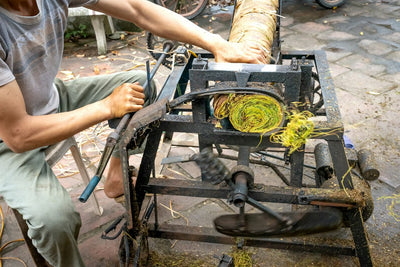
Photo by Kindel Media via Pexels.
Parity needs a definition first. The right yardstick is installed cost per unit of R-value, not sticker price per batt. Hemp and fiberglass batts differ in density and thickness, so comparing a bag of one to a bag of the other tells you almost nothing.
Fiberglass is a mature, high-volume commodity. Hemp has to close the gap through scale, fiber cost and product consistency. I have no verified price figures for either product in this brief, so I am giving none. What I can do is lay out the levers and what each would need to do.
| Variable | What it would need to do for parity |
|---|---|
| Fiber cost | Fall through stable Idaho supply and grower contracts rather than spot purchases |
| Line uptime | Approach commodity-plant reliability so fixed costs spread over more output |
| Freight distance | Shrink as fiber sourcing shifts from Montana and Alberta toward Idaho |
| Product yield | Rise as fiber variability is managed, so less input is scrapped |
Every row is an assumption, not a measurement. They are also linked: better uptime is hard to achieve with inconsistent fiber.
Now the speculative read. Parity on raw cost is the hardest path, because fiberglass has decades of scale advantage. A more plausible near-term outcome is a narrowed premium, justified by non-price factors such as moisture handling, installer comfort and embodied carbon. Those benefits are commonly cited for bio-based insulation, but how much a buyer will pay for them is untested here.
The counter-case matters. Builders and code officials weigh cost first. If a premium persists, hemp stays confined to a niche of green-building projects and owner-builders, however good the product is.
Policy Wildcards: Federal Redefinition and Idaho Rules
The policy backdrop shifted in November 2025, when an appropriations law redefined hemp federally and set up an intoxicating-hemp ban. My brief did not verify the details or the timeline, so confirm both before relying on any specific. I will keep to what follows logically.
Fiber and building-material hemp is generally distinct from the intoxicating-product debate. But shared definitions and licensing rules can still reach growers and processors. Whether a new definition or licensing tweak touches fiber operations in practice is an open question, not a settled one.
Closer to home, check the Idaho State Department of Agriculture for any 2026 rule changes to its industrial hemp program. State-level licensing, testing and transport rules decide what a fiber grower must do before the crop reaches Jerome.
History offers a precedent. The 2018 Farm Bill opened hemp farming nationally, and a boom and bust in the CBD market followed. Acreage surged on expectations, then prices collapsed when supply outran demand. Policy openings do not guarantee stable demand, and fiber hemp could suffer from similar overplanting if enthusiasm outruns processing capacity.
There are two opposite readings of tighter rules:
- Stricter limits on smokable and cannabinoid hemp could reduce competition for acreage and attention, leaving fiber a cleaner lane.
- Stricter rules could raise compliance costs for every license holder, fiber growers included, squeezing already thin margins.
I lean toward treating policy as a risk to monitor rather than a tailwind to count on. The evidence for either effect on fiber specifically is thin.
Three Scenarios for the Next 3-7 Years

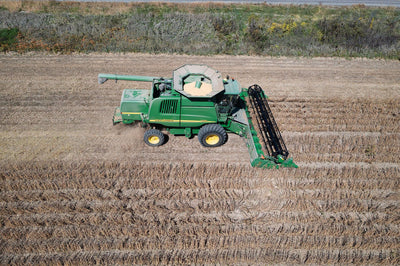
Photo by RachelW1 via Pixabay.
Three scenarios, each labeled for what it is. None is a prediction with a date.
The bull case is open speculation. The second line commissions smoothly, Idaho fiber supply deepens, and the premium narrows enough for hemp to win bids in green-building projects. This requires everything in the table to move the right way at once, which is a lot to ask.
The base case is my reasoned expectation. Hemp insulation stays a premium product with a growing niche. The gap narrows but does not close within the window. Most new building materials follow this path, so it needs the fewest assumptions.
The bear case is anchored in the one thing we do know. Fiber inconsistency, thin farmer margins or financing trouble stall expansion, much as the rough first year showed how fragile the process can be. A second line built before the first is reliable would be the likeliest way to land here.
For precedent, look at cellulose insulation. It is a bio-based product that gained a durable share of the market against fiberglass, though over decades, not a few years. I assert no specific figures. The lesson is that bio-based insulation can win, but the timeline is generational and the path ran through performance and code acceptance, not price alone.
If you want to track this yourself, here is a watchlist:
- Permit filings and equipment orders in Jerome County.
- Local acreage reports from the Idaho State Department of Agriculture.
- Published HempWool pricing from the company.
- Any change to Idaho hemp rules or the federal definition's implementation.
The honest bottom line is that the Jerome plant's rocky first year says more about the odds than any parity forecast does. Scale only helps once the process runs reliably, and a truckload of fiber with nothing to show for it is a reminder of how much work sits before the cost curve starts to bend.
Treat any announced second line as the start of the evidence, not the conclusion. Watch fiber cost and line uptime rather than headlines about capacity. If those two numbers improve in public view, parity talk gets interesting. If they do not, the extra line is just extra overhead.
Sources
- Making natural insulation from hemp, Hempitecture eyes product expansion
- Hempitecture
- Hempitecture - IGEM Micro Site Idaho Global Entrepreneurial Mission
- Hemp Insulation Plant Opens in Idaho - GreenBuildingAdvisor
- Hempcrete: Market Hits $25B in 2024, Six Pioneers to Push to $35B by 2030
- NY Awards $1.1 M to Hempitecture