Could Cryogenic Cannabis Genetics Replace Seed Imports?
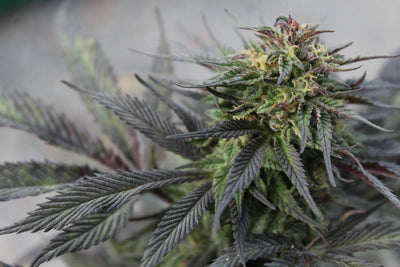
Photo by Igor Passchier via Pexels.
Moving elite cannabis genetics across a border is awkward either way. A seed is a genetic gamble, and a clone carries whatever pests and pathogens rode along in the tissue.
This piece explores a third pathway: pathogen-tested tissue, frozen and shipped in liquid-nitrogen dry shippers, then regrown at a licensed lab on the receiving end. I searched for a commercial program doing this and found none, so the idea is a hypothesis, not a trend. One cryopreservation study gives it a foothold; regulators and further research would have to supply the rest.
The short version: peer-reviewed work shows 13 commercial cannabis genotypes can be frozen in liquid nitrogen and regrown, with minor chemical-profile differences. The biggest barriers are legal rather than biological, since phytosanitary certification and DEA import authority will set the timeline more than freezing technology will.
The Seed Problem Nobody Likes to Talk About
Seeds are the default legal vehicle for moving plant genetics across borders. They are small, they store well, and phytosanitary systems have decades of experience inspecting and certifying them. For most crops, that settles the question.
Cannabis is the awkward exception. It is an outcrossing plant and highly heterozygous, so a seed is a new genotype rather than a copy of its parent. Even a seed from a controlled cross yields a spread of phenotypes. An elite plant, the one with the terpene profile and resin output a breeder spent years finding, cannot be reliably shipped as seed.
Clones solve that and create a different problem. A cutting preserves the genotype exactly, but it also preserves pathogens and pests. Viroids such as hop latent viroid have been documented in the cannabis literature, though I am not citing a specific paper here. Viroids are especially awkward because a plant can carry them without obvious symptoms.
That leaves a gap. Breeders want true-to-type material, and regulators want low-risk material. Cryogenic tissue is one proposed way to deliver both: a genetically identical sample that could be tested for pathogens before it is ever frozen.
What the Cryopreservation Science Actually Shows
The anchor study is a paper titled Cryopreservation of 13 Commercial Cannabis sativa Genotypes Using In Vitro Nodal Explants. Its ResearchGate listing shows a May 2026 date, but the record appears to date from 2021. The listing date is probably not the publication date, so I treat the 2021 date as the likelier one.
Here is what the abstract and methods say. The researchers compared droplet vitrification with conventional vitrification. Explants were loaded onto strips with PVS3 vitrification solution and plunged into liquid nitrogen, where they were held for at least 40 minutes. The result was a functional cryopreservation system that worked across multiple commercial genotypes.
Post-thaw plants matched the originals on most major traits. Some differences appeared in minor cannabinoid and terpene profiles. The authors also note that further improvements are likely possible, so the protocol is still being refined.
The paper also cites sequencing work reporting genetic variation within a single cannabis plant, without naming it here. It reads that as evidence that cannabis accumulates mutations. If that is right, there is a real argument for freezing an elite line rather than propagating it by cuttings for years, since each propagation cycle is another chance for drift.
The limits are plain, though. This is one study. It used in vitro explants, not shipped material. It had no transit component at all. Everything above is established fact about what happened in that lab. Anything about international trade is extrapolation, and the authors did not claim it.
How a Cryogenic Cold Chain Would Physically Work

Photo by Simon via Pixabay.
What follows is reasoned extrapolation, not a description of an existing system. Dry shippers cooled by liquid nitrogen vapor phase are widely used for biological material such as animal semen and embryos. The hardware exists. The question is whether it fits a plant.
Crop genebanks offer a second precedent. Collections already cryopreserve vegetatively propagated species, and national genebanks are the obvious example. Cannabis would be joining an established practice, not inventing one.
The likely workflow would run in five steps:
- Pathogen-test the mother plant.
- Create explants from clean tissue.
- Freeze them using a validated vitrification protocol.
- Ship in a dry shipper with a temperature logger.
- Thaw and regenerate in a licensed receiving lab.
The receiving end is the hard part. Regrowing plants from frozen explants requires trained tissue culture staff and sterile facilities, and success rates by genotype are not established beyond the 13 genotypes in the study. A cultivar that thaws well in one lab may not in another.
Transit is a practical worry. A dry shipper holds its cold for a limited time, and one stuck in customs for days is a genuine failure mode. Nobody has published cannabis-specific transit data that I can cite, so how often this would go wrong is unknown.
Where Phytosanitary Rules Help and Where They Bite
Phytosanitary certification exists to certify that plant material is free of regulated pests. In vitro material is often treated as lower risk than soil-grown plants, since it grows on sterile media. Whether that holds for cannabis and hemp under USDA APHIS rules is something my research did not verify.
I can point to a precedent for reasoning. ISPM 33 covers pathogen-free potato micropropagative material, and it shows international bodies will write a dedicated standard for tissue-culture trade. If potatoes earned one, a high-value crop with enough trade pressure could in principle earn another.
The mechanism that could favor cryogenic tissue is indexing. Material can be tested for pathogens before it is frozen, and the same sample can be retained for retesting. A seed lot cannot offer that as cleanly, and a rooted clone carries its soil and its history with it.
The current APHIS permit and certificate requirements for cannabis or hemp tissue culture are the gap in this section, so none of it should be read as settled today.
A less hopeful outcome is easy to imagine. Regulators may simply classify frozen tissue as plants for planting and attach stricter conditions. In that world the cold chain adds cost and complexity and gains no regulatory advantage over seed.
The Legal Wall: Hemp First, Marijuana Much Later
Hemp and marijuana genetics face different rules. Hemp has been federally legal in the United States since the 2018 Farm Bill, which makes it the realistic first lane for any frozen-tissue import pathway. Marijuana genetics sit much further back.
Cryogenic material of a Schedule I plant would likely need DEA import authorization. This is an inference about how controlled-substance import works generally, not a confirmed rule for tissue culture.
Rescheduling alone would probably not remove import controls. That is also inference. Other controlled-plant material has historically stayed under registration and permit regimes even where its research use was accepted, and I would expect something similar here.
International trade adds another layer. Moving genetics between two legal markets depends on the exporting country's rules, and on drug-control treaty obligations that both countries have signed. A frozen vial does not escape those just because it is small.
This may be the most likely outcome. If federal law stays unchanged, frozen genetics may only ever move for research or for hemp. That would cap the commercial opportunity well below what the seed-replacement framing implies.
Who Would Pay for This, and What Could Go Wrong

Photo by Diego Barros via Pexels.
Plausible buyers are easy to name, though I am reasoning here, not citing. Breeders protecting elite lines would want a backup and a clean export format. Licensed producers in new markets would want true-to-type starting material. Public and academic germplasm collections already do this kind of preservation for other crops.
Possible business models follow from those buyers: genetics banking as a service, certified-clean frozen libraries, and networks of receiving labs. No market-size figure for any of these has been established, and I am not inventing one.
Precedent argues for patience. Tissue culture became routine in potatoes, bananas and ornamentals only after standards, certified labs and demand lined up, and that took decades. Cannabis is unlikely to compress that schedule much.
The risks are specific:
- Post-thaw variation in minor cannabinoids and terpenes could matter for branded products sold on a consistent profile.
- Intellectual property enforcement across borders is unsettled.
- Per-shipment cost is unknown.
The strongest threat is a competing technology. Stabilized, inbred cultivars sold as pathogen-tested seed could solve the same problem with no cold chain at all. If breeders can make seed that comes true, the frozen vial loses much of its reason to exist.
A Reasoned Timeline, With the Salt Included
Everything in this section is open speculation built on precedent: the slow pace at which regulators adopted tissue culture in other crops, and the pace of standards-setting at the IPPC, which is measured in years. A 7 to 15 year horizon is a guess about institutions, not about technology.
For the pathway to work, four things would have to be true:
- More replicated cryopreservation studies across genotypes and labs.
- Verified genetic fidelity after thawing.
- An agreed phytosanitary pathway for in vitro cannabis.
- A clear federal or national import route.
Three signposts would tell you it is moving. One is an APHIS or IPPC document that names in vitro cannabis. Another is a DEA registration category covering genetics. The third is a licensed producer announcing a cryobank.
The most likely near-term outcome is modest. Cryopreservation becomes an internal backup for breeders and academic collections long before it crosses a border. That use needs no regulator's blessing and delivers value immediately.
My verdict: plausible as a niche pathway, unlikely to fully replace seed imports, and not yet supported by any documented pilot. Hold it with that much confidence and no more.
The real test is not whether cannabis survives liquid nitrogen. The 13-genotype work suggests it can. The test is whether a border agency will accept a frozen vial as a safe plant, and no study answers that.
Watch for the first quiet signal: a regulator naming tissue culture in a cannabis rule. That sentence in a Federal Register notice or an IPPC draft would matter more than any technology announcement, because it would mean someone with the power to say no had started working out how to say yes.
Sources
- (PDF) Cryopreservation of 13 Commercial Cannabis sativa Genotypes Using In Vitro Nodal Explants
- Optimization of the D-Cryoplate Technique for...
- Cryopreservation of 13 Commercial Cannabis sativa Genotypes Using In Vitro Nodal Explants
- Time Is Running Out to Protect US Cannabis Seed and Genetics Industry
- How Tissue Culture Is Advancing Cannabis Genetics and Global Expansion - Cannabis Industry Journal
- Cannabis Seed Bans: Genetics Loophole Closing, Act Now!