Czech Home-Grow Law: What Spain's Club Limbo Predicts
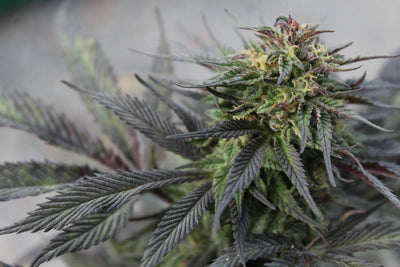
Photo by felipebmarques via Pixabay.
Spain has never legalised a single cannabis social club. It has simply declined, in most places and most years, to shut them down. The Czech Republic has discussed the opposite approach: writing clubs and limited home-grow into statute, with licences, rules and a named regulator.
Spanish enforcement history is the main precedent, because it shows what happens when a club model lives on judicial doctrine and prosecutorial mood. Germany's club model is the second comparison, since it is the nearest example of a statute that does what Czech planners appear to want.
The main open variable is what became of the Czech draft under the government formed after the October 2025 election: whether it advanced, was rewritten or went into a drawer. The forecasts below depend on that answer.
What the Czech plan reportedly proposes
Under the Fiala-era government, national drug coordinator Jindřich Vobořil was associated with a draft regulated model covering limited home cultivation and non-profit cannabis clubs. A Ministry of Health version was also in development, so there may have been competing texts, and it is unclear which survives.
Plant counts, gram limits and membership caps define a model like this, and the draft texts on vlada.cz and psp.cz are the place to read them.
The Czech baseline is better documented. The Czech Criminal Code moved possession of small amounts and small-scale growing toward administrative-offence treatment rather than criminal prosecution. Medical cannabis has been legal for over a decade. So the country already has long experience with a soft approach and a working medical channel.
Why does the statutory route matter so much? Because a law sets out who may grow, how much, and who may supply whom. It can set inspection powers and penalties for breaches.
That is precisely what Spain lacks. A Spanish club operator can follow every informal norm and still not know whether a prosecutor will see a lawful association or a trafficking ring. A Czech statute, if it passes, would convert that guesswork into a compliance checklist. Whether that checklist proves easy to satisfy is a separate matter.
How Spain's social clubs actually operate
In Spain, private consumption and private possession are not criminal offences. Possession in public and trafficking are sanctioned, the former administratively and the latter under the Criminal Code. That split is the legal ground every club stands on.
A typical club is a private non-profit association. Members grow cannabis collectively, or arrange for it to be grown, and distribute it to registered adults. Membership usually requires an introduction from an existing member, and many clubs enforce consumption-on-site rules or strict quantity limits per member.
The legal theory behind this is shared consumption among a closed group of known users. The argument is that if the people consuming are the same people who pooled the plants, no one is trafficking to third parties. It is a judicial doctrine built from case law with no statutory right behind it, and courts have applied it unevenly.
Regional governments have tried to give clubs firmer footing, and that exposed the competence problem. Criminal law belongs to the Spanish state. A region can regulate associations, health or consumption in its own sphere, but it cannot decide what counts as a drug offence. Any regional law that effectively legalises supply invites a challenge on exactly that ground.
Clubs concentrate in Catalonia and a few other regions, and that geography shapes the risk. Tolerance varies with local policing priorities and with individual prosecutors. A club in a city where authorities have chosen to look away lives in a different legal reality from one a few provinces over, though the underlying law is identical.
This is why Spain is a useful study but a poor template. The clubs exist, they are visible, and they are mostly left alone. But nothing in the system guarantees that outcome, and the enforcement record shows why.
The Spanish enforcement pattern, in order
Two events anchor the Spanish pattern. First, the Supreme Court has repeatedly ruled against club models that distribute to members, in a line of cases involving well-known Barcelona associations. Second, Catalonia's 2017 club law was struck down by the Constitutional Court on competence grounds. That ended the regional-legalisation route.
The sequence runs like this:
- Clubs grow under a shared-consumption theory with no statute behind them.
- Courts, including the Supreme Court, decline to treat that theory as a blanket defence.
- A region tries to legislate a safe harbour.
- The Constitutional Court removes it, because the region lacked the power.
What followed was selective enforcement. Raids and prosecutions tend to follow scale, open sales to non-members, or tourist-facing operations, rather than targeting clubs as a category. A small, closed, locally rooted club has historically faced less pressure than a large one selling to visitors.
A gray zone produces unpredictable risk. Operators can face asset seizure and criminal charges after years of tolerance. With no licence, there is nothing to revoke, and equally nothing to defend.
Spain's clubs have survived largely because enforcement priorities have pointed elsewhere, and a single judge reading the doctrine more narrowly, or a change in political mood, could end that. This is the baseline for any Czech scenario in which clubs stay unwritten.
Why the Czech setting differs from Spain's

Photo by Diego Barros via Pexels.
The first difference is structural. The Czech Republic is a unitary state, so it avoids the regional-versus-national fight that sank the Catalan law. If the Chamber of Deputies passes a statute, there is no lower tier of government whose authority can be questioned in the same way.
The second is the legal basis for clubs. A statute would create a licence regime. Clubs would operate because the law says they may, under conditions, rather than because a court once accepted a shared-consumption argument. That removes the central vulnerability of the Spanish model.
Germany is the closer precedent than Spain. Its national law put non-profit clubs, capped membership, limited personal home-grow and a ban on commercial sales into statute. If Czech drafters follow a similar architecture, expect similar trade-offs: strict non-commercial rules in exchange for legal certainty.
Germany's rollout also carries a warning. Early implementation was marked by licensing backlogs and uneven enforcement across the federal states. For Czech administrators this shows that a good statute can still stall at the desk where applications pile up.
Constraints are shared. The UN drug conventions and EU framework decisions on trafficking limit how far any member state can go toward commercial supply. That is why both Germany and any Czech model lean on non-profit, closed-membership structures rather than retail sales. A Czech law that tried to license shops would face a harder legal road than one built on clubs and home-grow.
The Czech setting looks legally friendlier than Spain's but administratively untested: a statute would settle the legal question while leaving open whether offices can process applications.
The political counter-case: will the draft even move?
Everything above assumes the draft moves, and that is the weakest assumption. How the government formed after the October 2025 election, led by Andrej Babiš, treats the draft is the open question, and its stance will decide most of what follows.
History offers a caution. Czech medical cannabis took years from debate to law. Drug-policy bills often stall across changes of government, because a new coalition has little reason to adopt its predecessor's signature project.
The case for progress is real, though. The Czech experience with decriminalised small-scale possession and growing means the country has lived with a soft regime without visible disaster. That makes a limited model politically cheaper than in many EU states, where no such track record exists.
The case for stalling is equally concrete:
- Coalition partners with conservative positions on drugs.
- Competing ministerial drafts, which can delay a government line.
- A crowded legislative calendar where cannabis rarely ranks first.
So what do I expect over one to three years? Partial or watered-down passage looks more plausible than a full club-and-home-grow regime. A narrower home-grow provision, or a deferred club chapter, fits the usual pattern of compromise. If the draft is dead, the no-passage scenario below becomes the default; if a bill is already in the Chamber, the odds shift the other way.
Three enforcement scenarios for the next few years
Each scenario below depends on different conditions and has its own confirming signal.
Scenario one: statute passes with clubs licensed. This requires a coalition willing to adopt a Germany-style model. The confirming signal is a bill number on psp.cz and a first-reading vote. Expect administrative friction, inspections and licence disputes rather than Spain-style raids, because the argument shifts from whether clubs are legal to whether a specific club complied.
Scenario two: home-grow only passes. This requires clubs to be cut as the price of a compromise. Then clubs stay in a Spain-like limbo, and the Spanish pattern of scale-based enforcement becomes the best predictor. The signal is a revised text with the club chapter removed.
Scenario three: nothing passes. The status quo of small-quantity tolerance continues. The signal is simply the absence of a government legislative council agenda item over successive quarters.
None of these carries a probability. A short watch list for tracking them:
- A government legislative council agenda item on a cannabis draft.
- A psp.cz bill number and its reading stage.
- Any Spanish Supreme Court or club-related ruling.
- German licensing data on approvals and backlogs.
If the first two items stay empty for a couple of years, scenario three is the working assumption.
Clubs in Spain have lasted because prosecutors and local police chose other priorities, and the Supreme Court and Constitutional Court rulings show how little protection that offers. The key Czech variable is whether clubs get written into law at all; the generosity of the home-grow limits matters less.
The current status of the Czech draft, its plant counts, gram limits and membership caps, and the stance of the post-October 2025 government will each move these scenarios.
Sources
- Inside Czechia’s new cannabis law: How much can you legally grow and possess? - Prague, Czech Republic
- A Progressive Path: The Evolution of Cannabis Laws in the Czech Republic • Vicente LLP
- Home Grow Is Now Legal in the Czech Republic! What Changes in 2026
- Cannabis in the Czech Republic and Slovakia 2025
- Czech Republic Cannabis Legalization 2026: Full
- Czech Republic Legalizes Home Cannabis Cultivation and Possession Starting January 2026