Bhang, Kif and Ganja: Old Cannabis Customs, New Legal Fights
Photo by Marina via Pexels.
Long before anyone drafted a schedule of controlled substances, cannabis was already doing quiet, specific work in people's lives: stirred into a festival drink in North India, smoked from a hand-carved pipe in the Rif Mountains, held as sacrament by Rastafari elders in the Caribbean. These aren't recent adaptations to a legalization wave -- they're practices that predate the entire concept of drug policy by centuries, in some cases by millennia. The plant showed up as food, as ritual, as social glue, long before it showed up in a courtroom.
2026 has forced a lot of these old practices into direct contact with modern legal systems, and the results have been anything but uniform. Kenya's High Court just rejected a Rastafarian petition for religious cannabis use that had been working through the courts since 2021. Grenada decriminalized adult cannabis use with specific carve-outs for its Rastafarian community. Morocco shipped its first legal export batch of hashish to Australia, formalizing an international market for a plant its own Rif farmers have smoked socially for generations without any such paperwork. Three very different countries, three very different rulings, all landing in the same calendar year.
The throughline isn't that these traditions are winning or losing outright -- it's that legal systems built around prohibition, and later around narrow medical or industrial exceptions, are still figuring out how to make room for customs that were never designed to fit inside a controlled-substances framework in the first place. Some governments are bending their laws toward the custom. Others are asking the custom to prove itself worthy of an exemption. A few are just exporting the plant and leaving the local tradition where it started.
Bhang: A Vedic Plant Surviving a Modern Drug Law

Photo by Naheedzain Siddiqui via Pexels.
Cannabis shows up in the Atharva Veda, one of the four foundational texts of Hinduism, compiled somewhere in the first millennium BCE. It's named there among five sacred plants -- bhang among them -- associated with releasing anxiety and delivering a kind of liberation, a status that put cannabis in the same category as basil and other plants still treated as ritually significant in Hindu households today. That's not a fringe reading of an obscure verse; it's one of the more frequently cited textual anchors for why bhang occupies a different cultural slot in India than ganja or charas ever have.
India's Narcotic Drugs and Psychotropic Substances Act of 1985 is the law that actually governs all this, and it's more specific than people often assume. It bans ganja (the flowering tops) and charas (the resin), but its definition of cannabis explicitly carves out the leaves and seeds of the plant. Bhang, made from ground leaves, technically falls outside the Act's core prohibition -- which is the entire legal foundation for why bhang shops, bhang lassi stalls, and bhang thandai vendors can operate openly in large parts of the country.
What that carve-out doesn't do is create a uniform national policy. States regulate the sale of bhang independently, and the results are patchy: some, including parts of Uttar Pradesh and Rajasthan, license government-authorized bhang shops outright. Others restrict sale to certain seasons or locations, and a handful discourage or effectively ban it despite the federal exemption technically permitting it. The same drink can be a licensed product in one state and a legal gray area a few hundred kilometers away.
Consumption predictably spikes around Holi and Maha Shivaratri, when bhang gets mixed into thandai, lassi, and sweets and sold at festival stalls with little pretense of secrecy -- it's treated less like contraband and more like a seasonal specialty item, the way eggnog shows up at Christmas. Heading into 2026, that seasonal openness sits awkwardly next to an NDPS framework that still criminalizes cultivation and possession of the plant outside these narrow leaf-and-seed exceptions, leaving India with a system where the culturally dominant form of cannabis use is legal almost by technicality rather than by design.
Rastafari Sacrament in the Caribbean: Progress and Pushback

Photo by Royce Fonseca via Unsplash.
Grenada moved decisively at the start of 2026, decriminalizing adult-use cannabis and, notably, writing specific accommodations into the law for its Rastafarian population -- treating sacramental use as something the legislation needed to address directly rather than leave to enforcement discretion. It's part of a broader pattern across the English-speaking Caribbean, where governments have been more willing to build religious exemptions into cannabis law than most of the rest of the world.
The Bahamas offers the more complicated case study. Roughly 30,000 people there, about 1% of the national population, identify as Rastafari and hold sacramental permission to use cannabis under the country's framework. But community leaders have been vocal that the program exists more on paper than in practice. Implementation has lagged since it was introduced, and the gap between the law's promise and its rollout has become the central complaint.
Specifics matter here. Rastafari organizers point to licensing fees they describe as prohibitively high for small growers and community groups, exclusion from the actual drafting process that shaped the sacramental framework, and continued police encounters in rural areas where officers either aren't briefed on the exemption or don't apply it consistently. The result is a legal right that doesn't always translate into a lived one.
Outside that sacramental carve-out, Bahamian cannabis law remains genuinely severe: adult-use possession without the recognized exemption can still draw up to 10 years in prison or fines in the neighborhood of $100,000. That's a wide gap between the treatment of a recognized religious practitioner and everyone else, and it puts a lot of weight on how narrowly or broadly authorities define who qualifies.
Antigua and Barbuda got there earlier, permitting Rastafari to cultivate cannabis specifically for sacramental use well before Grenada's 2026 move. Taken together, the regional pattern isn't full legalization -- it's a series of carve-outs, built country by country, each with its own fees, paperwork, and enforcement quirks, none of them quite matching the others.
Kenya's Courts Say No -- For Now

Photo by sergeitokmakov via Pixabay.
On July 19, 2026, Kenya's High Court closed out a case that had been sitting in the legal system since 2021, ruling against a Rastafarian petition seeking legal protection for cannabis use as a matter of religious practice. The petitioners had argued that Kenya's constitutional guarantees around freedom of religion should extend to their use of cannabis as sacrament, the same basic argument that's found more traction in parts of the Caribbean this same year.
The court didn't buy it -- not because it dismissed Rastafari as a faith, but because it found the petitioners hadn't demonstrated that cannabis use is an essential, non-negotiable requirement of the religion itself, as opposed to a common but non-obligatory practice within it. That's a meaningful legal distinction: courts weighing religious-freedom claims often look for evidence that a practice is doctrinally required, not just widely observed, and the ruling turned on the petitioners falling short of that bar.
An appeal is expected, which means this is a paused conversation rather than a finished one. Kenyan cannabis law in the meantime stays exactly where it was: possession can still carry up to 10 years in prison plus fines, with no religious exemption currently written into the statute or recognized by the courts. Anyone claiming sacramental use has no legal shield to point to.
What makes the timing notable is the contrast sitting right next to it. In the same year Kenya's judiciary is asking petitioners to prove their faith requires cannabis, Grenada is writing sacramental accommodations directly into decriminalization legislation, and the Bahamas -- however imperfectly -- already has a permit system running. Kenya isn't an outlier in having strict cannabis law; plenty of countries do. What stands out is that it's actively litigating the religious-freedom question at the same moment other jurisdictions are settling it through legislation instead, and coming out with a different answer.
Kif in the Rif: Morocco's Old Habit Meets a New Export Market
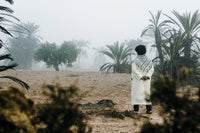
In the Rif Mountains of northern Morocco, kif isn't a novelty or a recent import -- it's been smoked in social gatherings, ceremonial settings, and spiritual practice for centuries, traditionally through a long, narrow wooden pipe called a sebsi. It's woven into daily rhythms in villages across the region in a way that has little to do with the plant's newer status as an internationally regulated commodity.
Sufi practitioners in Morocco have historically used kif alongside mint tea, music, and repetitive chanting to deepen meditative or trance-like states during religious gatherings -- a practice that ties cannabis use to a specific devotional context rather than pure recreation, even though outsiders often flatten the two together. That devotional use has persisted quietly for generations, mostly outside any formal legal recognition.
Morocco's government took its first real step toward formalizing any of this in 2021, legalizing cannabis cultivation for medical and industrial purposes and opening a regulated path for licensed farmers to sell into pharmaceutical and export markets. Recreational kif smoking, notably, remains criminalized under that same framework -- the law created a commercial lane without touching the personal, social use that's been happening in Rif villages the entire time.
That commercial lane produced a real milestone in June 2026, when Morocco shipped its first legal export batch under the new system: 50 kilograms of Beldiya hashish sent to Australia, marking the country's formal entry into the international medical cannabis export trade. It's a landmark for Moroccan agriculture and a signal that the government sees far more value in regulated export than in touching the deeply rooted local custom.
The gap between those two realities is stark. The same plant, grown in the same mountains, is simultaneously a casual social habit passed down through generations and a pharmaceutical-grade export product moving through customs paperwork to reach Australian buyers -- two entirely separate legal universes occupying the same hillside.
Where Law and Custom Still Don't Match Up

Both the Bahamas and Kenya impose identical maximum penalties for cannabis possession, with offenders facing up to 10 years of imprisonment in either country.
Line these four situations up and the differences in legal exposure are jarring. Grenada has moved to decriminalization with built-in religious accommodation. The Bahamas has a sacramental permit system, however unevenly enforced, running alongside penalties of up to 10 years in prison and roughly $100,000 in fines for anyone outside it. Kenya carries that same roughly 10-year maximum sentence but currently recognizes no religious exemption at all. India permits bhang through a substance-specific carve-out that has nothing to do with religion or intent.
That last point is worth sitting with, because it's a genuinely different legal logic from what's happening in the Caribbean. India's NDPS Act doesn't ask whether someone is using cannabis leaves for a Holi celebration, a Vedic ritual, or just because they like the taste of bhang lassi -- the exemption is defined by which part of the plant is involved, full stop. Grenada and the Bahamas, by contrast, are drawing their lines around who's using cannabis and why, carving out space for a recognized religious community rather than a particular plant part. Kenya's court, meanwhile, essentially asked petitioners to prove their practice belonged in that second category and ruled that they hadn't met the bar.
Three different frameworks, three different questions being asked, and that mismatch is exactly why this keeps ending up in front of judges and legislatures instead of getting settled once. A law built around substance definitions doesn't map cleanly onto a claim about religious necessity, and a religious exemption built for one recognized faith doesn't necessarily extend to a plant that also gets used casually, medicinally, or commercially by people outside that faith. The categories that drug law relies on -- plant part, intent, religious status, medical versus recreational -- rarely line up with how cannabis actually moves through a culture's daily life, and every one of these cases is really a dispute about which category should control.
None of what's described here is frozen in amber. Bhang vendors are adjusting to state-by-state licensing quirks in real time, Rastafari growers in Nassau and St. George's are pushing back on fee structures and drafting processes they were shut out of, and Rif farmers are watching their neighbors' hillsides get folded into export contracts while their own sebsi habits stay exactly as illegal as before. These are living practices responding to law that's being rewritten around them right now, not historical curiosities waiting to be either preserved or phased out.
2026 has made clear that there's no single global direction here -- there are at least two, moving at once. Caribbean nations are carving out legal room for sacramental use, imperfectly but deliberately. Kenya's courts are holding the line, asking for a higher evidentiary bar before treating cannabis use as protected religious practice. Morocco has taken a third path entirely, commercializing hashish for export while leaving the actual local custom of kif smoking exactly where prohibition left it decades ago.
The Kenyan appeal and the actual on-the-ground rollout of Bahamian sacramental permits are worth watching closely over the next year, because they'll say a lot about which model spreads. If Kenya's appellate courts eventually side with the Rastafarian petitioners, or if the Bahamas manages to fix its licensing and enforcement gaps, other jurisdictions weighing similar claims will have a workable precedent to point to. If not, India's approach -- exempt the substance, not the practice -- may end up being the more durable template, simply because it asks courts to answer a much narrower question than whether a given belief system requires cannabis at all.