Cannabis in Ancient Chinese Pharmacology Texts
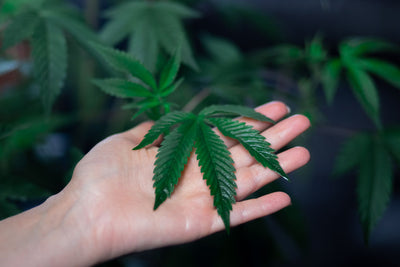
Photo by 金 运 via Unsplash.
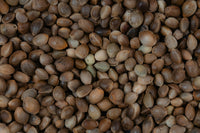
A drawer in a traditional Chinese pharmacy holds small, pale seeds labeled ma zi ren. They are prescribed for stubborn constipation. Compare that with how one of the oldest herbal texts in the Chinese tradition describes the plant they come from: a Supreme Elixir of Immortality that could make the body light.
That gap is the story. What do the early Chinese pharmacology texts actually say about ma, and what has accumulated through centuries of retelling and a decade of internet recycling?
A caution before we start. Nearly every date and author here is traditional rather than confirmed, and the popular claims often trace back to a single secondary summary. This article leans on one such source, Project CBD's account of the Yang Shou-zhong translation, plus background knowledge that needs checking. Treat it as a map of what to verify, not a final word.
Key takeaways
- The Shennong Ben Cao Jing lists ma (cannabis) among its Supreme Elixirs, though the text is a later compilation attributed to a legendary emperor.
- Hemp seed became a routine ingredient in Chinese formulas, a more practical legacy than the text's talk of immortality and spirit light.
- Popular dates like 2700 BC and claims about Hua Tuo's anesthetic rest on tradition, not firm archaeological or textual proof.
What the Shennong Ben Cao Jing Actually Says About Ma
The Shennong Ben Cao Jing is often called humankind's first pharmacopeia. According to Project CBD's summary of Yang Shou-zhong's translation, The Divine Farmer's Materia Medica (Blue Poppy, Boulder, Colorado), cannabis appears in it under the name Ma. Check the publisher and year against the book itself before citing, because the page's reference list is truncated.
The text sorts its substances into tiers. In the usual account there are three: a top grade of substances considered safe for long-term use, a middle grade with more varied effects, and a lower grade of stronger, potentially toxic drugs taken with care. Ma sits in the top tier, described as one of the Supreme Elixirs of Immortality.
The quoted language is plain in places. Ma mainly supplements the center and boosts the qi. Protracted use may make one fat, strong, and never senile. Those are the claims of a tonic, a substance for building the body up.
Then comes the line that gets shared most. Long use, the text says, could enable one to communicate with the spirit light and make the body light. Read in context, this is the stock vocabulary the book applies to its top-tier substances, not a note on psychoactive effects. Nothing in the quoted passages describes intoxication, and a reader should resist adding it.
A Legendary Author and a Han-Era Book
Tradition credits the book to Emperor Shen Nung, the legendary father of Chinese medicine, who is also said to have introduced tea drinking. He belongs to myth, not to a documented biography. Scholars generally treat the text as a later compilation.
The usual dating is roughly the Han dynasty, around the first or second century CE, drawing on older oral tradition. That date comes from background knowledge rather than my research, so confirm it in a scholarly review.
The famous 2700 BC date for therapeutic cannabis in China has the same problem. It is a legendary dating tied to the Shen Nung story. No archaeological find confirms it, and anyone repeating it as fact is repeating a tradition.
Why attach a mythic name to a book? In early China, authority flowed backward in time. A remedy credited to a sage-emperor carried more weight than one from a recent practitioner, so compilers placed accumulated knowledge under legendary patrons. It was a way of vouching for the material, not a plain attempt at deception.
There is one more complication. As I understand it, the original text survives mostly through quotations in later works and through reconstructions by later editors. That means a modern translation rests on layers of scholarly judgment. One secondary web page cannot carry that weight, so read a proper academic review alongside the translation.
Hemp Seed in the Pharmacy: Bencao Gangmu and Everyday Use

Photo by Madison Inouye via Pexels.
For everyday use, the better witness is Li Shizhen's Bencao Gangmu, completed in 1596. As I understand it, the work discusses both hemp flowers (ma fen) and hemp seed (ma zi ren). I could not verify the details, so check a translation before quoting any line.
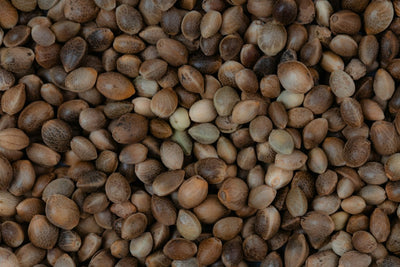
The seed is the durable part. Hemp seed is a standard ingredient in laxative formulas in Chinese medicine, and it remains in pharmacies. Nothing about that use requires immortality or spirit light. It is a lubricating, nutritive seed doing a modest job.
The texts, as I understand them, treat the two parts differently. The seed is a food and a mild medicine. The flower draws more caution. Again, confirm this against the primary sources rather than taking my summary.
The split makes sense for a plant that did many jobs. The phrase the land of hemp and mulberry, quoted by Project CBD, points to hemp as fiber for cloth, food for the table and medicine for the sick. A plant that useful did not need mystical billing to earn its place.
Modern law is a separate matter. How China regulates cannabis and hemp today needs official sources, such as the NMPA or the Ministry of Public Security. Laws change, so verify current specifics rather than inferring anything from the old texts.
Hua Tuo and the Mafeisan Question

Photo by Andreas Suwardy via Pexels.
Hua Tuo, a physician of the second to third century CE, is traditionally credited with mafeisan, a powder used to anesthetize patients for surgery. The name is often translated as cannabis boiling powder. That is how the story reaches most readers.
Historians dispute the attribution. The surviving record does not settle what mafeisan contained, or even how reliably it was described. The cannabis link is an interpretation of the name and later accounts, not a recipe anyone can reproduce from the page.
The story persists because it is tidy. It hands the history of surgical anesthesia an origin in China, a named genius and a plant with modern interest. Tidy tales travel, and each retelling sands off the doubt.
My position: treat mafeisan as an intriguing tradition, not a documented fact. The distinction matters because the claim gets used as evidence, and evidence built on a disputed name is brittle. A reader who repeats it as settled history will be wrong the moment someone asks for the source.
All of this is background knowledge I could not confirm in research. Before using it, consult scholarly work such as Ethan Russo's historical reviews and see how carefully they handle the attribution.
What the Ground Itself Tells Us: The Yanghai Tombs
Soil can say things paper cannot. In 2008, researchers reported roughly 2,700-year-old cannabis from a shaman's burial in the Yanghai tombs near Turpan, in Xinjiang. It is one of the better-known archaeological finds tied to ancient cannabis use.
It is also separate evidence from the pharmacology texts. The tomb find and the Shennong Ben Cao Jing come from different places, different periods and different kinds of source. Blending them into one continuous story is a common mistake.
A burial find has limits. It shows cannabis was present and valued enough to be placed with a person of status. It does not tell us what a pharmacopeia author would have prescribed, or whether the plant was used as medicine, ritual material or something else.
I confirmed nothing newer. Readers wanting current work should look for residue analysis of the Yanghai material and for archaeology reports from the Chinese Academy of Sciences, since methods in this field keep improving.
The fuller picture comes from using both. Texts give us names, categories and claims, but they are compiled late and filtered through editors. Burials give us physical presence, but little meaning. Each corrects the other's blind spot, and together they support a more honest account than either could alone.
The lasting legacy of ma in Chinese pharmacology is modest and practical: hemp seed in the formulary, doing quiet work for centuries. The immortality language reads best as period philosophy, the vocabulary a tradition used for its safest, most tonic substances.
So treat any ancient-cannabis claim that arrives with a date, a named author or a miracle anesthetic as a lead to check, not a fact to repeat. Read the primary translations, find the scholarly reviews, and notice how often the dramatic version outruns its sources. The real history is less flashy than the retelling, and the plain drawer of seeds may be the most reliable witness in it.