Hemp in Colonial Agricultural Policy: What the Law Said
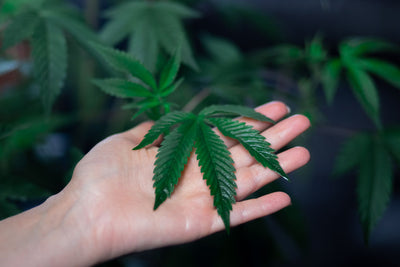
Photo by Behnam Norouzi via Unsplash.
Ask almost anyone who has read a hemp explainer and they will tell you that colonial farmers were legally forced to grow the stuff. Fines, orders, the whole apparatus of the Crown pushing seed into the ground. It is partly true, and nearly always told wrong.
The documented story is more interesting. It runs through a Virginia law that asked settlers to try the crop, later bounties paid to growers, and a steady worry in London about where rope and sailcloth would come from. Hemp was naval hardware before it was anything else.
A note on sourcing before we start. This piece leans on a limited set of secondary sources, chiefly a trade-outlet explainer of unknown date. Every specific legal detail here should be checked against primary records, and I will point to where those live as we go.
Key takeaways
- Virginia's 1619 act told householders to trial hemp, flax or aniseed seed for a season, not to grow hemp outright.
- Virginia and Parliament offered bounties in the 17th and 18th centuries to reduce dependence on foreign hemp, especially Russian.
- Hemp took hold in Virginia's Piedmont and Shenandoah Valley, where tobacco did less well, but several popular claims still need primary sources.
What the 1619 Virginia Act Actually Required
The Virginia Assembly act of 1619 is the usual starting point, and the usual claim is that it forced farmers to grow hemp. Cannabis Now treats that claim as true, and the quoted text does carry real weight. But the weight is different from the legend.
The act is addressed to all householders of this colony. It asks those with hemp, flax or aniseed seed to make trial thereof the next season. Read that again: make trial. The order is to experiment, not to plant a set acreage or deliver a set harvest.
One detail deserves more attention than it gets. The wording covers both English and Indian hemp. That suggests the Assembly may have been thinking about two sources of planting stock, one brought from home and one tied to Indian hemp, though the source does not say how the Assembly weighed them against each other.
Why does the distinction matter? Because a mandate to trial a crop and a blanket order to grow it are different kinds of policy. The first is an agricultural pilot program with the force of law behind it. The second is a quota. Repeating the story as forced planting flattens a more modest, more plausible piece of colonial governance.
A caution: this account rests on one secondary source quoting the text. Anyone who wants to cite the act should pull the exact language from the Virginia Statutes at Large and read the surrounding provisions, not just the famous line.
Why Empires Wanted Colonial Hemp

Photo by Pixabay via Pexels.
To see why an assembly would bother with hemp seed, think about ships. Hemp fiber became rope, rigging and sailcloth. A navy and a merchant fleet without those materials simply do not sail, which made the fiber a strategic commodity in the way fuel is today.
According to the Cannabis Now account, Britain wanted to cut its reliance on foreign imports, Russia above all. Depending on a distant and sometimes rival supplier for something so basic to naval power was an obvious vulnerability. Growing it in the colonies was one answer.
That fits the wider logic of the period. Colonies were expected to supply raw materials to the mother country, and hemp slotted neatly into that frame. Seen this way, colonial hemp was imperial supply policy, planned from the center and aimed at security of supply.
It is worth saying plainly what these policies were not about. Nothing in this record concerns recreation or medicine. The crop was valued for its stalk fibers, and the rulemaking reflected that.
You will often see specific orders from 1630s Massachusetts and Connecticut cited as further proof of colonial hemp mandates. My research could not verify them. They may well exist as described, but treat them as unconfirmed until you have seen the original orders or a reliable scholarly treatment of them.
Bounties: Paying Farmers to Plant
Mandates were one lever. Money was the other. Both the Virginia Assembly and the British Parliament offered bounties for growing hemp during the 17th and 18th centuries, according to Cannabis Now.
A bounty works differently from an order. Instead of punishing a farmer who does not plant, it pays one who does. That shifts the risk. A grower weighing hemp against tobacco or grain could see a guaranteed sweetener on one side of the ledger.
The two approaches were complementary. The 1619 trial requirement pushed settlers to find out whether hemp would grow at all. Later bounties tried to turn that knowledge into volume, rewarding people who committed land and labor to a crop with a notoriously heavy processing burden.
The goal stayed consistent: a domestic fiber supply that did not hinge on Russian trade. A bounty on colonial hemp was, in effect, a subsidy for strategic independence.
I have not given amounts or exact dates, because my brief did not include them and I will not guess. They varied by act and period, and the specifics matter. Readers who want them should go to Library of Congress records and the Virginia Statutes at Large, where individual acts can be read in their original wording.
Where Hemp Took Root in Virginia
Geography shaped where hemp stuck. Hemp became a staple in Virginia's Piedmont and Shenandoah Valley, where tobacco grew less well. Cannabis Now attributes that point to another article it cites, so it is secondhand, but it makes agricultural sense.
Tobacco dominated the colony's economy and claimed the best land for it. A fiber crop that thrived on ground tobacco handled poorly gave farmers in those regions something marketable. Policy asked for hemp, and the map showed where it could actually be delivered.
There is also evidence of practical know-how circulating. The Virginia Gazette printed instructions for hemp cultivation in April 1767. The source snippet I had was truncated, so the contents of that item need checking before anyone quotes it.
Still, the existence of such a column is telling. Newspaper how-to pieces look a lot like early extension advice. Policy was not only orders and payments; someone thought farmers needed to be taught how to sow, cut and process a demanding crop.
You will also hear that Kentucky hemp grew from this same Virginia root. My research did not verify Kentucky's origins, so I would either leave that claim out or flag it clearly as unconfirmed until a primary or scholarly source backs it.
Founders, Farms and Fact-Checking the Legend

Photo by nickjying via Pixabay.
No hemp history is complete without the Founders, and no hemp history is more cluttered with myth. Cannabis Now has a piece on George Washington and hemp that tries to separate myth from reality, which is the right instinct.
One concrete item from it: Washington's estate partnered with the University of Virginia to sow and harvest a hemp crop. The snippet I saw did not give the year, so I cannot date it. It reads as a modern project rather than an eighteenth-century record, and the source should be checked for timing.
What I could not verify are the claims people most love to repeat. Washington's diary entries about hemp, and Jefferson's writings on the hemp brake, a tool for breaking the stalks, both need to be read in the originals. Mount Vernon's resources and the National Archives' Founders Online are the places to do that.
Apply the same skepticism to the famous legends. The claim that founders drafted documents on hemp paper is a good example. Without documentation, treat it as a story, not a fact.
One more caveat applies to everything here. Cannabis Now is a cannabis trade outlet, and the explainer I relied on is undated and may be out of date. It is a fine starting map. It is not a substitute for the records themselves.
What Colonial Hemp Policy Still Teaches

Photo by Henrik Pauly via Unsplash.
The colonial pattern is easy to summarize. Governments wanted strategic fiber, and they pursued it with mandates and bounties, not prohibition. The tools were nudges to try, then payments to commit.
Modern hemp rules have moved in a very different direction and have changed repeatedly. Anyone relying on a claim about current federal status should confirm it on congress.gov, federalregister.gov and usda.gov rather than trusting a summary, including this one.
That caution applies sharply to the late-2025 appropriations language on hemp and intoxicating THC products. People draw lines from colonial policy to that language, but I did not confirm its current status, any effective date or any delay or repeal. Treat connections to it as unverified until you have checked.
The broader lesson is simple. Agricultural policy is a moving target, and what was true in one season may not hold in the next. Laws change, so check the current specifics for your own situation before acting on anything you read, historical or otherwise.
The 1619 story holds up better as a lesson in how governments steer agriculture than as a tale of forced planting. A nudge to experiment, followed by bounties when the experiment looked promising, is a recognizable policy sequence, and one that modern agencies would not find unfamiliar.
It also shows how a good anecdote drifts. A request to make trial of a crop became an order to grow it, and nobody noticed because the story was too tidy to question. Hemp history deserves the same scrutiny as any modern policy claim. Before repeating a founding-era anecdote, go back to the primary records, starting with the Virginia Statutes at Large, and read what the text actually says.