Chu Valley Wild Hemp: Eradication vs. Fiber Cultivation
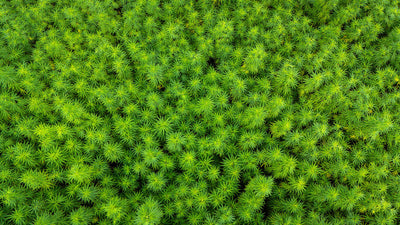
Photo by wuzefe via Pixabay.
In 2014, two very different ideas about the same patch of southern Kazakhstan surfaced within months of each other. A state plant-protection institute proposed killing the cannabis in the Chu Valley with herbicides and sowing forage crops in its place. A deputy, Nazarbayeva, suggested the valley's wild hemp could be put to medical use instead.
That split is the tension in this story. A valley known mainly for wild cannabis is a policing problem for the Interior Ministry. It is also, on paper, a raw-material base for fiber or medicine, if anyone could build the legal and industrial chain around it.
The documented record behind this article is a decade old, drawn from 2014 reporting by Tengrinews, so it describes what officials proposed rather than what the valley looks like now.
The two sides of the 2014 debate were an institute's herbicide proposal and a minister's admission that earlier hemp-processing attempts in the valley had failed.
A Valley Known for Its Wild Cannabis
Kazakh reporting describes the Chu (Chui) Valley as known mainly for the wild cannabis that grows there. That is the valley's reputation in the official conversation, ahead of its farming or scenery. The 2014 Tengrinews report adds a telling admission: nobody knows exactly when the cannabis began growing there.
Geographically, the valley lies in southern Kazakhstan in the Chu basin and runs toward the Kyrgyz border.
Wild, self-seeding hemp is a different thing from a managed crop. There is no certified seed, no field record of what was planted where, and no known THC profile. One stand might be fiber-grade by accident, another might be potent, and without sampling nobody could say which.
That is why the valley is a land-management and enforcement question as much as an agricultural one. Plants that nobody planted and nobody owns cannot be licensed, inspected or harvested on a schedule. They simply spread, and the state has to decide whether to treat them as a weed, a narcotics risk or a resource.
The 2014 Case for Herbicides and Forage Crops
The eradication case is the better documented of the two. In October 2014, the Kazakh Scientific Research Institute on Plant Protection and Quarantine proposed destroying the Chu Valley cannabis with herbicides. Its plan did not stop at clearing. It called for planting forage crops where the cannabis had been.
The political push came earlier. In January 2014, Interior Minister Kalmukhanbet Kasymov told the Mazhilis, the lower chamber of parliament, that the state needed to address the problem. He said officials were weighing a project to localize and liquidate wild hemp under an existing Ministry of Agriculture target program.
These were statements of intent and recommendations, and the reporting gives no hectares treated, budget, start date or results. A herbicide proposal from a research institute is not a government program, and a minister describing a project under consideration is not the project itself, so the 2014 material cannot show that eradication happened or worked.
Why Earlier Industrial Hemp Efforts Stalled

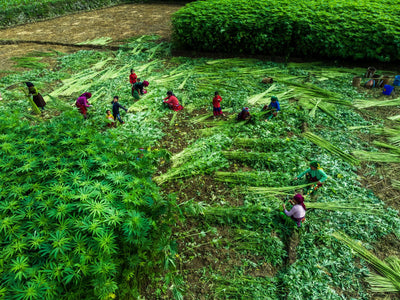
Photo by ThisisEngineering via Unsplash.
Kasymov made a second point to lawmakers that gets less attention. He said earlier ministry attempts to organize industrial hemp processing in the Chu Valley had not borne fruit. The report does not say why.
Separately, Deputy Nazarbayeva proposed using the valley's wild hemp for medical purposes. Whatever one makes of the idea, it shows that eradication was not the only answer on offer. Officials were not unanimous about what the valley's cannabis was for.
Nothing in the 2014 reporting shows whether either idea, industrial processing or medical use, advanced afterward.
Legal Fiber Bids: What Can and Cannot Be Confirmed
The contest in the headline played out only on the official side: no company bids or tenders to grow fiber hemp legally in Kazakhstan appear in the record. Whether Kazakh law permits licensed industrial hemp, and at what THC threshold, is a separate question the 2014 coverage does not touch.
A decade-old report is a poor guide to today's rules, so a prospective grower, processor or investor would need the current narcotics law and qualified local counsel, and Russian-language searches such as дикорастущая конопля Шуская долина are a reasonable start for press coverage.
Eradication and Fiber Hemp Pull in Opposite Directions
A cleared valley and a fiber supply base cannot both be the goal on the same land. The 2014 record shows the state weighing both, which suggests no settled policy had emerged.
There is also a general agronomic problem. Industrial fiber generally depends on certified low-THC seed and uniform stands, so that plants mature together and yield consistent material. Wild populations offer neither. Building a fiber industry on them would more likely mean clearing and replanting with certified seed than harvesting what grows.
The herbicide route is its own land-use choice. It trades a cannabis problem for a livestock-feed use, forage in place of hemp. That may be sensible, but it is a trade, and it should be described as one.
Any claim of success or failure in the valley would need to say how many hectares were treated, what it cost, and which agencies, including the Zhambyl and Almaty region akimats, were responsible.
Eradication and industrial processing were both floated in public in 2014, and the Chu Valley's wild hemp was still being argued over as a weed, a narcotics risk and a possible resource.
Sources
- Cannabis valley in Kazakhstan to be destroyed with herbicides: 09 October 2014 17:03 - news on Tengrinews.kz
- GOVERNMENT OFFICIAL DETAILS EXTENT OF ILLEGAL DRUGS IN KAZAKHSTAN - Jamestown
- Roots of drug trade run deep
- Kazakhstan approves legalization of industrial hemp
- China and Italy Are Eyeing Kazakhstan Following Its Legalization of Hemp - Newsweed
- Kazakhstan to Permit Industrial Hemp Cultivation - The Times Of Central Asia