Lesotho's Dagga Hills and Appalachia's Moonshine Ridges
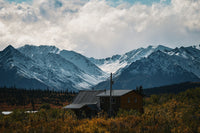
Photo by hbieser via Pixabay.
Drive far enough up into the Maloti or the Appalachian ridges and the logic of the land becomes obvious. The slopes are steep, the roads are poor, and the fields are small. A farmer there has to ask what is worth the trip down to market.
For Basotho highland families, one answer has long been dagga. For Appalachian farmers, it was corn turned into whiskey. This article treats that as a thematic comparison only. No documented historical link connects the two traditions, and nothing here suggests one.
The comparison earns its place because of the question both stories raise. When an informal rural economy is finally legalized, who actually gets to take part? Details of Lesotho's rules are drawn from general, widely reported accounts and should be checked against current official sources.
Key takeaways
- Lesotho is widely reported as the first African country to license medicinal cannabis cultivation, in 2017, with the Ministry of Health in charge.
- Appalachian moonshine and Basotho dagga share a pattern: upland informal economies, criminalization, then partial legitimization that favors well-capitalized players.
- No documented historical link connects the two traditions, so this is a structural comparison and readers should verify current Lesotho licensing details.
Dagga in the Mountain Kingdom
Lesotho sits entirely above 1,000 meters, and its lowest point, about 1,400 meters, is the highest lowest point of any country. That geography shapes everything about rural life. Steep ground, thin soils and short distances to nowhere in particular limit what a household can grow and sell.
Dagga is the common southern African word for cannabis. According to widely reported accounts, Basotho mountain communities have grown it informally for generations. It has mostly been small-scale work, folded into household income in districts where cash crops are scarce.
That is an economic reality, not a folk legend. A family weighing school fees against a bad maize season will look hard at a plant that sells for far more per kilogram than any grain.
Cross-border movement is part of the picture too. Lesotho-grown cannabis has repeatedly been reported moving into South Africa, which surrounds the country entirely. Precise volumes are hard to verify, and anyone quoting a tonnage should ask where it came from.
Illegality, in other words, did not stop the farming. It just left growers without legal contracts, without protection and with little say in the price.
The 2017 Licence and the Cost of Entry
In 2017, Lesotho was widely reported to have become the first African country to license cannabis cultivation for medicinal purposes. It was a notable policy turn for a state with a long tradition of informal growing. The Ministry of Health oversees the licensing.
As I understand it, the framework rests on cannabis regulations issued in 2016 and on amendments to the country's drug laws. I could not confirm the exact instruments for this piece, so readers should check the Government Gazette rather than rely on my summary.
The sticking point has been cost. Reports have described licensing fees and compliance requirements as steep, and critics argue that they effectively shut out the small traditional growers who kept the crop going. A licence built for a funded company is a poor fit for a household farming a hillside plot.
Unsurprisingly, the most visible licence holders have been foreign-backed and well-capitalized companies. I am not naming any here because I could not verify the current roster.
One caution applies throughout. Regulations and approvals, including export permissions, change. Anyone planning to act on this should confirm the current position with official sources first.
Appalachian Moonshine: A Familiar Playbook

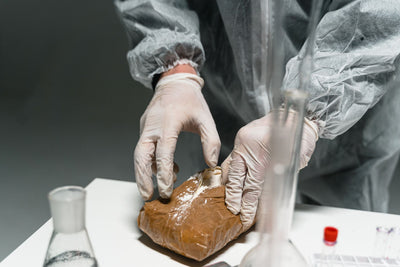
Photo by inkflo via Pixabay.
Appalachian moonshine began with plain freight economics. A wagon of corn was bulky and low in value once it reached a distant market. The same corn distilled into whiskey was compact, durable and worth much more per load. Upland farmers on bad roads did the math.
Authority arrived early. The federal whiskey excise of 1791 hit small distillers hard, and in 1794 resistance in western Pennsylvania grew into the Whiskey Rebellion. It was a very early clash between rural producers and a distant government that wanted its cut.
Prohibition, from 1920 to 1933, pushed home distilling further underground. Enforcement against illicit stills did not stop when Prohibition ended, and the tradition of the revenue agent chasing the hollow-dwelling distiller became its own folklore.
Today, licensed distilleries in states such as Virginia and Tennessee sell moonshine-style spirits, often leaning on heritage in the marketing. The legal route is real, but it carries heavy federal and state compliance costs. I am keeping these claims general, and state-specific rules should be verified before anyone relies on them.
Where the Parallel Holds, and Where It Breaks

Photo by MurrrPhoto via Pixabay.
Lay the two stories side by side and the shared structure shows up fast. Both involve remote terrain, a crop with a high value-to-weight ratio, informal trade, criminalization, and eventually a licensed market that rewards people with capital and legal help.
Branding is the common thread. Legal moonshine sells the outlaw story. Licensed cannabis markets are starting to do the same with landrace and traditional-origin claims, borrowing credibility from the growers they often price out.
The differences are just as important. Moonshine's legal path ran through a domestic regulatory system, with American consumers buying a product made under American law. Lesotho's licences are aimed heavily at medicinal export markets, which means foreign buyers and foreign standards set the terms.
Moonshine also had a clear product category to migrate into. Whiskey was already a legal, understood good. Lesotho's small growers face licensing designed around pharmaceutical-grade standards, a much steeper climb from a hillside plot.
Again, no documented link exists between the two traditions, and the cultures are not the same. My position is that the comparison is useful because the economics repeat. It tells us what to watch for, not what Basotho farming means.
What Legitimization Teaches Small Growers
Licensing regimes tend to set fee and compliance thresholds that favor investors. Lesotho's reported criticism fits that pattern, and so does the history of craft distilling. Thresholds are rarely written to exclude anyone. They simply end up doing so.
Other jurisdictions have tried fixes. Cooperatives let small producers share the cost of compliance. Tiered licence classes scale requirements to the size of the operation. Reduced fees for small or traditional producers can lower the entry price. These are options, not guarantees, and each has had mixed results elsewhere.
Heritage claims offer another route. Appellations and geographic labeling gave some Appalachian spirits a way to capture value from where and how they were made. In principle, a similar approach could apply to mountain-grown cannabis from Lesotho, tying a premium to origin rather than to capital.
Whether that happens is a policy choice, not a market accident. Laws change, so any grower or investor should verify current Lesotho licensing rules with the Ministry of Health and the official gazettes before committing money or land.
The first licence is a headline. The real test comes later: can a family that has farmed a hillside plot for years actually pay the fees and meet the paperwork to join the legal market?
Appalachia took more than a century to turn outlaw heritage into a legal industry, and plenty of the original distillers never made it across. Lesotho's choices now will decide who benefits this time.
Sources
- Cannabiz Africa Report: Lesotho Completely Overhauls Cannabis Oversight with New Regulations Expected Soon
- Industrial Hemp - Lesotho National Development Corporation
- 2026 in Lesotho
- Cannabis in Lesotho
- Cannabis in Lesotho (2026): Laws, Medical Cannabis & Tourist Travel Guide - Exploring Natural Growth
- Is Weed Legal in Lesotho?