Paraguay's Marijuana Belt and Morocco's Rif: A Shared Blueprint
Photo by Mark Stebnicki via Pexels.
Drop a pin on the northeastern edge of Paraguay, near Pedro Juan Caballero, and another on the Rif mountains above Chefchaouen in northern Morocco, and you get two places that have never had a reason to know about each other. Different continents, different colonial histories, different languages, different climates. And yet if you swapped the place names in a government report on either region, you could publish it in the other country and nobody would notice the seams.
Both are poor, rugged border zones where cannabis cultivation became the actual economic base of rural life decades before any legislature bothered to write a law that matched reality. Both had governments that tolerated the crop for a generation because eradicating it meant eradicating the only income option for tens of thousands of families. And both are now in the middle of the same experiment: trying to license and formalize the very crop, in the very places, that state agencies spent decades trying to eradicate. The question worth asking about Paraguay's Amambay department and Morocco's Rif isn't whether legalization is happening -- it clearly is, on paper. It's whether that legalization can actually reach the growers who built the illicit economy in the first place, or whether it's mostly constructing a parallel, legal industry that runs alongside the old one without ever touching it.
Pedro Juan Caballero: Paraguay's Original Marijuana Belt

Photo by Benjamin Shurance via Unsplash.
Cannabis growing around Pedro Juan Caballero traces back to the late 1960s, when farmers along Paraguay's border with Brazil's Mato Grosso do Sul state started planting marijuana as a cash crop in a region with little else going for it economically. Amambay department sits on a frontier that has always been more permeable than official maps suggest, and that permeability became the foundation of a cross-border trade that's now more than fifty years old. Pedro Juan Caballero itself, a city of roughly 122,190 people as of 2025, has grown into one of the most important transit hubs in the region -- controlled in large part by Brazil's Primeiro Comando da Capital (PCC) and other trafficking organizations that use the border crossing to move product into Brazil's much larger consumer market.
The cultivation itself is concentrated in Paraguay's poorest northern departments -- San Pedro, Concepción and Amambay -- where marijuana has functioned as a mainstay of rural livelihoods for two generations running. It isn't a side hustle in these areas; for many families it's the only crop that reliably converts to cash. Part of what's kept Amambay's product commercially dominant is potency: cannabis grown there carries a markedly high THC concentration compared to marijuana from other parts of the country, which lets traffickers charge a premium and keeps the region's growers competitive even as other supply routes have opened up elsewhere in South America.
The scale becomes clearer when you look at enforcement numbers. Paraguay's anti-drug secretariat, SENAD, eradicated 1,312 hectares of cannabis in Amambay alone in 2019. At a rough yield of 1.5 tons per hectare per harvest, with two harvests a year standard in the region's climate, that single department's fields imply annual production approaching 2,000 tons -- and that's before counting the 770 tons of already-processed cannabis seized nationwide that same year. Those are eradication and seizure figures, meaning they represent only the fraction authorities caught. The actual scale of the Amambay marijuana belt is almost certainly larger.
The Rif: Morocco's Older, Larger Version of the Same Story

Photo by Hamza Semsamaili via Pexels.
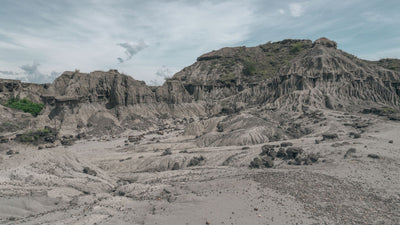
Morocco's version of this story is older and considerably bigger. Cannabis has been illegal there since 1956, the year the country gained independence from France, but cultivation in the Rif mountains -- the rugged range running along the Mediterranean coast in the north -- was tolerated de facto for decades regardless of what the statute books said. That tolerance is precisely what made Morocco one of the world's leading hashish producers for the better part of half a century, supplying much of the resin consumed across Europe.
The dependency runs deep. Estimates place somewhere between 700,000 and one million people in the Rif as directly or indirectly reliant on the kif economy -- kif being the local term for cannabis cultivated for hashish production -- for their livelihood. That's not a niche informal sector; in provinces like Ketama, Chefchaouen and Al Hoceima, it's close to the entire regional economy, woven into land tenure, family structure and local commerce in ways a single law was never going to unwind quickly.
Morocco's legal response came in 2021 with Law 13-21, which created a new regulatory body, ANRAC (the National Agency for the Regulation of Cannabis-Related Activities), to license cultivation for medical and industrial purposes while keeping recreational use illegal. Structurally, that's almost identical to what Paraguay did with its own 2017 and 2019 medical and industrial carve-outs -- narrow legal doors opened for specific licensed uses, while the broader plant remains criminalized outside those channels. The Rif story is older and runs at a larger scale than Amambay's, but the underlying pattern is the same: an impoverished, mountainous or border region where the state tolerated a crop rather than eliminate it, followed decades later by a legal framework arriving long after the informal economy had already calcified into something resembling a parallel state.
Licensing the Illicit: How Far Legalization Actually Reaches

Licensed cannabis cultivation in Morocco surged from 300 hectares in 2023 to 2,700 in 2024, yet this remains a tiny fraction—less than 6%—of the estimated 50,000 to 70,000 hectares actually under cultivation nationwide.
The numbers coming out of Morocco's licensing regime show real growth, but also just how far it still has to go. ANRAC data reported in April 2026 put licensed dry cannabis production at 19,576 quintals for 2025, up from 18,810 quintals the year before, spread across 3,141 hectares and 4,776 licensed growers. Another 4,147 new authorizations were issued in that window, pushing the total number of licenses to 5,765. Authorized hectarage jumped from under 300 in 2023 to roughly 2,700 in 2024 -- a genuinely large percentage increase. But set against the 50,000 to 70,000 hectares Morocco is estimated to actually cultivate in illicit or unlicensed production, that legal footprint is still a rounding error. The formal sector is growing fast in relative terms and staying tiny in absolute ones.
Paraguay is chasing a similar bet with its 2026 industrial cannabis push, which targets San Pedro, Concepción, Paraguarí, Central and Chaco -- again, largely the same departments long associated with illicit growing, San Pedro and Concepción in particular. The agriculture ministry has floated an estimate of roughly 25,000 families who could participate in the licensed program if it scales as planned. The proposed contract price sits at 10,000,000 guaraníes per hectare, with two harvests a year possible under the region's growing conditions. That's the number growers will actually run against what illicit buyers already pay for high-THC Amambay product -- and it's an open question whether the legal contract price beats the black-market one once transport, licensing costs and compliance burdens are factored in.
In both countries, the pattern that emerges is the same: the legal program covers a genuinely small slice of total cultivation, while the larger illicit economy keeps operating essentially undisturbed alongside it, often in the very same valleys and municipalities where the licensed farms are being set up.
Why the Law on Paper Isn't the Law on the Ground

Photo by succo via Pixabay.
Paraguay's statute books still carry the older, harsher framework underneath the new licensing language. Law 1340 punishes cultivation with 10 to 20 years in prison under Article 33, and while Article 30 carves out a personal-use exemption, that exemption caps at just 10 grams -- a window narrow enough that it does little to protect the small growers whose entire livelihood depends on far larger plots. That means a farmer in San Pedro or Amambay can be watching industrial licensing roll out down the road while remaining fully exposed to a two-decade prison sentence if their own plot isn't part of the formal program.
The gap between law and ground reality shows up in how outside observers describe these departments. A U.S. travel advisory dated April 30, 2025 specifically flagged Amambay, San Pedro, Concepción, Canindeyú and Alto Paraná for active smuggling and weak policing -- language that amounts to an official acknowledgment that state control in these departments is partial at best, licensing regime or not.
Morocco's own reckoning with this gap has a name attached to it now. Researcher Mouloud Ziani's 2026 book on the kingdom's cannabis reform argues that the 2021 statute opened a door the country has yet to actually walk through -- that ANRAC's licensing numbers, however much they've grown, still describe a bureaucratic structure sitting mostly apart from the Rif's real economy. Ziani's point, stripped down, is that the real verdict on Moroccan legalization won't be written in the text of Law 13-21 or in ANRAC's annual reports. It'll be written in the Rif's roads, its markets, and the household economics of families who've been growing kif since before most of them were born.
Strip away the geography and both countries are facing the identical practical test: a licensing regime only means something if it can absorb the informal growers who built the market to begin with. Otherwise it's just a new formal sector standing next to an old informal one, both harvesting the same hillsides.
Legalizing cannabis in a place where the crop was already the de facto backbone of the rural economy is not the same project as legalizing it somewhere it wasn't. In Amambay and the Rif, the informal economy has its own prices, its own buyers, its own enforcement logic -- built up over fifty-plus years of tolerance, eradication campaigns, and cross-border trafficking networks that adapted to every previous policy shift. A new statute doesn't erase any of that just by existing. It has to out-compete it, on price, on convenience, on trust between grower and buyer, in the same hills and border towns where the illicit trade has had decades to entrench itself.
That's really what Paraguay and Morocco are testing right now, whether either government intends to frame it that way or not: can a licensing bureaucracy actually beat a trafficking network at its own game, on its own turf? ANRAC's growth from under 300 licensed hectares to roughly 2,700 in a single year is a real number worth taking seriously. So is the fact that it still sits against an estimated 50,000 to 70,000 hectares of unlicensed cultivation. Paraguay's 10,000,000-guaraní contract price is a real offer on the table. So is the reality that Amambay's high-THC product already commands premium pricing on the illicit market, with buyers who've never once cared what SENAD's eradication totals were.
The statute language in both countries will keep getting refined, amended, and debated in legislative committees for years. That's not where this story will actually resolve. Watch the hectare numbers instead -- licensed versus estimated total -- in both countries, year over year. That gap is the honest measure of whether either reform is working, or whether it's just building a second, smaller industry next to the one that was already there.